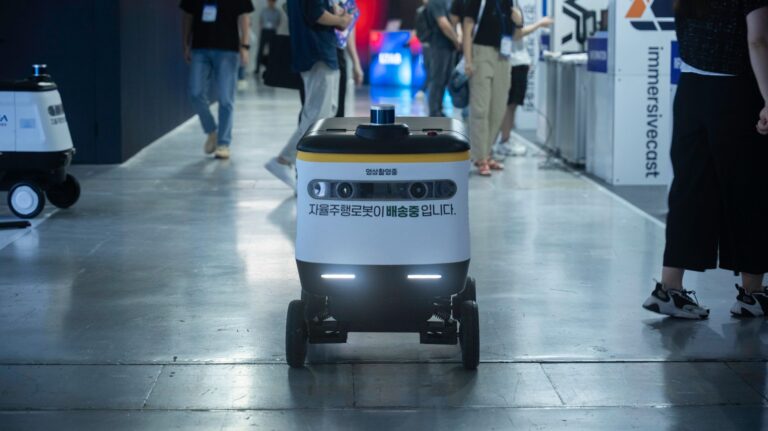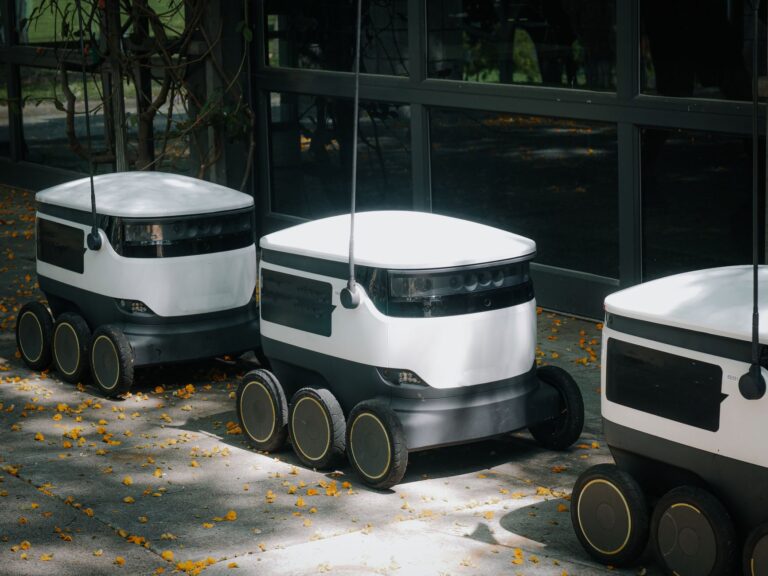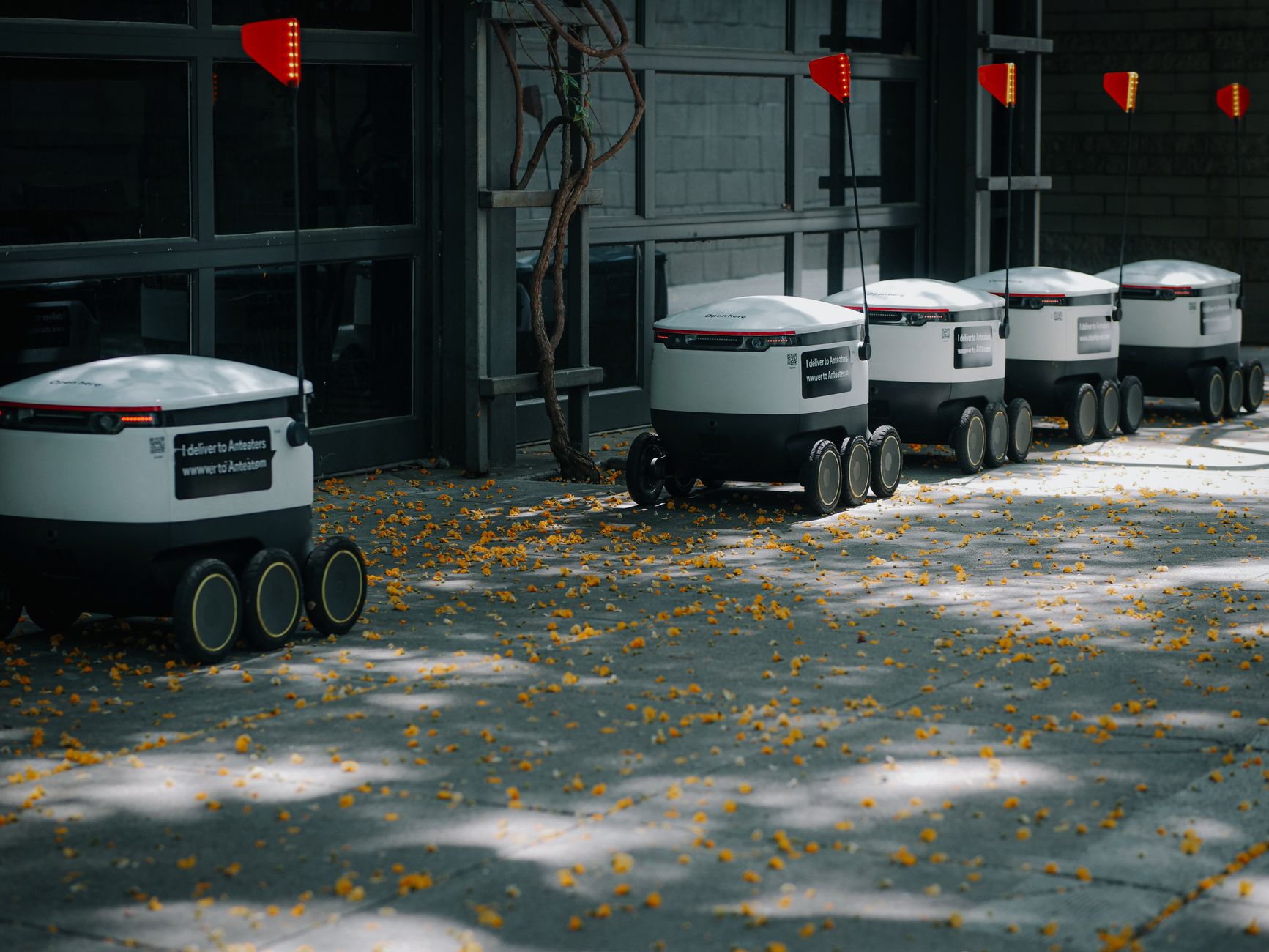

Last-mile delivery, the final store-to-door run, costs far less by robot than by courier at scale. Serve told investors traditional trips cost $8-$10 against less than $1 targeted for robots by removing driver wages. ARK Invest estimated human delivery at $1.60 versus about $0.06 by autonomous sidewalk robot in its ARK Invest analysis of autonomous delivery. ARK Invest names hardware, electricity and remote operators as the main robot costs.
Table of Contents
- What makes robot energy costs so low?
- Why do human courier costs stay high?
- Why do robot operators still lose money?
- Where does each option win today?
What makes robot energy costs so low?
Starship reports more than 10 million autonomous deliveries over 14 million miles with about 125,000 road crossings daily. High trip counts spread hardware costs across many deliveries.
Starship says an average delivery uses about as much energy as boiling a kettle for one cup of tea. Its robots can run up to 18 hours on a charge. Low energy use keeps the variable cost per stop small.
Why do human courier costs stay high?
The New York City Mayor's Office set at least $21.44 per hour before tips for app-based restaurant delivery workers in its city pay announcement. The rule applies since April 2025 and returned over $700 million to more than 60,000 workers, the city says.
ARK Invest estimated road-capable grocery robots could deliver for about 40 cents per trip, roughly one-sixth the cost of a personal car grocery trip. Wages and car costs keep human trips expensive even on short routes.
Why do robot operators still lose money?
The Basin, citing Serve SEC filings, reports Serve lost $101.4 million on $2.7 million revenue in 2025 in its Basin review of Serve filings. The filing shows $1.06 hourly revenue against $12.30 hourly cost, a $55.80 hourly loss.
Early fleets run few paid trips per hour. Fixed costs for robots, supervision and maintenance then swamp revenue. Scale, not vehicle design, is the near-term gap.
Where does each option win today?
Serve pitches robots as compelling for merchants, consumers and platforms like Uber Eats and DoorDash. The Basin, citing its investor deck, says savings depend on dense short trips, high utilization and looser sidewalk rules.
Operators should match robots to short, dense routes first. A spread-out zone with long trips and tight sidewalk limits still favors human couriers.
- dense neighborhoods with many short orders
- high daily use per robot
- clear sidewalk access