
Port automation means using computer-guided cranes, straddle carriers and smaller robots to move shipping containers. Cranes lift boxes between ship and shore, straddle carriers transport and stack them, and robots handle inspection and repetitive yard tasks. Many terminals blend manual driving, remote control and self-guided travel on fixed routes. The practical choice is which task to automate first and what human supervision each machine still needs.
Table of Contents
- How do ship and yard cranes work?
- What do straddle carriers do?
- Where do smaller robots fit in?
- What limits full automation?
- How should a terminal automate one task?
How do ship and yard cranes work?
Ship-to-shore cranes stand on rails along the quay and reach over a docked vessel. The trolley runs along the boom, lowers a spreader and locks onto the box. A spreader is the gripping frame that holds the container corners. In an automated crane, software drives the trolley path, hoist height and landing position.
A remote operator watches cameras and sensors, then confirms pickup, release and any skewed landing. This split keeps repetitive travel automatic and leaves judgment calls with a person. Yard cranes stack boxes in rows for storage and truck pickup. They track each slot so the control system knows where every box sits. Operators intervene for leaning stacks, damaged corner fittings or a truck parked outside the marked bay.
What do straddle carriers do?
A straddle carrier is a tall vehicle on four legs that drives over a container and lifts it into its frame. That shape lets it pick up, carry and set down a box without another lift machine. It links the quay, the stack area and truck lanes. Automated straddle carriers follow mapped lanes using satellite positioning, wheel motion sensors and laser scanners.
Laser scanners measure distance with light pulses and build a live picture of nearby people, vehicles and stacks. The carrier slows or stops when that picture shows a blocked path. Manual and automated carriers often share the same terminal during a transition. Clear lane markings, speed zones and crossing rules keep that mixed traffic predictable. Fleet software assigns jobs, spaces vehicles apart and reroutes around a blocked aisle.
Where do smaller robots fit in?
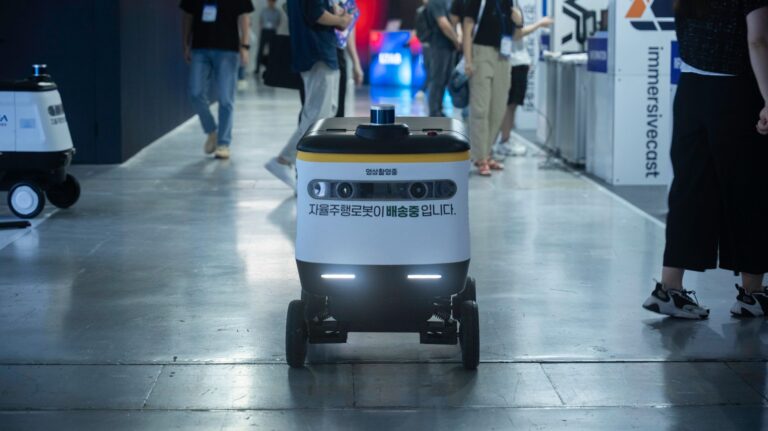
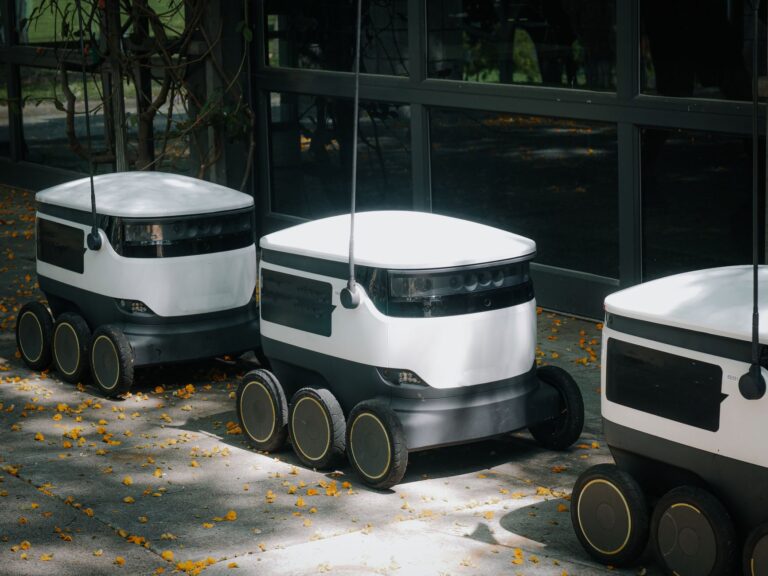
Small robots take dull, dirty or hard-to-reach jobs around cranes and carriers. Wheeled inspection units roll under cranes to check wires, brakes and spreader parts. Crawlers and drones look at ship hulls, high boom joints and stack roofs without scaffolds. Automated guided vehicles move standard boxes on fixed yard paths.
An automated guided vehicle is a low driverless platform that follows set routes at steady speed. It suits short, repeated transfers between quay and stack where the path rarely changes. Sorting, sampling and cleaning robots handle other narrow jobs. Examples include units that read container door marks, scan seals or sweep empty slots. They reduce foot traffic in active driving lanes.
What limits full automation?
Full autonomy struggles where conditions change faster than the map. Heavy rain, spray, dust and low sun can blind cameras and laser scanners. Worn paint, tilted boxes and parked service trucks also break the neat pattern software expects.
Communication gaps cause stops rather than crashes by design. If positioning or fleet messages drop, machines slow down and wait for a fresh signal. Power, tire wear and sensor cleaning set daily limits too, since a dirty lens reads as an obstacle.
- Keep people and manual trucks out of driverless lanes where possible.
- Freeze travel during sensor faults instead of driving by guess.
- Test night, rain and glare modes before raising speed.
- Assign one person to own stops, restarts and handoffs.
How should a terminal automate one task?
Pick one repeated move with clear start and end points, such as quay to one stack block. Map the lanes, mark pedestrian zones and set speed limits before changing software. Train drivers, signalers and maintenance staff on the new stop and restart routine.
Run the route at low speed with a supervisor able to halt every machine. Check pickup accuracy, braking distance, handoff delays and false stops. Fix markings, lighting and radio shadows before adding more routes or machines. Start with one mapped route and expand only after the safety review passes.