
Pudu Robotics received the 36Kr “Most Investor-Attractive AI & Embodied Intelligence Enterprise” Award at the Shanghai World Artificial Intelligence Conference (WAIC 2026) during July 17–20, 2026. The recognition marks a validation of the company’s position as the global leader in commercial service robotics and signals continued confidence from institutional investors in the embodied AI sector. The award comes months after the company closed a USD 150 million funding round in April 2026, bringing its valuation above USD 1.5 billion.
The timing of the award coincided with Pudu’s debut of the PUDU D7, a next-generation semi-humanoid robot, at the conference. Industry analysts note that this recognition reflects not just Pudu’s current market dominance—holding 25% of global revenue share and 23% of shipment volume in commercial service robotics according to Frost & Sullivan—but also investor expectations for the company’s role in scaling embodied AI applications across sectors. The award underscores that investor appetite for embodied intelligence remains strong despite broader economic uncertainty.
Table of Contents
- Why Does the WAIC Award Matter for Pudu’s Market Position?
- Pudu’s Global Market Share and the Competitive Landscape
- The PUDU D7’s Significance in Semi-Humanoid Robotics
- Funding Runway and the Path to Profitability
- Embodied AI’s Dependencies and Practical Constraints
- Investor Sentiment and Capital Inflow in AI Robotics
- The Broader Signal for Commercial Robotics Sector Development
Why Does the WAIC Award Matter for Pudu’s Market Position?
The 36Kr award, granted at one of Asia’s largest AI conferences, serves as external validation of Pudu’s strategic direction during a critical growth phase for humanoid and semi-humanoid robotics. Awards like this typically influence institutional investment decisions and shape perception within enterprise procurement cycles, as corporate buyers often track which robotics companies receive industry recognition. For Pudu, the award provides credibility beyond performance metrics—it signals to potential customers and partners that the investment community views the company as having sustainable competitive advantages. However, awards at major conferences also carry limitations. They measure reputation and investor sentiment at a single moment, not product reliability or long-term market success.
A company can win recognition for innovation but still face execution challenges in manufacturing scale, software updates, or customer support. Pudu’s challenge now is converting this investor confidence into sustained market share growth, particularly as competitors like Boston Dynamics, Agility Robotics, and various Chinese robotics startups intensify development efforts in humanoid systems. The award also reflects the broader shift in how embodied AI is being valued by capital markets. Unlike software AI where marginal costs approach zero, commercial robotics requires sustained capital investment in R&D, manufacturing infrastructure, and field support. The USD 150 million funding round that preceded the award demonstrates that investors remain committed to backing companies with proven commercialization pathways, not just promising prototypes.
Pudu’s Global Market Share and the Competitive Landscape
Frost & Sullivan’s 2025 research ranked Pudu first globally in commercial service robotics by both revenue (25% market share) and unit shipments (23% market share). This dual ranking—leading in both dollar value and volume—is significant because it shows Pudu has captured both high-end enterprise customers who purchase premium systems and broad-market segments where unit volume drives scale. Most competitors operate in one or the other; few dominate both simultaneously. The global commercial service robotics market remains fragmented, with Asia accounting for the largest regional concentration of deployments and development. Pudu’s strength is particularly pronounced in China, Southeast Asia, and increasingly in developed markets like Japan and South Korea.
However, Western markets remain a growth frontier where Pudu faces entrenched competitors and different regulatory expectations. For instance, American and European enterprises often require specific certifications, compliance documentation, and local support infrastructure that differ from Asian requirements. A limitation of market share leadership in this sector is that the overall commercial robotics market is still relatively small—only several billion dollars annually—compared to industrial automation or consumer electronics. Pudu’s 25% of this smaller market represents a leading position but also means the company’s growth is capped until the total addressable market expands. The PUDU D7 represents Pudu’s bet that semi-humanoid robotics will unlock new use cases and accelerate market growth beyond what wheeled or fixed-form-factor robots can accomplish.
The PUDU D7’s Significance in Semi-Humanoid Robotics
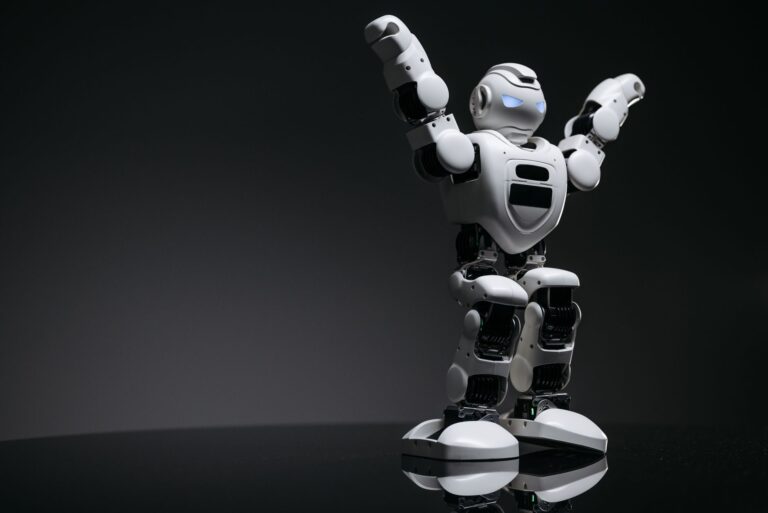
The PUDU D7’s offline global debut at WAIC 2026 marks a strategic pivot for a company historically known for wheeled service robots. Semi-humanoid design—featuring a humanoid upper body on a mobile base rather than fully bipedal locomotion—offers specific advantages: the familiar human-like arm manipulation and interaction model makes training and deployment faster for certain tasks, while the wheeled base provides stability and battery efficiency compared to bipedal systems. The tradeoff is that semi-humanoid systems are mechanically complex, requiring sophisticated joint control and higher maintenance than simpler wheeled robots. Pudu’s move into semi-humanoid robotics is not isolated innovation; it reflects industry-wide recognition that tasks requiring dexterity, social interaction, or navigation in unconstrained human spaces may demand embodied forms closer to human morphology.
Competitors like Boston Dynamics, Tesla’s Optimus program, and various Chinese startups are pursuing similar strategies. Pudu’s advantage is that it brings manufacturing expertise and existing customer relationships in hospitality, delivery, and facility management—sectors where a semi-humanoid robot could augment existing workflows more seamlessly than a purely wheeled platform. The timing also matters. Semi-humanoid systems have become feasible at commercial scale only in the last 2–3 years due to advances in affordable actuators, mobile manipulation stacks, and AI-driven motion planning. Pudu’s entry suggests the company believes this technology window is now open and that first-mover advantages in commercial deployment—not just R&D—will compound in this category.
Funding Runway and the Path to Profitability
The USD 150 million April 2026 funding round and valuation above USD 1.5 billion indicate that venture and strategic investors believe Pudu has a viable path to profitability at scale. For a capital-intensive business like robotics, funding runway is critical; unlike software startups that can operate on minimal capital, robotics companies require continuous investment in manufacturing, supply chain resilience, and field service operations. With recent capital secured, Pudu can fund 2–3 years of aggressive product development and market expansion. However, the gap between investor confidence and actual profitability remains substantial. Most commercial robotics companies operate at a loss during their scaling phase, subsidizing deployment costs and customer support to win market share.
Pudu’s current market leadership does not guarantee profitability; it means the company has been more successful than peers at managing this transition, but execution risk persists. Rising component costs, competition driving down deployment fees, and unexpected technical challenges in bringing the PUDU D7 to mass production could all compress margins. Profitability timelines in robotics typically extend 5–10 years from first commercial deployment. Pudu’s earlier generations achieved this faster than some peers, suggesting operational discipline, but the D7 represents a higher-complexity product where manufacturing costs and software maturity curves are less certain. Investors’ continued backing despite these risks reflects confidence in Pudu’s management and execution track record, not a guarantee of near-term profits.
Embodied AI’s Dependencies and Practical Constraints
The award’s emphasis on “Embodied Intelligence Enterprise” reflects how investors now frame commercial robotics: not as mechanical automation but as AI-driven systems that learn, perceive, and adapt in real-world environments. This framing is valuable but also masks real constraints. Embodied systems depend on reliable perception (cameras, lidar), robust local computation for real-time decisions, connectivity for remote operation when needed, and continuous model updates—all of which introduce operational complexity that static industrial robots do not face. Deploying embodied robots at scale requires solving problems beyond hardware design: How do updates to AI models get rolled out safely without disrupting service? How are robots secured against adversarial inputs or tampering? How do operators manage liability when a robot causes an accident? These questions lack fully mature answers in the industry, and companies like Pudu must often develop proprietary solutions or establish new precedents.
This operational overhead is not captured in equipment cost estimates but represents real friction in adoption. Another constraint is that embodied robots’ effectiveness depends on the environment they operate in. A restaurant with cramped aisles, complex seating arrangements, or unpredictable human behavior remains difficult for current robots to navigate autonomously, even with advanced perception and planning. Pudu’s deployment track record is strong, but field reports also show that operators often use robots in more controlled scenarios than promotional materials suggest—tasks like delivery in open spaces, cleaning in standardized environments, or reception duties in low-traffic areas. Expanding to truly unconstrained, unpredictable human spaces will require both hardware robustness and AI advances that may take years to mature.
Investor Sentiment and Capital Inflow in AI Robotics
The 36Kr award reflects a period of renewed institutional enthusiasm for robotics after earlier hype cycles that disappointed investors. Unlike the mid-2010s, when venture capital flowed into many robotics startups without clear commercialization paths, current funding is more selective and directed toward companies with demonstrated revenue, existing customer bases, and clear product roadmaps. Pudu’s award and recent funding round exemplify this maturing capital environment. Capital inflow into embodied AI remains volatile, however.
A major setback—such as a high-profile robot malfunction, supply chain disruption, or failed product launch by a well-funded competitor—could shift investor sentiment rapidly. Conversely, breakthroughs in AI reasoning or manipulation could trigger another funding surge. Pudu’s position as market leader provides some insulation from sentiment swings, but the company is not immune. Strategic investors often condition continued support on hitting deployment targets and revenue milestones, not awards and recognition alone.
The Broader Signal for Commercial Robotics Sector Development
Pudu’s award and the PUDU D7 debut signal that commercial robotics is entering a phase where the market leader is investing in next-generation form factors rather than optimizing existing ones. This typically occurs when a company believes the current product category is maturing and new use cases require different embodied designs. Similar transitions occurred in mobile robots and drones when market leaders shifted from research platforms to purpose-built commercial systems.
For customers and enterprises considering robotics deployment, Pudu’s moves suggest that now is a window to invest in commercial robots across use cases—hospitality, logistics, facility management, delivery—before the competitive landscape solidifies further around specialized form factors. Early adopters who understand their operational constraints can deploy proven systems like Pudu’s wheeled robots while also piloting emerging technologies like the D7. Companies that wait risk missing the window where multiple viable options exist and may face lock-in once specific robotics platforms dominate specific sectors.