
NVIDIA is indeed positioning itself as the next backbone infrastructure for the robotics industry—not as a robotics manufacturer itself, but as the foundational platform that robotics companies build upon. Unlike past attempts to create a universal robot, NVIDIA is following a more successful playbook: becoming the Android of robotics by providing the software stack, simulation tools, foundation models, and computational infrastructure that enable dozens of manufacturers to deploy AI-powered robots. At CES 2026, NVIDIA unveiled a comprehensive Physical AI stack including Cosmos Transfer 2.5 and Cosmos Predict 2.5 (world models for synthetic data generation), Cosmos Reason 2 (a reasoning vision language model), and Isaac GR00T N1.6 (a vision language action model for humanoid robots)—the layers that let any robot company build generalist robots without starting from scratch.
The evidence that this strategy is working is already visible in real production environments. Siemens began testing an NVIDIA-powered humanoid robot in a German factory in April 2026, Boston Dynamics, Caterpillar, Franka Robotics, Humanoid, LG Electronics, and NEURA Robotics have all committed to building on NVIDIA’s platform rather than developing their own AI infrastructure. This isn’t theoretical positioning—these companies are already shipping robots that run on NVIDIA’s models and frameworks. What makes this different from previous robotics efforts is that NVIDIA isn’t trying to own the robot; it owns the backbone that makes different kinds of robots possible.
Table of Contents
- Why a Robotics Backbone Matters More Than a Robotics Company
- The Physical AI Stack That Enables Generalist Robots
- Industry Adoption Is the Real Validator
- Computational Infrastructure as a Competitive Moat
- The Open Model Strategy Builds Industry Trust
- The Infrastructure Expansion Catalyst
- What This Means for the Future Robotics Landscape
- Conclusion
Why a Robotics Backbone Matters More Than a Robotics Company
A robotics backbone is fundamentally different from a robotics manufacturer. A manufacturer builds one type of robot and tries to sell it into as many industries as possible—a strategy that has failed repeatedly because different tasks require different hardware, shapes, and capabilities. A backbone provider, by contrast, supplies the tools that let specialized manufacturers build what they need. Android didn’t make one phone; it made it possible for hundreds of companies to make thousands of different phones. nvidia‘s Physical AI strategy applies the same logic: the company provides the models, simulation environment (Isaac Lab-Arena), training data generation tools (Cosmos models), and edge-to-cloud compute framework (OSMO) that let robotics manufacturers focus on their hardware and domain expertise while standing on proven AI foundations.
The practical advantage is time-to-market and cost reduction. A robotics company no longer needs to spend years developing world models from scratch or collecting millions of hours of robot video data. Instead, they can leverage NVIDIA’s Cosmos models to generate synthetic training data, use Isaac GR00T N1.6 as a starting point for robot control, and deploy on NVIDIA’s OSMO framework. this doesn’t eliminate the need for domain expertise—a Caterpillar construction robot faces different challenges than a Boston Dynamics delivery bot—but it removes the foundational research burden. The risk for any backbone provider is that companies eventually become less dependent on it or that competitors build equally good alternatives. NVIDIA isn’t immune to this, but the head start in data, compute power, and industry partnerships makes it difficult to catch up quickly.
The Physical AI Stack That Enables Generalist Robots
NVIDIA’s robotics backbone rests on three layers of foundation models announced at CES 2026, each solving a different problem in robot development. The Cosmos models (Transfer 2.5 and Predict 2.5) generate high-quality synthetic training data by learning patterns from real-world video and predicting future frames—this matters because robots need millions of examples to learn from, and collecting that data manually is expensive and slow. Cosmos Reason 2 acts as a reasoning vision language model that can interpret what a robot sees and decide what it should do next. Isaac GR00T N1.6 sits at the top as a vision language action model specifically trained for humanoid robots, handling the translation from high-level commands (“pick up that object”) to low-level motor control.
The limitation here is that generalist models have tradeoffs with specialized models. A vision language action model trained broadly across robot data may not perform as well on a highly specialized task—a surgical robot or precision manufacturing robot might still need custom training. Additionally, these models are only as good as the data NVIDIA can source or generate; if a particular robotics domain is underrepresented in training data, generalist models may perform poorly. Companies adopting NVIDIA’s stack aren’t replacing all their custom work; they’re getting a strong foundation that reduces risk and accelerates development. The Isaac Lab-Arena evaluation platform lets manufacturers test their robots in simulation before hardware deployment, which is crucial for catching issues early and reducing dangerous trial-and-error on physical robots.
Industry Adoption Is the Real Validator
The fact that established robotics companies are adopting NVIDIA’s platform—not building alternatives—suggests the backbone strategy is working. Boston Dynamics, an autonomous systems leader, chose to build on NVIDIA’s stack rather than develop independent models. Caterpillar, with decades of construction equipment expertise, partnered with NVIDIA instead of pursuing internal AI development. Franka Robotics, NEURA Robotics, Humanoid, and LG Electronics have all committed to the platform. This isn’t because NVIDIA forced them; it’s because the ROI was clear—using NVIDIA’s foundation models and tools was faster and cheaper than alternatives.
The most telling real-world example is the Siemens factory trial from April 2026. Siemens deployed an NVIDIA-powered humanoid robot in a German manufacturing facility—not in a lab or controlled demo, but in actual factory conditions with actual work to do. This trial validated that NVIDIA’s models and stack work in industrial settings with real physical constraints, temperature variations, and unscripted scenarios. The robot didn’t just perform pre-programmed tasks; it had to handle variability, interact with humans, and adapt to factory conditions. If NVIDIA’s stack couldn’t handle real manufacturing environments, a company as rigorous as Siemens wouldn’t have deployed it. The industrial adoption signals that NVIDIA has moved beyond theoretical robotics AI into practical infrastructure.

Computational Infrastructure as a Competitive Moat
Part of NVIDIA’s backbone strategy extends beyond software into the computational infrastructure supporting it. Google Cloud’s G4 VMs, built to support robotics applications, provide the edge-to-cloud coordination layer that allows robot fleets to synchronize across logistics centers with millisecond precision. This is crucial for autonomous warehouses and delivery systems where timing and coordination matter—a fleet of robots needs to communicate and coordinate without the latency that would result from sending every decision to a distant cloud server. NVIDIA’s OSMO framework handles the orchestration between edge devices (the robot itself or a nearby edge computer) and cloud resources, allowing real-time processing where it matters and leveraging cloud compute for heavier analysis.
This mirrors how Android abstracted the hardware layer—robot manufacturers don’t need to become cloud infrastructure experts; they use OSMO to handle that abstraction. The tradeoff is dependency: robotics companies adopting this infrastructure become somewhat locked into NVIDIA’s ecosystem, at least for the short to medium term. Moving to a competitor’s stack would require retraining models and rewriting integration code. This is economically rational for NVIDIA and a calculated risk for adopting manufacturers, but it’s a structural advantage that’s difficult for competitors to overcome.
The Open Model Strategy Builds Industry Trust
NVIDIA’s approach to open-sourcing certain components of its robotics stack (Isaac Lab-Arena, select model weights) is strategically important for establishing a backbone. A backbone only works if developers trust it and can see inside it. Closed, proprietary systems trigger fear of lock-in and vendor control. By open-sourcing evaluation platforms and publishing technical details about Cosmos and Isaac GR00T N1.6, NVIDIA signals confidence in its technology and gives developers room to customize and extend. This is a lessons-learned from Android, where open sourcing the core OS (while controlling key proprietary layers) built developer trust at scale.
The limitation is that open models create opportunities for competitors. Another AI company could in theory download Isaac Lab-Arena, train competing vision language action models, and build an alternative backbone. However, the infrastructure advantage—NVIDIA’s GPUs, the data NVIDIA has accumulated, the partnerships NVIDIA has established—creates a moat that’s hard to breach through open source alone. A startup with better models but no manufacturing partnerships and no industry relationships would still lose to NVIDIA. The real competition isn’t from better open-source tools; it’s from companies that can match both the technology and the ecosystem, which today appears unlikely in the near term.
The Infrastructure Expansion Catalyst
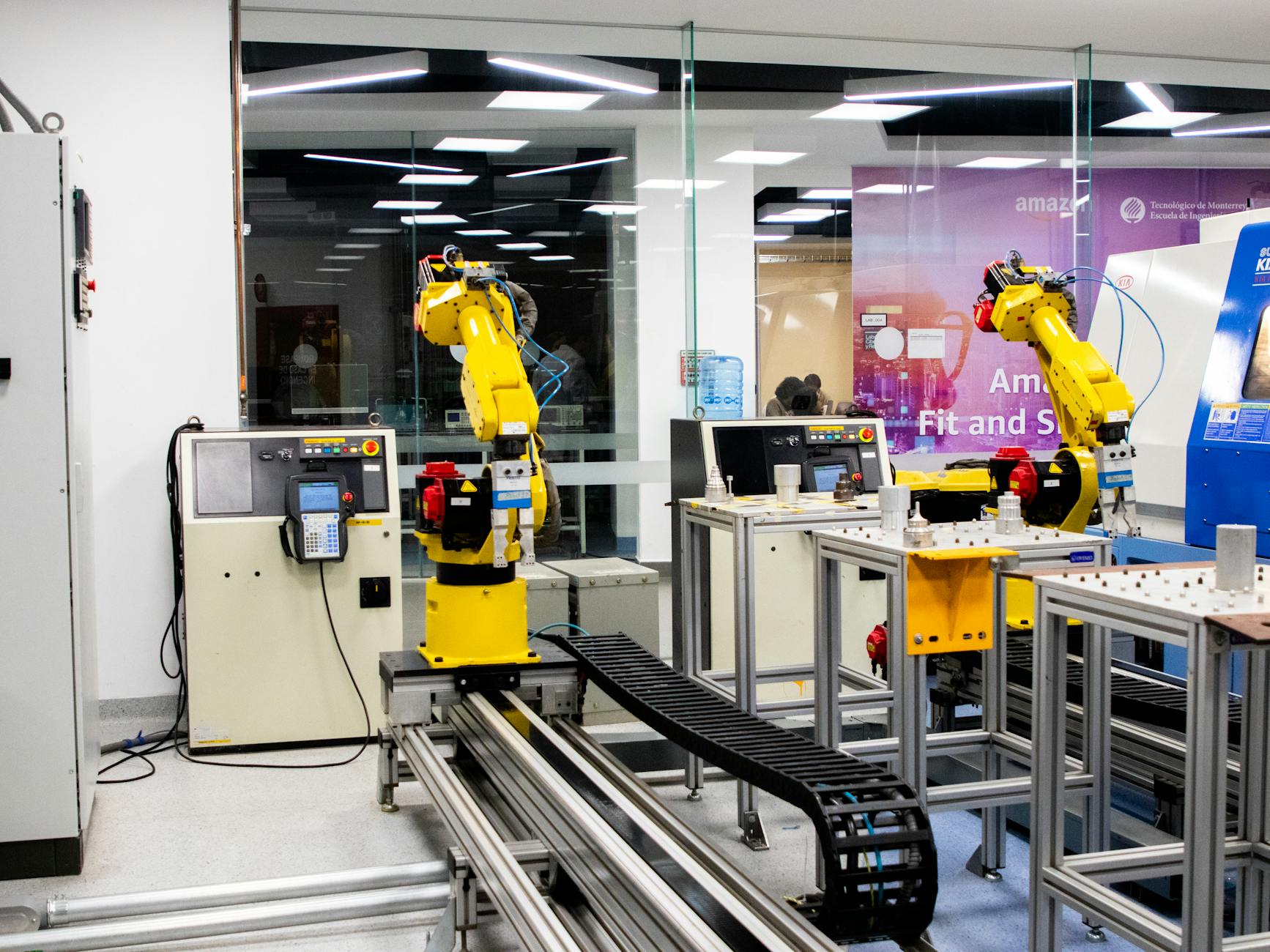
A April 2026 report highlighted the rapid expansion of robotics infrastructure globally, with NVIDIA’s AI advancement cited as a primary driver. This expansion isn’t accidental—it reflects the fact that when a reliable foundation becomes available, investment and deployment accelerate. Before NVIDIA’s Physical AI stack, robotics companies faced a bootstrap problem: developing custom models was expensive, so only large companies could afford to do it, which limited competition and slowed innovation.
With a credible backbone in place, smaller robotics companies can access foundational models and focus on differentiation in hardware or application-specific training. This expansion will likely accelerate further as more real-world deployments like the Siemens trial prove viability. Autonomous trucking, logistics automation, and manufacturing are the nearest near-term opportunities, but the same backbone approach could extend to healthcare robotics, agricultural robotics, and service robotics as the ecosystem matures.
What This Means for the Future Robotics Landscape
If NVIDIA successfully establishes itself as the robotics backbone, the industry will likely stratify: foundational model providers (NVIDIA and its competitors) at the base, specialized hardware manufacturers building on that foundation, and application-specific robot deployments at the top. This is fundamentally different from the current landscape, where robotics companies often try to own all layers. The winner in this future isn’t necessarily the company that makes the best robot; it’s the company that controls the layer that all robots depend on. The wildcard is whether another company can build a competing backbone quickly enough.
Google, with its AI capabilities and cloud infrastructure, has the resources to try. Open-source alternatives might eventually emerge. But NVIDIA’s current lead in GPUs, data, partnerships, and deployed success is substantial. The next five years will determine whether NVIDIA has genuinely achieved “Android of robotics” status or whether the robotics market is too diverse and specialized for a single backbone to dominate.
Conclusion
The next NVIDIA in robotics may not be a robotics company at all—it may be NVIDIA itself, but not in the way the question initially suggests. NVIDIA isn’t trying to build the best humanoid robot or the best autonomous vehicle; it’s building the computational and AI foundation that makes those possible for others. This backbone strategy—proven at CES 2026, validated by major industry partnerships, and tested in real factory environments by Siemens—represents a fundamental shift from previous failed attempts to create universal robotics platforms. By focusing on infrastructure rather than products, NVIDIA is positioning itself as the enabling layer rather than the final product, which is a more defensible and scalable business model.
For robotics companies, the strategic question is clear: adopt the backbone and focus on differentiation, or attempt to build everything from scratch. So far, most are choosing to adopt. For investors and industry observers, the implication is that the robotics boom will increasingly benefit infrastructure providers—chip makers, model providers, and cloud platforms—as much as robot manufacturers. The next decade of robotics advancement will likely depend on how well NVIDIA executes this backbone strategy and how quickly competitors respond.