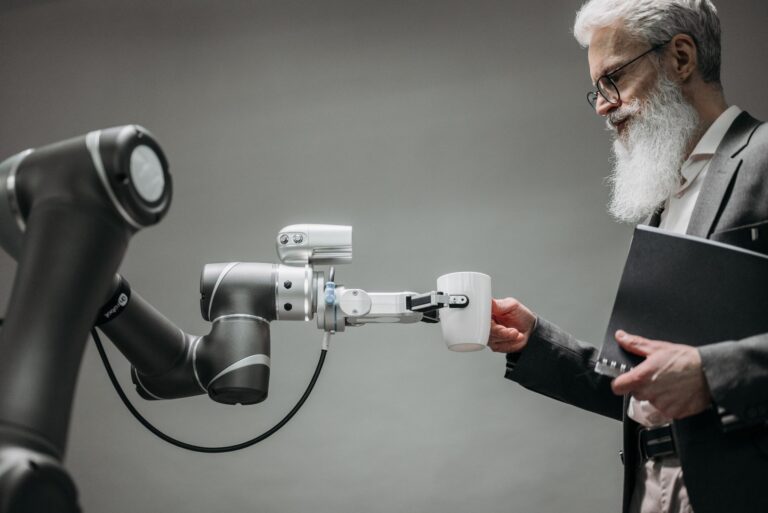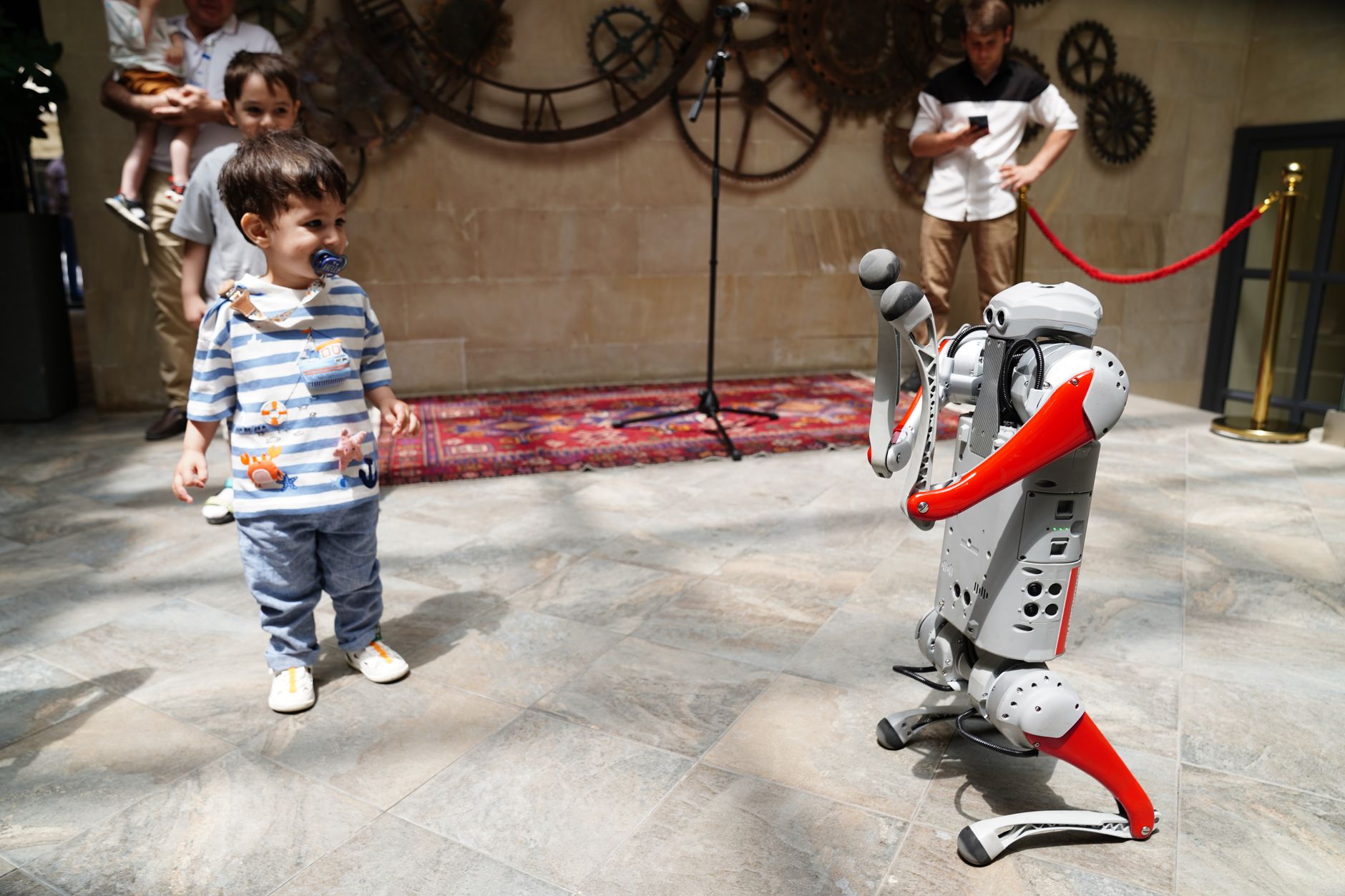

October 2026 brings new developer platforms, warehouse and home demos, and touch-aware models for language-driven robots. Natural language processing robotics means robots that take spoken or written instructions and turn them into physical actions. Developers get GPU-accelerated building blocks and reusable skills, while research teams show arms and humanoids following step-by-step language. The practical shift is from single commands to longer tasks guided by vision, language, and touch.
Table of Contents
- Which developer platforms matter now?
- What can warehouse robots do with language?
- Can humanoids tidy unfamiliar rooms yet?
- How do voice and touch close the gap?
Which developer platforms matter now?
NVIDIA released Isaac ROS 5.0 at ROSCon Toronto on Sept. 24, adding GPU-accelerated packages, reusable setup and manipulation skills, Ubuntu 24.04 support, and agent-ready documentation, according to TechRepublic in its ROSCon report. The goal is to let developers and AI agents generate working ROS applications from intent.
NVIDIA then positioned GTC Berlin on Oct. 20-22 as the next showcase for humanoid and arm partners using Isaac Sim, GR00T, and Isaac ROS together. Google DeepMind had already released Gemini Robotics 2 in July, with whole-body control, five-finger dexterity, planning, and multi-robot work shown on Apptronik Apollo 2.
What can warehouse robots do with language?
Viam debuted BoxBot at IROS 2026 in Pittsburgh, held Sept. 27-Oct. 3, where an arm cuts tape by visual servoing and then opens box flaps with a vision-language-action model trained on human demonstrations, according to PR Newswire in its IROS debut report.
The two-step design splits precise cutting from flexible opening. That split matters for automation buyers. Visual servoing handles the straight, force-sensitive cut. Learned language-action behavior handles varied flap positions, tape residue, and box sizes.
Can humanoids tidy unfamiliar rooms yet?
Stanford Movement Lab and Caltech showed HomeBody around Sept. 26-27, with a Unitree G1 tidying an unfamiliar kitchen step-by-step under OpenAI GPT-6 Astra. No learned vision-language-action policy sits between reasoning and motor control.
The result looks useful but remains lab-bound. Curated demos, local inference, and controlled lighting still limit transfer to homes and factories. Unitree was expected to ship NVIDIA Isaac GR00T H2 Plus hardware in October, while XPeng planned an Oct. 24 fifth-generation humanoid reveal.
How do voice and touch close the gap?
Slovak Technical University researchers published SMaRTAban on Sept. 21, a LangGraph ReAct agent on quadruped Artaban. It takes English and Slovak voice through Whisper, adds on-demand GPT-4o vision, uses interruptible tools, and answers by speech.
Daimon Robotics launched Daimon-TWM on Sept. 29, extending its vision-tactile-language-action design to combine touch, vision, prediction, and real-time control, according to Robotics and Automation News in its launch report. Touch helps where cameras fail: slip, stiffness, contact, and grip force.
- Test voice commands in both supported languages before a pilot.
- Log interruptions, retries, and tool calls for safety review.
- Add tactile checks for fragile, soft, or slippery picks.
You Might Also Like
- What Is New With Tutorials and DIY Robotics in September 2026? Latest company releases and research papers and Key Takeaways
- What Is New With Sensors and Perception Robotics in September 2026? Latest company releases and research papers and Key Takeaways
- What Is New With Robotics Companies in September 2026? Latest company releases and research papers and Key Takeaways