
Rockwell Automation dominates factory robotics through a combination that competitors struggle to replicate: deep integration between industrial software and robotic systems, a 50+ year track record of solving manufacturing problems, and an ecosystem of partnerships that locks customers into their platform. While newer robotics companies focus on cutting-edge hardware or software alone, Rockwell’s real advantage is that they sell a complete factory operating system where robots are one component, not the centerpiece. A food and beverage manufacturer might standardize on Rockwell’s ControlLogix controllers, CompactLogix edge systems, FactoryTalk software, and collaborative robotics through their FANUC partnership—replacing individual components later becomes expensive and risky when they’re all designed to work seamlessly together.
This integrated approach isn’t flashy but it’s durable. Rockwell Automation holds roughly 25% of the industrial automation market globally, with robotics being a growing division that leverages the company’s existing customer relationships, IT expertise, and control software dominance. Their competitors—ABB, KUKA, Siemens—excel in specific robotics categories but lack Rockwell’s software depth or manufacturing legacy. Smaller rivals like Universal Robots invented collaborative robotics but operate almost independently from broader factory control systems, a handicap when enterprises prefer single-vendor accountability.
Table of Contents
- What Makes Rockwell Automation’s Software Ecosystem Unbeatable?
- The Legacy Advantage in Manufacturing Environments
- Financial Scale and R&D Investment
- Integration with Collaborative Robotics and Newer Trends
- Cybersecurity and Regulatory Compliance Burden
- Global Supply Chain and Manufacturing Footprint
- The Real Barrier to Entry for Competitors
What Makes Rockwell Automation’s Software Ecosystem Unbeatable?
Rockwell’s advantage begins with software, not hardware. FactoryTalk, their industrial operating system, runs production monitoring, predictive maintenance, quality control, and supply chain visibility across thousands of factories worldwide. When a robotics company sells just robots, it answers one question: “Can the robot move parts?” Rockwell answers six: “Can the robot move parts, can we see real-time performance, can we predict failures, can we track compliance, can we integrate this with our legacy conveyor system, and can we scale this to our other facilities?” Most enterprises already run FactoryTalk or other Rockwell software; adding robots from Rockwell rather than a competitor means one security layer, one training program, one vendor to call. This matters operationally. A car door manufacturer using Universal Robots’ cobots might integrate them with multiple systems—a third-party MES for production scheduling, a separate vision system for quality, a distinct network for data logging.
Rockwell’s vertically integrated approach means the cobot communicates directly with the ControlLogix controller managing the assembly line, reports telemetry through FactoryTalk, and the OPC-UA protocol handles data exchange seamlessly. When something breaks, debugging is faster because the entire chain shares the same diagnostic framework. A limitation, however: this tight integration can make it harder for customers to switch. Migrating away from Rockwell isn’t just replacing robots; it’s rewriting the software architecture that runs the factory. Over a decade, this creates vendor lock-in that competitors like abb actively exploit in their sales pitches. For customers, this is a tradeoff—simplicity now, reduced flexibility later.
The Legacy Advantage in Manufacturing Environments
Rockwell has installed nearly 30 million controllers and hundreds of millions of I/O points globally since their founding in 1903. This means most large manufacturers have Rockwell systems already running critical production lines—systems that have proven reliable over 10, 20, or 30 years. When that manufacturer needs a new robotic arm for emerging production demands, specifying Rockwell feels lower-risk than introducing a new vendor whose equipment must integrate into an existing Rockwell backbone. This legacy advantage is particularly strong in aerospace, automotive, and pharmaceuticals where system reliability and traceability are non-negotiable. A pharmaceutical plant can’t swap control systems easily; regulatory approval and validation testing take months.
Rockwell’s presence in these industries means their robotics integrate into well-understood, pre-approved architectures. A startup robotics company, by contrast, enters these markets facing institutional resistance and validation overhead, regardless of technical superiority. The downside: Rockwell’s robotics portfolio can feel conservative. Their product names—CollaborativeWorx, a partnership with fanuc for light collaborative arms—are functional but lack the brand momentum of brands like ABB’s GoFa or KUKA’s LBR. Younger manufacturers, especially in startups and small-batch operations, sometimes perceive Rockwell as “legacy,” not innovative. This perception, though often unfair, has allowed nimble competitors like Techman Robot and Stäubli to gain share in segments where Rockwell’s market presence is weaker.
Financial Scale and R&D Investment
Rockwell Automation’s annual revenue exceeds $9 billion, with recurring software revenue growing 20% annually. This scale funds R&D that smaller competitors can’t match. The company invests roughly $500 million per year in research and development, enabling continuous expansion into AI-driven predictive maintenance, vision systems, and autonomous mobile robotics. In 2023, Rockwell acquired Plex, a cloud ERP system, and Apex Group, a motion control company, cementing its strategy to offer end-to-end digital ecosystems for factories. This financial advantage compounds. Rockwell can afford to acquire three acquisition targets a year, can maintain 24/7 support across 80+ countries, and can offer aggressive pricing on software bundles that reduce total cost of ownership for large manufacturers.
Competitors like Universal Robots and KUKA operate at lower absolute costs but with smaller R&D budgets and more specialized product lines. When a manufacturing VP needs to justify a $10 million factory automation project, Rockwell’s scale, support infrastructure, and financial stability are compelling reassurances. Financially, this translates to stickiness. Once a customer adopts Rockwell, annual software subscriptions, maintenance contracts, and cloud services create recurring revenue that exceeds the initial hardware sale. A cobot purchased today might represent $150,000 in hardware, but $30,000 per year in software and support over a seven-year lifecycle. Rockwell’s business model ensures customers remain engaged long-term, unlike competitors who rely mostly on one-time hardware sales.
Integration with Collaborative Robotics and Newer Trends
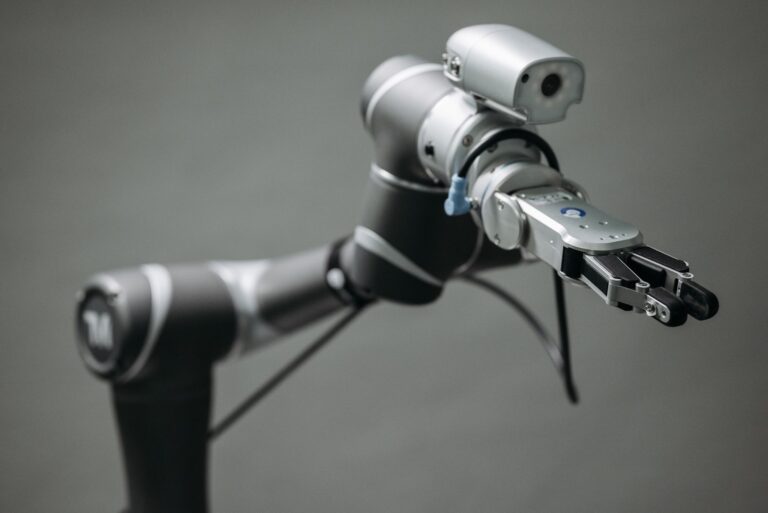
Rockwell didn’t invent collaborative robotics—Universal Robots did in 2005—but Rockwell acquired pockets of that expertise and parlayed their software strength into collaborative systems. Their partnership with FANUC, one of the world’s largest industrial robot manufacturers, created CollaborativeWorx, a line of lightweight collaborative arms designed to work alongside human operators. These arms run on Rockwell’s control architecture, meaning a manufacturer already using ControlLogix can add collaborative automation without retraining operators or redesigning the control network. In contrast, Universal Robots remains somewhat standalone; customers implementing Universal’s cobots often need separate software integration, separate safety validation, and separate training. This isn’t Universal’s fault—they pioneered the space—but it’s an advantage Rockwell leverages.
For a manufacturer contemplating both traditional industrial robots and collaborative cobots across their facility, a unified vendor story from Rockwell simplifies procurement and reduces total project risk. The comparison, however, isn’t black-and-white. Universal Robots’ cobots are lighter, cheaper, and easier to redeploy, which appeals to small manufacturers and job shops. Rockwell’s integrated approach scales better in large, complex operations. A job shop retooling every month might prefer Universal’s mobility; a high-volume automotive supplier prefers Rockwell’s reliability and planning integration.
Cybersecurity and Regulatory Compliance Burden
Factory automation now faces unprecedented cybersecurity scrutiny. Industrial control systems are increasingly networked, accessible to cloud dashboards, and vulnerable to ransomware and data theft. Regulatory frameworks like NIST Cybersecurity Framework, IEC 62443, and sector-specific rules in pharmaceuticals and defense place heavy compliance burdens on manufacturers. Rockwell Automation has invested heavily in security architecture—encrypted communication, role-based access, audit logging, and security updates—because they operate at the scale where a single breach could affect thousands of factories. Smaller robotics vendors sometimes treat security as an afterthought. A new collaborative robot startup might open an API without proper authentication, or push infrequent security updates, or lack the infrastructure for enterprise-grade encryption.
When a pharmaceutical manufacturer evaluates a robotics vendor, security maturity and regulatory alignment are non-negotiable. Rockwell’s security posture, combined with their experience navigating FDA and ISO standards, makes them the safer choice. A serious warning: Rockwell’s systems, like all industrial control systems, remain targets. Several zero-day exploits affecting Rockwell ControlLogix systems have been disclosed in recent years. The company’s advantage isn’t immunity from security threats—it’s responsiveness. Rockwell has the staffing and processes to patch vulnerabilities quickly and can coordinate industry-wide responses when threats are widespread. Smaller vendors lack this operational maturity, leaving customers more exposed.
Global Supply Chain and Manufacturing Footprint
Rockwell Automation manufactures components across multiple continents and has supply chain resilience that newer robotics companies are still building. During the 2021–2022 semiconductor shortage, Rockwell’s scale and diversified sourcing meant shorter lead times compared to competitors who rely on single suppliers or geographically concentrated production. This resilience became a major selling point—when a customer could order a Rockwell robotic system with a three-month lead time versus a competitor’s nine-month wait, the choice was obvious.
Rockwell operates manufacturing facilities in Wisconsin, Tennessee, and multiple countries overseas, along with assembly partners across Europe and Asia. This geographic distribution gives customers in different regions faster delivery, local support, and supply chain stability. In industries like automotive and consumer goods, where production schedules are tight and disruption is costly, supply chain reliability is often the deciding factor between vendors.
The Real Barrier to Entry for Competitors
Rockwell Automation doesn’t win in factory robotics because their individual robots are technically superior—they often aren’t. ABB’s IRB 6700 is arguably more precise, KUKA’s LBR is more agile, and Universal’s cobots are more accessible. Rockwell wins because competitors must replicate an entire ecosystem to compete: 50+ years of customer relationships, a software platform running in thousands of facilities, a support network spanning 80+ countries, and the financial capacity to acquire adjacent capabilities like ERP systems and edge computing. A startup building a better robot solves one piece of that puzzle. Rockwell, by contrast, already owns the factory.
This ecosystem advantage compounds with time. Every new customer using Rockwell’s software generates data that improves the company’s AI-driven maintenance algorithms. Every production line running FactoryTalk collects patterns that inform the next version of their mobile robotics or vision systems. Competitors race to catch up, but the gap widens because Rockwell’s installed base continuously feeds innovation. For manufacturers choosing between vendors, the question isn’t “Which robot is best?” It’s “Which vendor will still be supporting my system in 20 years, and which one integrates cleanly with my factory’s existing control architecture?” Rockwell’s answer to both is more credible than any alternative in the market.
- —