
UMAC has established itself as a foundational supplier to the drone robotics industry by developing and manufacturing critical motor components and propulsion systems during the sector’s critical early growth phase. The company’s timing in the market—entering when commercial drone adoption was still emerging—positioned it to become a trusted supplier for manufacturers building the foundational platforms that would later define the industry. From the early DJI Phantom series to various industrial inspection drones, UMAC’s brushless motors and control systems have powered many of the aircraft that helped transition drone technology from hobbyist experiments to professional tools.
The significance of UMAC’s early entry lies not just in market timing, but in the engineering solutions it provided when the industry faced genuine technical constraints. Early drone designers needed lightweight, reliable motors with high thrust-to-weight ratios and predictable failure modes—problems that weren’t easily solved with off-the-shelf automotive or industrial components. UMAC’s specialization in this gap made the company essential infrastructure for a generation of drone manufacturers who needed components they could reliably integrate into evolving designs.
Table of Contents
- What Made UMAC Essential During Drone Robotics’ Early Growth?
- Component Standardization and the Limits of Early Supplier Dominance
- Specific Applications That Defined UMAC’s Market Position
- Manufacturing Partnerships and the Economics of Early Supplier Integration
- Technical Evolution and the Challenges of Staying Ahead
- Supply Chain Resilience and Geographic Risk
- UMAC’s Evolution and the Future of Specialized Propulsion Supply
- Conclusion
What Made UMAC Essential During Drone Robotics’ Early Growth?
umac‘s core advantage was precision engineering at the exact moment the industry needed it most. Between 2008 and 2015, as commercial drone platforms were transitioning from prototype to production, manufacturers faced a critical constraint: available motor technology wasn’t designed for the duty cycles and size requirements that drones demanded. UMAC’s brushless direct-drive and geared motor systems offered the combination of controllability and efficiency that made reliable multi-rotor flight possible at consumer and professional scales.
The company’s supply relationships became the connective tissue binding together the emerging drone ecosystem. OEMs that might have otherwise sourced motors from generic industrial suppliers or attempted in-house motor development found that standardized UMAC components reduced integration time and improved product reliability. This wasn’t simply a vendor relationship—it was a technical partnership that allowed drone manufacturers to focus on flight control algorithms, mechanical design, and software rather than reinventing electric motor engineering. The difference between success and failure in early commercial drone platforms often came down to propulsion reliability, a domain where UMAC had already invested years of specialization.

Component Standardization and the Limits of Early Supplier Dominance
While UMAC’s early market position created significant dependencies, standardization also exposed limitations that became apparent as the drone industry matured. As drone manufacturers grew larger and more sophisticated, some vertically integrated their motor production or shifted to suppliers offering lower costs in emerging markets. The company’s strength in the early era—being the trusted technical partner during uncertainty—paradoxically became a vulnerability when the market shifted toward commoditization and price competition.
UMAC’s focus on precision and reliability meant premium pricing relative to eventual commodity suppliers. A manufacturer paying for UMAC motors in 2012 was investing in quality assurance and technical support that justified the cost when the technology itself was unproven at scale. By 2018, when brushless motor design had become more standard and Chinese manufacturers had caught up technically, that premium became harder to justify for price-sensitive markets. This illustrates a broader risk for early specialized suppliers: the very innovations that create initial dominance can become table stakes rather than differentiators as industries mature.
Specific Applications That Defined UMAC’s Market Position
UMAC’s motors became synonymous with high-reliability industrial applications where propulsion failure carried significant costs. Inspection drones used by utilities to survey power lines, telecommunications towers, and infrastructure needed propulsion systems that wouldn’t fail during critical captures. Search and rescue operations, where drones needed to operate in challenging conditions for extended periods, also drove demand for UMAC’s higher-reliability components. In these segments, the cost premium for proven, reliable motors was economically rational because mission failure could cost far more than component savings.
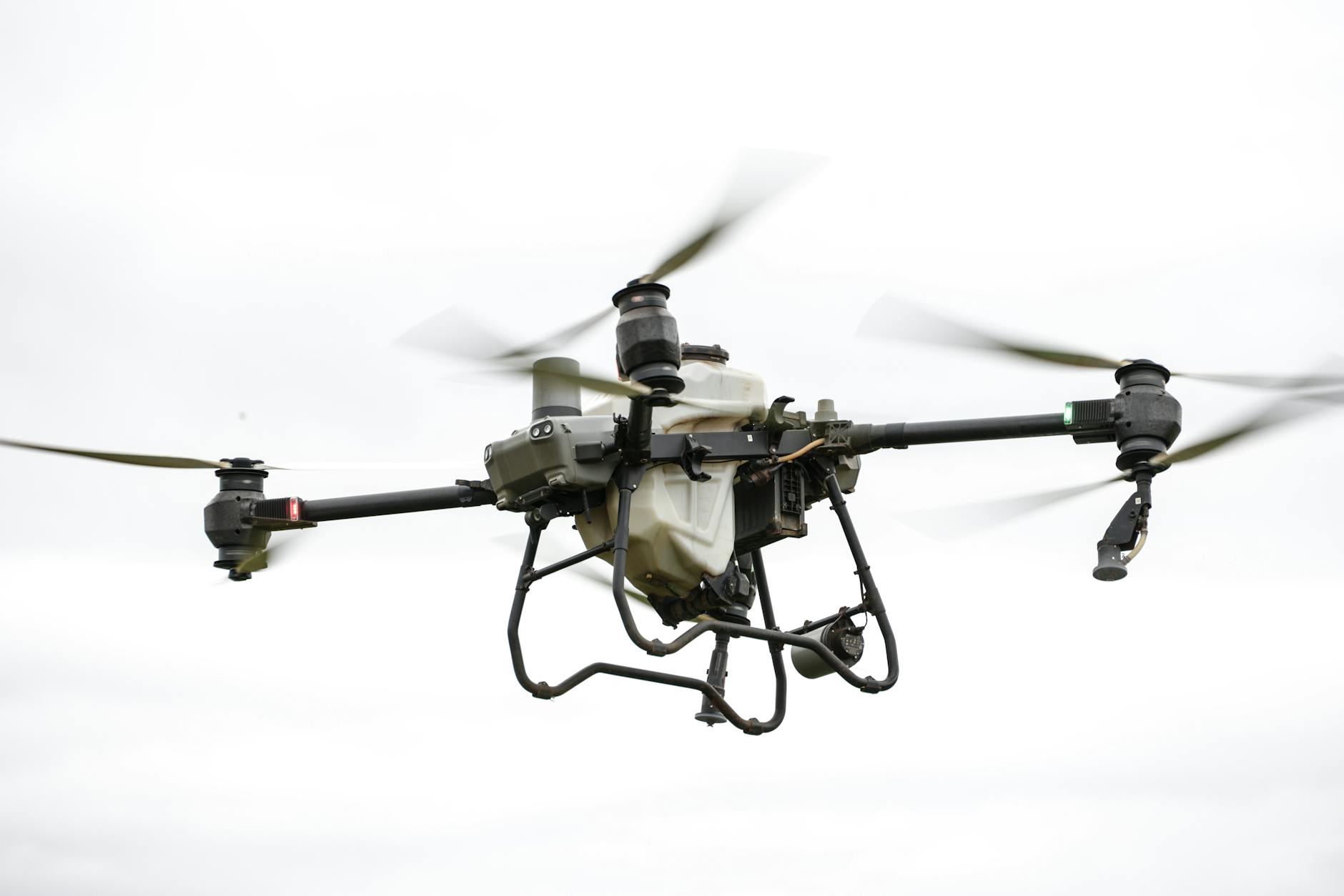
The agriculture sector represents another application where UMAC established early influence. As spraying drones became viable commercial tools, the motor systems needed to withstand chemical exposure, vibration from payload delivery systems, and extended flight times. UMAC’s experience with environmental durability and thermal management made its components popular in this segment. These specialized applications—where reliability directly impacted operational economics—created sticky customer relationships that persisted even as general-purpose drone motors became commoditized elsewhere in the market.

Manufacturing Partnerships and the Economics of Early Supplier Integration
UMAC’s business model reflected the realities of embedded component supply in a fast-moving industry. Rather than attempting to sell directly to end consumers or smaller manufacturers, the company focused on deep technical partnerships with established OEMs that could absorb minimum order quantities and commit to multi-year designs. This approach created mutual dependencies: UMAC gained revenue stability and the ability to optimize production for known customers, while OEMs gained supply certainty and motors engineered specifically for their platforms.
The tradeoff inherent in this model became visible as the industry expanded. Smaller drone manufacturers and startups often couldn’t access UMAC supply relationships, forcing them toward alternative motor suppliers or requiring them to develop custom solutions. This fragmentation of the supply chain meant that while UMAC secured dominant positions with major manufacturers, the broader industry developed redundant supplier networks. By the mid-2010s, the advantage shifted slightly toward manufacturers with diversified supplier bases who could negotiate better pricing while maintaining reliability through quality oversight rather than single-supplier specialization.
Technical Evolution and the Challenges of Staying Ahead
One of the underappreciated challenges for early specialized suppliers is the need for continuous innovation in an industry that doesn’t always remain grateful for past contributions. UMAC’s success with brushless motor systems created an expectation that the company would lead in emerging technologies—higher efficiency designs, integrated electronic speed controllers, wireless telemetry in motor systems, and thermal management solutions. The motor business, however, has fundamental physics constraints that limit innovation velocity in ways that software or sensor businesses don’t experience.
As competing suppliers invested heavily in R&D and manufacturing scale, the differentiation that UMAC pioneered became incrementally less significant. A company that could claim superior thrust efficiency in 2012 might only claim 3-5% advantages by 2018 when multiple suppliers had converged on similar design approaches. This erosion of technical advantage is a persistent challenge for pioneering suppliers: being first to solve a problem is valuable, but the problem-solving eventually becomes common knowledge, and historical advantage doesn’t guarantee future market share without continuous innovation that maintains the lead.

Supply Chain Resilience and Geographic Risk
UMAC’s supply relationships also became exposed to geographic and logistical risks that early OEMs hadn’t necessarily anticipated. As drone manufacturing globalized and supply chains stretched across multiple continents, single-source motor suppliers created vulnerability. The 2011 Thailand floods, the 2016 parts shortages, and subsequent disruptions demonstrated that concentration with any single supplier—however reliable—created risks for manufacturers trying to scale globally.
This vulnerability accelerated the industry’s move toward multiple-sourced components and created space for regional suppliers to establish foothold positions. A drone manufacturer that had relied on UMAC in 2010 might add motors from secondary suppliers by 2016, not because UMAC’s quality had declined, but because supply chain diversity became a business requirement rather than an optimization. For UMAC, this meant defending market share against an expanding competitive set while managing customer expectations about allocation during supply constraints.
UMAC’s Evolution and the Future of Specialized Propulsion Supply
Looking forward, UMAC’s role in the drone robotics ecosystem continues to evolve as the technology matures. The company’s early expertise created brand recognition and customer relationships that persist even in a more competitive landscape. Rather than competing primarily on price, surviving early specialized suppliers typically shift toward higher-complexity applications, custom engineering, and integrated solutions where their technical depth remains valuable.
The emergence of larger multirotor platforms, electric vertical takeoff and landing (eVTOL) aircraft, and autonomous systems requiring increasingly sophisticated propulsion control creates new opportunities for suppliers with UMAC’s engineering depth. The company’s foundation in early drone development positions it well for these next-generation platforms, though success will depend on continued innovation rather than historical market position. As the industry matures, UMAC’s trajectory illustrates a broader pattern: early suppliers who created essential infrastructure during periods of rapid change must continue evolving toward more specialized, higher-value applications to maintain relevance.
Conclusion
UMAC’s role as an early supplier to drone robotics demonstrates the significant but temporary advantages that come from timing, specialization, and technical excellence during emerging industry growth phases. The company’s motor systems enabled critical infrastructure for drone manufacturers that might otherwise have faced insuperable technical or supply obstacles during the crucial 2010-2015 period when commercial drone viability was being established. This contribution was materially important—many successful drone platforms literally couldn’t have reached production without access to reliable propulsion components engineered for the unique requirements that early drone designs demanded.
However, UMAC’s experience also illustrates the inevitable arc of early supplier dominance in technology industries. As markets mature, technical standards converge, and competing suppliers develop equivalent capabilities, the advantages of being first diminish unless actively renewed through continued innovation and market adaptation. The company’s current challenge—and opportunity—lies in leveraging its deep technical expertise and established relationships to move upstream in the value chain, focusing on more complex applications and integrated solutions where specialization remains valuable long after the basic technology becomes commoditized.