
Defense automation stocks could very well be the next Nvidia, but with an important caveat: they’ll likely be a smaller, more specialized version of the semiconductor giant’s dominance. Rather than a single company controlling the entire market, the robotics and automation boom in defense is fragmenting across multiple players—Rockwell Automation, Teradyne, Symbotic, and specialized defense contractors—each capturing different segments of an expanding opportunity. The Pentagon’s $13.4 billion allocation for autonomous systems development and recent AI deals signed in May 2026 with Nvidia, Microsoft, AWS, and Reflection AI suggest that governments are willing to deploy massive capital in this space, creating sustainable demand that could fuel growth for a decade or more.
The comparison breaks down once you look at the actual market structure. Nvidia became dominant because it controlled the GPU architecture that everything else needed. Defense automation, by contrast, is a horizontal market where multiple companies provide different components—robotics platforms, AI simulation tools, autonomous navigation systems, and supply chain automation. The next “Nvidia moment” in robotics won’t be one company capturing 90% of the market, but rather a few well-positioned automation and robotics firms capturing outsized returns as the overall market explodes from $23.76 billion in 2025 to $40.2 billion by 2032.
Table of Contents
- Why Is the Pentagon Betting Big on Defense Automation?
- Market Growth Projections and the Reality Behind Them
- Which Companies Are Positioned to Capture This Growth?
- The Investment Opportunity and the Tradeoff
- The Hidden Risks in Defense Automation Investments
- Nvidia’s Role in Robotics: Enabler, Not Monopolist
- What the Next 24 Months Will Reveal
- Conclusion
Why Is the Pentagon Betting Big on Defense Automation?
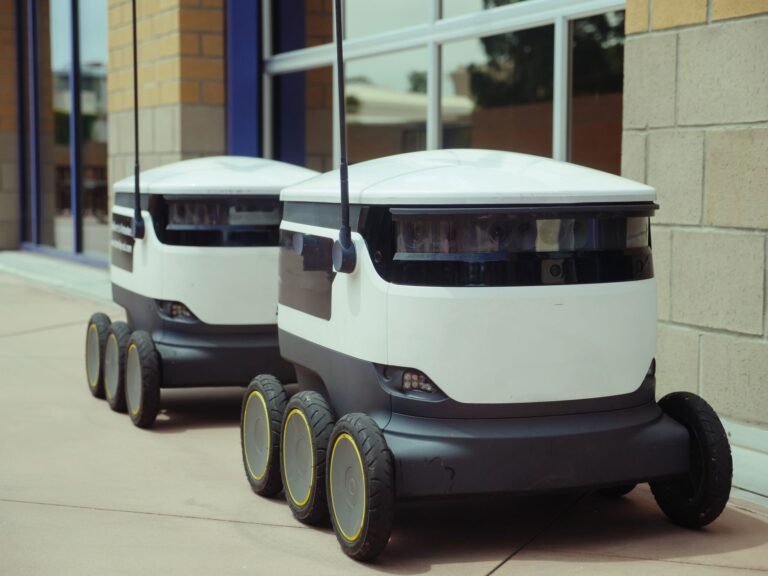
The Pentagon isn’t funding autonomous systems out of curiosity. Project Convergence, tested by the U.S. Army in 2025 and 2026, proved that unmanned ground vehicles could work effectively alongside manned units—including autonomous resupply convoys and robotic forward observers directing artillery fire. This isn’t science fiction; it’s operational testing. That validation matters because it means defense budgets will flow toward proven capabilities rather than experimental projects. When the military finds something that works, budget commitments typically lock in for a decade or longer.
The government’s recent AI deals tell you exactly where the money is flowing. The Defense Department signed agreements with nvidia, Microsoft, AWS, and Reflection AI for deployment on classified military networks. Notice what’s missing: Nvidia got one deal, not an exclusive monopoly. The Pentagon is explicitly avoiding single-vendor dependency, which means multiple companies will win contracts and scale their operations. This is structurally different from the enterprise cloud market, where Amazon dominates AWS. In defense, the budget is so large and the use cases so varied that winning one piece of it—even a significant piece—can sustain explosive growth without requiring market dominance.

Market Growth Projections and the Reality Behind Them
The aerospace and defense AI/robotics market is projected to grow from $23.76 billion in 2025 to $40.2 billion by 2032 at a 7.8% compound annual growth rate. That’s not a typo—the market is expected to expand by roughly 70% over seven years. To put that in perspective, global robotics funding surpassed $10.3 billion in 2025, the highest since 2021, showing renewed investor confidence after years of slower growth. These numbers are large enough to support multiple winners.
The limitation here is important: these projections assume sustained government spending and successful technology deployment. If autonomous systems encounter major failures in military operations, or if geopolitical priorities shift away from robotics, the forecasts could compress significantly. Additionally, much of this growth will go to large defense contractors like Lockheed Martin, RTX, Northrop Grumman, Anduril Industries, and Palantir, which already have government relationships and security clearances. Smaller pure-play robotics companies will win contracts, but they’ll typically be subcontractors or specialty suppliers rather than prime contractors. That’s still a profitable position, but it’s a different investment profile than betting on a company that controls the entire value chain.
Which Companies Are Positioned to Capture This Growth?
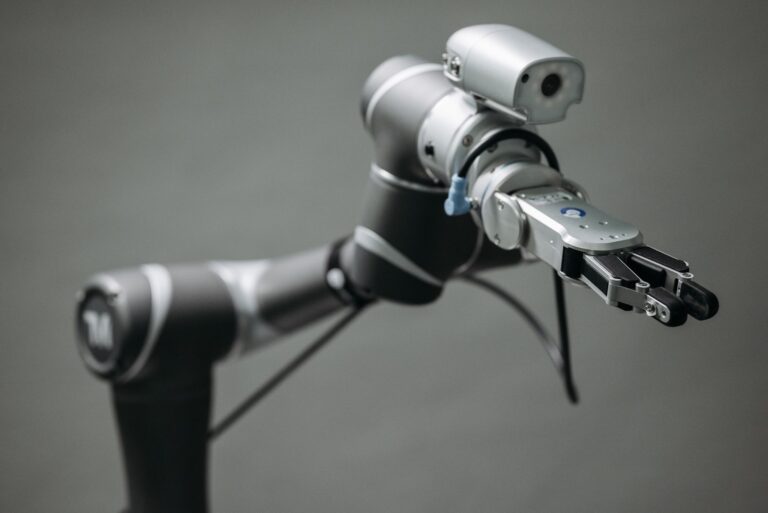
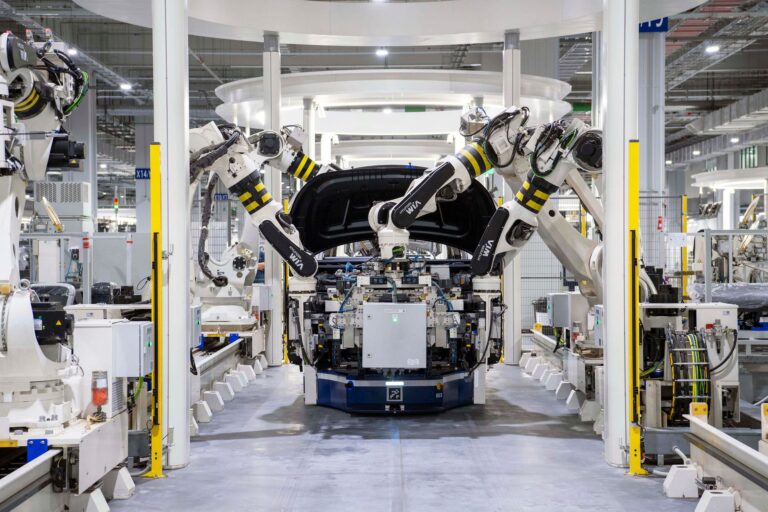
Rockwell Automation showcased AI-enabled smart machines at Hannover Messe 2026 and filed permits for a New Berlin facility expansion in April 2026, suggesting confidence in near-term demand growth. These aren’t speculative moves; capital expenditures on new manufacturing facilities only happen when companies expect sustained revenue increases. Teradyne launched ElevateX 2026 and opened a new U.S. Operations Hub in Michigan specifically for domestic cobot manufacturing, directly responding to government interest in reshoring and securing the supply chain for critical automation components. Symbotic deserves particular attention.
The company focuses specifically on AI-powered supply chain robotics and has a multi-year partnership covering hundreds of Walmart stores. That’s not defense revenue, but it demonstrates the company’s ability to scale technology across large, complex operations—exactly what the Pentagon needs. Symbotic’s supply chain expertise translates directly to military logistics, autonomous resupply, and automated defense manufacturing. Meanwhile, Nvidia continues expanding its robotics footprint; it announced Cosmos 3, updated Isaac simulation tools, and Isaac GR00T humanoid models at GTC 2026, with 110+ robotics developers now on its platform. Nvidia’s role won’t be controlling the defense robotics market, but rather enabling it through simulation and AI tools that other companies build on top of.

The Investment Opportunity and the Tradeoff
If you’re looking for the next Nvidia in defense automation, you’re essentially betting on a portfolio rather than a single stock. Unlike Nvidia, which concentrated both compute and dominant market position, defense automation requires exposure to multiple companies across different segments—industrial robotics, supply chain automation, autonomous vehicles, simulation software, and specialized defense contractors. This diversification reduces single-stock risk but also means your returns will be spread across multiple winners rather than concentrated in one explosive growth story. The tradeoff is execution risk versus upside.
A pure-play robotics company like Teradyne could double or triple if its cobot manufacturing strategy succeeds and defense spending accelerates as expected. A diversified approach using an aerospace and defense ETF or holding multiple automation stocks will capture more of the overall market growth but with lower volatility and potentially lower peak returns. The Pentagon’s $13.4 billion autonomous systems budget is real and committed, which supports the diversified approach—there’s enough capital to fund multiple winners. However, specific companies face execution, supply chain, and geopolitical risks that could derail individual stock performance.
The Hidden Risks in Defense Automation Investments
Defense robotics is not recession-proof, despite government backing. Budget cycles can shift, priorities change, and a new administration could reallocate spending toward different technologies. More immediately, the militarization of robotics has attracted regulatory scrutiny. Several countries and international bodies have raised concerns about autonomous weapons systems, and pressure to regulate this space is increasing. If regulations are tightened—whether domestically or internationally—it could constrain deployment timelines and reduce peak revenue opportunity for companies focused purely on autonomous military systems.
Supply chain vulnerability is another hidden risk. Many robotics companies depend on semiconductor components, rare earth elements, and specialized manufacturing. If geopolitical tensions disrupt component availability or if tariffs are imposed on critical inputs, margin compression could offset top-line growth. The May 2026 Pentagon AI deals specifically mention U.S. companies (Nvidia, Microsoft, AWS) and appear designed to strengthen domestic capacity, but implementation lags. A robotics company with a fragmented supply chain faces real risk if reshoring and localization requirements become stricter, forcing capital expenditures before revenue scales.

Nvidia’s Role in Robotics: Enabler, Not Monopolist
Nvidia’s position in defense robotics is fundamentally different from its dominance in data center AI. Nvidia provides the tools—GPUs, simulation software (Isaac), and foundational models (GR00T)—that other companies use to build robotics systems. It’s an important role, and it generates significant revenue, but it doesn’t create the same market control that Nvidia has in AI training. The Pentagon is explicitly working with multiple AI providers, and robotics applications can run on different compute architectures.
A defense contractor can build autonomous systems on Nvidia hardware, but it can also use AWS, Microsoft, or custom solutions if cost or performance requirements demand it. This actually supports the case for smaller defense automation companies. They can source Nvidia tools, reduce their R&D costs, and focus capital on unique capabilities like supply chain optimization, autonomous navigation, or specialized military applications. Nvidia benefits from volume, but the actual value creation—and potential for outsized returns—flows to companies that solve specific defense problems, not to the tools provider.
What the Next 24 Months Will Reveal
The remainder of 2026 and into 2027 will be critical. We’ll see whether Project Convergence advances to wider Army deployments, whether the Pentagon’s AI deals accelerate classified military adoption, and whether companies like Rockwell Automation and Teradyne convert their capital investments into actual defense revenue. These early wins matter because they’ll establish which companies have real government relationships and proven capabilities. Talk is cheap; shipping systems to the Pentagon and maintaining security clearances is expensive and hard.
The broader forecast suggests that defense automation will become a major subsector of the robotics market within five years. The capital is committed, the operational testing is validating the technology, and multiple companies are positioning for growth. The next Nvidia in robotics won’t be a single dominant player, but the companies that capture 20-30% of that $40 billion market could still deliver returns comparable to what Nvidia did in the AI boom. The key is identifying which companies execute well and maintain government relationships as budgets scale.
Conclusion
The next Nvidia in robotics may not exist as a single company, but the opportunity is real and the capital is flowing. The Pentagon’s $13.4 billion autonomous systems budget, validated military testing, and multi-vendor AI agreements create a structural environment where several well-positioned companies can grow dramatically. Rockwell Automation, Teradyne, Symbotic, and specialized defense contractors are all positioned to win, though their returns will depend on execution, supply chain stability, and sustained government spending.
If you’re considering exposure to this trend, approach it as a portfolio strategy rather than a single-stock bet. Defense automation is too fragmented and too dependent on regulatory, geopolitical, and execution factors to mirror Nvidia’s dominance. But the underlying market opportunity is substantial enough that multiple winners will emerge—and the best time to identify them is now, before the market prices in the full scope of Pentagon spending.