
AeroVironment (NASDAQ: AVAV) isn’t the next Nvidia—it’s something different entirely, operating in a market where Nvidia supplies the computational backbone but AVAV controls the entire autonomous system. The Virginia-based defense technology company is positioning itself as the integrator and innovator of autonomous defense platforms that rely on AI for decision-making, threat detection, and autonomous operation. While Nvidia dominates the chip layer that powers these systems, AVAV owns the full stack: the aircraft, the software, the computer vision algorithms, and the military relationships that turn AI capabilities into field-deployable weapons and surveillance platforms. This distinction matters because it makes AVAV a different kind of investment—not a foundational technology company, but a prime contractor in a defense sector increasingly dependent on autonomous systems and machine learning. The comparison to Nvidia still holds weight, though, because the defense industry is moving toward a future where unmanned systems are the primary platform for intelligence, surveillance, reconnaissance, and targeting.
AVAV’s recent contract wins and expanded product lineup suggest the company is positioned to capture significant market share in this transition. In May 2026, AeroVironment secured a $14.6 million U.S. Army contract for the VAPOR Compact Long Endurance (CLE), an all-electric vertical takeoff and landing unmanned aircraft system that runs on NVIDIA ORIN processors and autonomous decision-making software. This is the kind of recurring, mission-critical platform that could drive decades of revenue—similar to how Nvidia’s CUDA ecosystem created lock-in and switching costs in the AI sector. What separates AVAV from other defense contractors isn’t just the technology; it’s the timing. The Pentagon is restructuring procurement around autonomous systems, and AVAV’s recent portfolio expansions suggest the company understands what the military actually needs: platforms that can operate independently, process sensor data in real time, and execute missions without constant human intervention.
Table of Contents
- Can AVAV Capture the Defense Autonomy Market Like Nvidia Captured AI?
- The VAPOR CLE Platform—Autonomous Systems With NVIDIA Backbone
- Recent Contract Wins—The Real Evidence of Market Momentum
- NVIDIA ORIN and the Hardware-Software Partnership Model
- Stock Valuation and Market Skepticism—The Reality Check
- The AV_Halo Software Suite—Autonomous Decision-Making in the Field
- The Future of Autonomous Defense Systems—From Niche to Doctrinal
- Conclusion
Can AVAV Capture the Defense Autonomy Market Like Nvidia Captured AI?
The comparison between AVAV and nvidia breaks down in one crucial way: Nvidia sells a standardized chip architecture that works across thousands of applications, while AVAV builds specialized platforms for a specific customer base. However, the dynamics of capture and dominance are similar. Once the Pentagon standardizes on AVAV’s software ecosystem—the AV_Halo mission software, INSTINCT autonomy framework, and DETECT RF sensing suite—switching to a competitor becomes expensive and risky. The VAPOR CLE platform isn’t just a piece of hardware; it’s a system that works with specific drone designs, training protocols, logistics chains, and integration patterns. Building that kind of friction is how Nvidia maintained its moat, and it’s how AVAV intends to protect its market position. The difference is scale and addressable market.
Nvidia’s TAM expanded exponentially because AI became central to nearly every industry. AVAV’s market is the global defense sector—a multi-trillion-dollar sector, but one with fewer buyers and slower procurement cycles. The $14.6 million VAPOR CLE contract and the three-year, $43 million PANTHER antenna integration contract for Department of War SkyRange test platforms show the company winning recurring business, but these aren’t the kind of hyperscale wins that Nvidia saw in cloud infrastructure. Instead, AVAV’s advantage lies in execution: being faster to market with better-integrated systems than larger defense primes like Northrop Grumman or Lockheed Martin. A key limitation, though, is that contract wins are subject to political and budgetary headwinds. The 17% stock drop following the Pentagon’s decision to open the SCAR phased array antenna program to competitive bidding shows how quickly investor confidence can evaporate when defense procurement decisions shift. AVAV isn’t insulated from these risks the way Nvidia is insulated from changes in cloud spending—defense budgets fluctuate, priorities shift, and new competitors can emerge when contracts open to competitive bidding.
The VAPOR CLE Platform—Autonomous Systems With NVIDIA Backbone
The VAPOR Compact Long Endurance aircraft represents the current state of autonomous defense technology. It’s an all-electric VTOL platform that can take off, navigate, recognize targets, and execute missions without human control inputs. The integration of NVIDIA ORIN onboard processors enables real-time processing of sensor data—camera feeds, RF signals, thermal imaging—and autonomous decision-making. this is where the “Nvidia of defense systems” narrative gains traction: the ORIN chip is doing the heavy lifting of autonomous perception and reasoning, while AVAV’s software layers (AV_Halo VISION for computer vision, WISARD for AI/ML processing) translate that compute into military outcomes. The VAPOR CLE’s electric propulsion system is worth noting as a tactical and strategic choice. Electric motors provide longer endurance than fuel-based systems, quieter operation (important for covert surveillance), and simpler logistics.
The platform can loiter over a target area for hours, collect intelligence, and return without refueling. In contested environments, this endurance matters more than raw speed. The $14.6 million Army contract suggests the military sees value in this design philosophy, which differs from some competitors who prioritize speed or payload capacity over sustained presence. However, electric propulsion introduces constraints: the VAPOR CLE can carry fewer sensors and weapons than larger, fuel-powered platforms, and battery capacity limits mission duration in extreme conditions. For a defense contractor, this means AVAV has optimized for a specific use case—persistent surveillance and precision strikes in environments where air denial threats are moderate to severe. That focus is a strength in niche markets but a limitation against adversaries with advanced air defense systems or in scenarios requiring rapid response over large geographic areas. Customers need to understand these tradeoffs rather than treating autonomous systems as universally superior to manned aircraft or larger unmanned platforms.
Recent Contract Wins—The Real Evidence of Market Momentum
The $14.6 million VAPOR CLE contract and the $43 million PANTHER antenna integration award are the tangible evidence that the market is moving in AVAV’s direction. The VAPOR contract is from the U.S. Army, a massive institution with competing priorities and risk-averse procurement. Getting the Army to buy a specific autonomous aircraft system signals that AVAV has cleared significant technical and political hurdles. The platform must have demonstrated reliability, interoperability with existing military networks, and operational effectiveness in field testing. The PANTHER contract is equally significant because it indicates AVAV’s expansion beyond aircraft platforms into broader defense systems integration.
PANTHER is a phased array antenna program, and AVAV’s three-year, $43 million contract to integrate antenna technology into Department of War SkyRange test platforms positions the company as a systems integrator—not just a drone manufacturer. This is how defense contractors grow: they start with a successful platform and expand into adjacent systems and services. Northrop and Lockheed Martin followed this playbook, and AVAV is executing a similar strategy. But here’s the caution: government contracts are unpredictable. The 17% stock decline following the SCAR antenna program opening to competitive bidding shows that investors see AVAV’s competitive advantage as fragile. If larger, more established defense contractors enter autonomous systems with their own NVIDIA integrations, AVAV could lose market share quickly. The company’s strength is in innovation and speed to market, not in the kind of political relationships and lobbying power that larger primes possess.

NVIDIA ORIN and the Hardware-Software Partnership Model
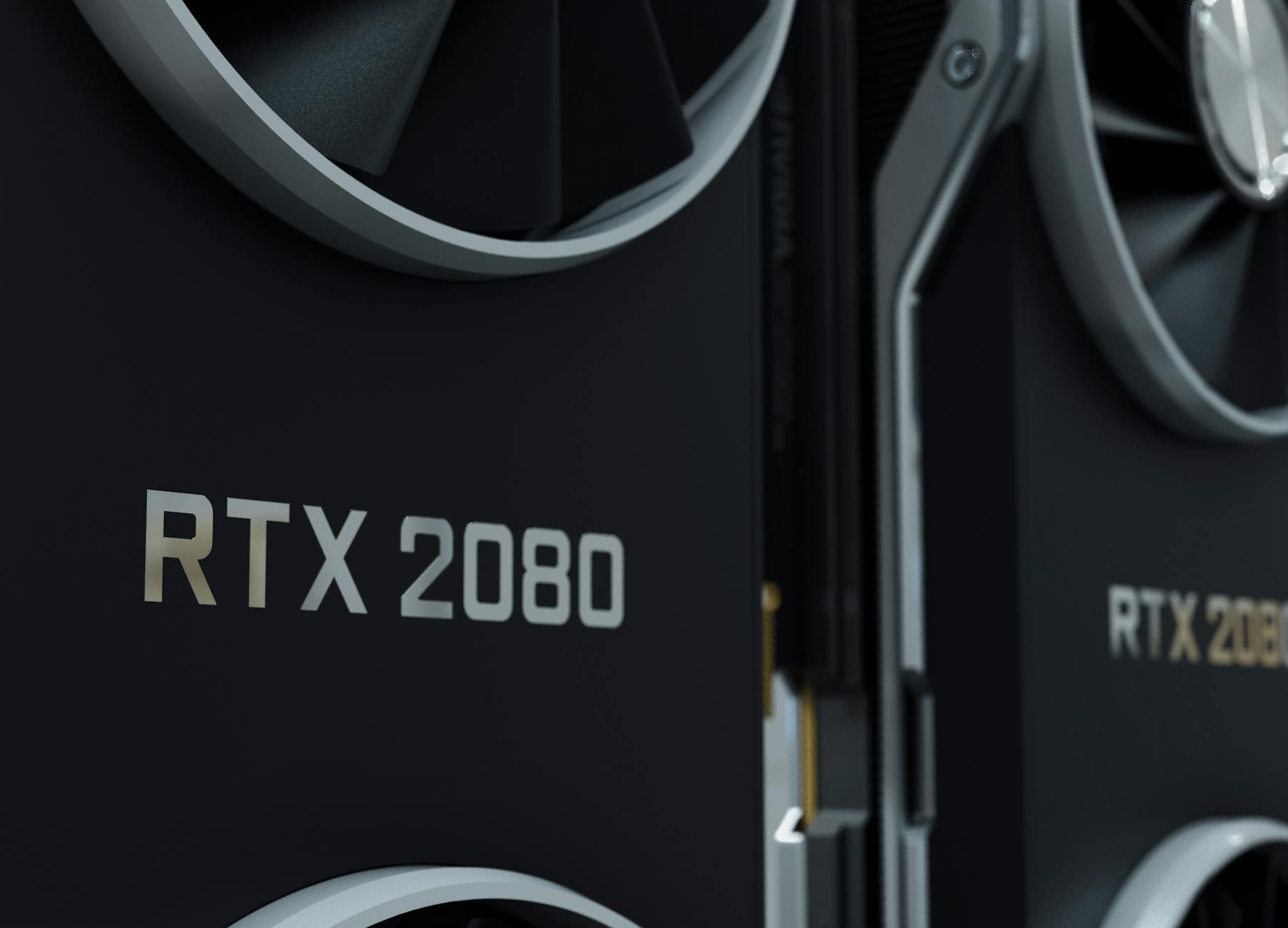
The choice to build VAPOR CLE around NVIDIA ORIN processors reflects a broader trend in defense autonomy: specialized military applications increasingly depend on commercial AI hardware. NVIDIA designed the ORIN for edge computing applications—devices that need powerful processing but operate remotely, without constant connection to centralized cloud infrastructure. For an unmanned aircraft, this is perfect: the system needs to process camera feeds, lidar data, and RF signals onboard, make autonomous decisions, and report back to ground stations. This is where the Nvidia comparison becomes literal. AVAV is building a platform that depends on NVIDIA’s compute architecture in the same way that the broader AI industry depends on NVIDIA GPUs. If NVIDIA’s ORIN becomes the de facto standard for defense autonomous systems, AVAV benefits from that standardization.
But AVAV also becomes locked into NVIDIA’s product roadmap. If NVIDIA discontinues the ORIN line, shifts architectural focus, or decides to compete directly in autonomous systems, AVAV’s competitive position shifts fundamentally. The advantage of NVIDIA integration is that AVAV can focus on software and integration rather than chip design. The disadvantage is that the company has less control over its core technology layer. Commercial chip manufacturers prioritize commercial markets—AI data centers, robotics, autonomous vehicles—over defense applications. If NVIDIA’s strategic interests diverge from the defense sector, AVAV will need to adapt or develop alternative computing platforms. This is a real risk that investors should weigh against the benefits of using proven, rapidly improving commercial hardware.
Stock Valuation and Market Skepticism—The Reality Check
AVAV was trading at $220.56 as of March 2026, roughly 48% below analyst consensus targets of $309.88. This discount reflects legitimate investor skepticism. The recent 17% drop following the SCAR antenna program opening to competitive bidding shows that the market views AVAV’s competitive moat as weaker than the company’s management might suggest. When large contracts open to competitive bidding, investors worry that AVAV’s technical advantages are overstated or that larger, better-capitalized competitors will undercut on price or relationship strength. The valuation also reflects slower-than-expected adoption of autonomous defense systems. While the Pentagon is clearly moving toward autonomous platforms, the transition is incremental. Existing platforms—manned aircraft, larger unmanned systems like the Reaper—represent entrenched capital investments and operational doctrines.
AVAV needs the military to commit to large-scale deployment and training for autonomous platforms to justify the premium valuation that analysts are pricing in. The $14.6 million VAPOR contract and $43 million PANTHER award are progress, but they’re not the $500 million, multi-year, fleet-scale commitments that would justify a $300+ stock price. A prudent investor should wait for evidence of sustained, high-volume procurement before treating AVAV like the next Nvidia. The technology is real, the contracts are real, but the scale of adoption is still uncertain. Defense procurement is slow, and autonomous systems are still relatively new. AVAV could be a tremendous investment, or it could be a company that never scales beyond a niche role in a larger defense ecosystem. The stock discount reflects that uncertainty, and it’s probably appropriate.

The AV_Halo Software Suite—Autonomous Decision-Making in the Field
AVAV’s recent expansion of the AV_Halo mission software suite with INSTINCT autonomy framework and DETECT RF sensing capabilities represents the company’s bet that software is the long-term differentiator in autonomous defense systems. INSTINCT is an autonomy framework designed to enable unmanned systems to operate without constant human input—to plan missions, navigate complex environments, recognize threats, and execute decision trees in real time. DETECT is an RF sensing suite that processes radio frequency data to identify targets and threats beyond visual range. These software layers are where the AI actually lives. NVIDIA ORIN provides the computational capacity, but AV_Halo decides what to do with that capacity. The MAYHEM 10 modular loitering munition system mentioned in recent announcements (a system designed for contested environments where traditional unmanned platforms are vulnerable to air defense) depends entirely on the quality of AVAV’s autonomy software.
If INSTINCT can reliably navigate complex terrain, avoid obstacles, and recognize military targets with minimal false positives, MAYHEM 10 becomes a credible military system. If the software is unreliable, no amount of NVIDIA processing power can fix that. This is also where AVAV’s risk becomes clear. Building reliable autonomy software for military applications is exponentially harder than building autonomy software for commercial drones or autonomous vehicles. The consequences of failure are literal—strikes on wrong targets, friendly fire incidents, loss of expensive platforms. AVAV’s reputation depends on the software working under stress, in adversarial environments, with incomplete or noisy sensor data. A major software failure could set back the company’s entire product roadmap and trigger regulatory restrictions on autonomous defense systems.
The Future of Autonomous Defense Systems—From Niche to Doctrinal
The trajectory of defense autonomy is clear: unmanned, autonomous systems are moving from experimental platforms to core elements of military strategy. The $14.6 million VAPOR contract and continued Pentagon investment in autonomous platforms suggest that within 5-10 years, autonomous systems will be as common as manned aircraft in modern militaries. For AVAV, this means significant upside if the company can maintain its competitive position and execution quality. However, the defense autonomous systems market will likely fragment. AVAV’s advantage is in vertical integration and first-mover status, but competitors will emerge.
Other defense contractors will license or develop their own autonomy software. Commercial drone manufacturers like DJI (which faces U.S. export restrictions) may pivot toward military-grade autonomous systems. International competitors—especially China and Israel, which are heavily investing in autonomous defense platforms—will create alternatives. AVAV’s path to Nvidia-like dominance requires sustained innovation, customer lock-in through superior software, and an ability to execute faster than larger, slower-moving competitors. The company has shown all three capabilities so far, but the bar will only increase as the market matures.
Conclusion
AVAV is not the next Nvidia in the sense of being a foundational technology company—Nvidia will continue dominating the AI chip layer. But AVAV could become the dominant integrator of autonomous defense systems, capturing significant value by controlling the full stack: hardware, software, military relationships, and continuous innovation. The recent contract wins, expanded software suite, and integration of NVIDIA ORIN processors show a company executing a coherent strategy at the right time in the market cycle.
The risks are real: defense procurement is unpredictable, the stock trades at a discount to analyst targets for legitimate reasons, and larger competitors may capture market share as the autonomous defense market scales. For investors, AVAV represents a high-risk, high-reward opportunity in a sector that’s clearly moving toward autonomous systems. The company’s execution will determine whether it becomes a Nvidia-scale winner or a strong niche player in a larger defense ecosystem.