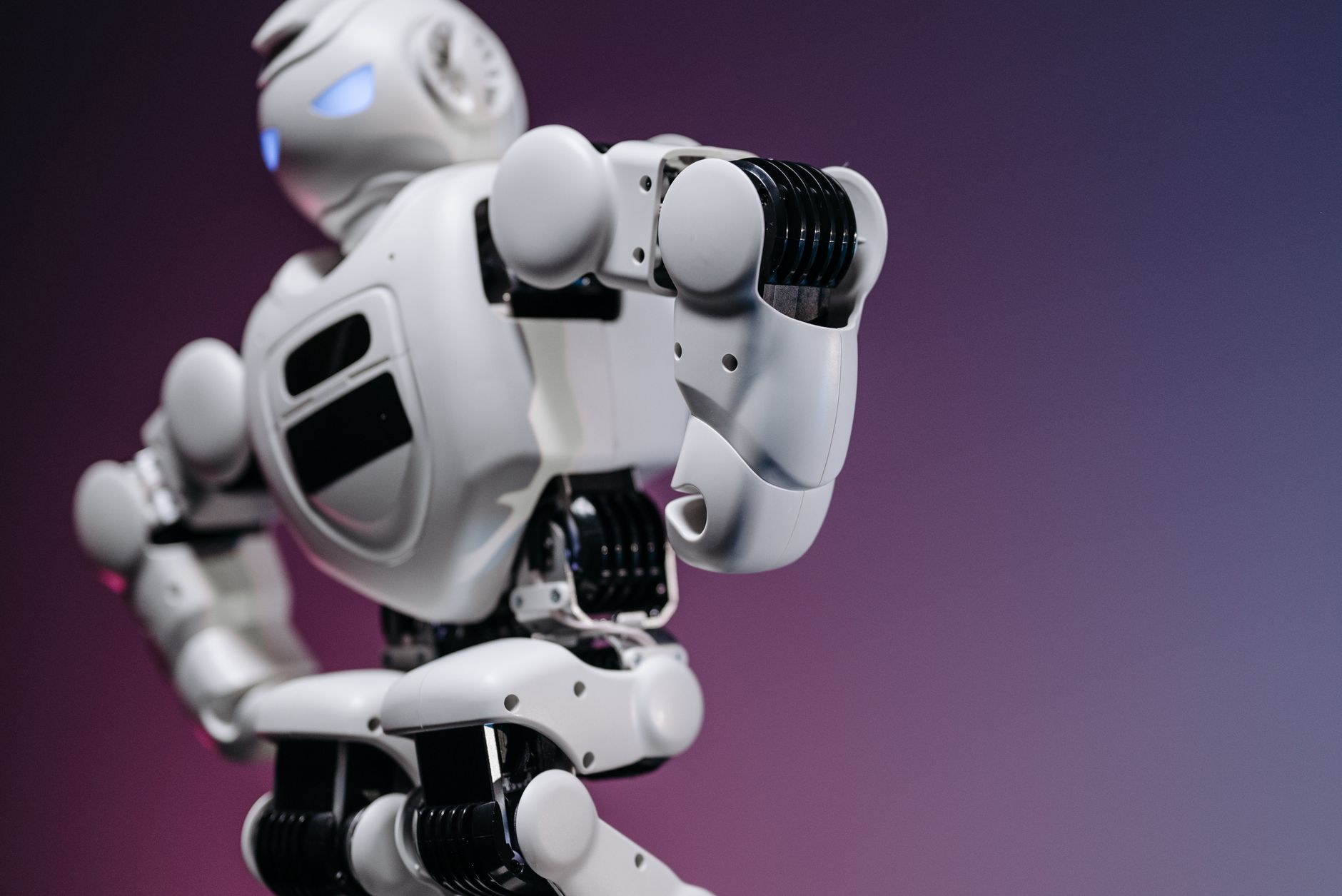

Ensuring humanoid robot safety before widespread human workplace integration requires a multi-layered approach combining hardware safeguards, rigorous testing protocols, and evolving industry standards. The core challenge is that humanoids designed to work alongside humans cannot be confined to cages or fenced zones—they must operate in shared spaces, handle collaborative tasks, and respond safely to unexpected situations. This demands that manufacturers and operators implement mechanical constraints, sensor systems, and behavioral limits that prevent harm even when something goes wrong. Real-world integration is already beginning in controlled settings.
A notable example is collaborative applications in manufacturing facilities where humanoid arms work at assembly stations, operating at reduced speeds and with force-limiting technology that automatically stops the robot if it contacts a worker. These early deployments show that safety is not merely a feature to add later but a fundamental design constraint that must shape everything from the robot’s mechanical structure to its decision-making algorithms. Before humanoids can move into widespread use, three critical areas must mature: physical safety mechanisms that limit force and motion, environmental awareness systems that detect and respond to human presence, and organizational protocols that establish safe operating boundaries. Without progress in all three areas simultaneously, the risk of serious injuries increases dramatically as deployment scales.
Table of Contents
- What Safety Standards and Regulations Currently Govern Humanoid Robots in Shared Workspaces?
- Collision Detection and Force Limiting Technologies That Prevent Injuries
- Testing, Validation, and Real-World Safety Trials Before Deployment
- Designing Safe Human-Robot Collaboration Workflows and Job Boundaries
- Risk Assessment and Real-World Integration Challenges That Complicate Safety
- Workforce Training and Continuous Safety Operations Around Humanoid Robots
- Regulatory Evolution and Industry Standards Development for Humanoid Deployment
What Safety Standards and Regulations Currently Govern Humanoid Robots in Shared Workspaces?
The regulatory landscape for humanoid robots in human workspaces is still developing, with different jurisdictions and industries moving at different speeds. Organizations like the International Organization for Standardization (ISO) have published frameworks like ISO/TS 15066, which covers collaborative industrial robots and specifies limits for force, pressure, and contact conditions during human-robot interaction. However, these standards were designed primarily for traditional industrial arms, not mobile humanoids that can move throughout a facility and interact in unpredictable ways. Manufacturers currently rely on a combination of existing machinery safety standards, aerospace-derived safety practices, and self-imposed engineering guidelines.
Some companies conduct third-party safety certifications similar to those required for traditional industrial equipment, including risk assessments that follow ISO 12100 (machinery safety—general principles for design). The limitation here is significant: regulatory bodies in most countries have not yet established specific legal requirements for humanoid robot deployment in general workplace environments. This creates a gap where early adopters may operate within legal guidelines that don’t specifically address the unique risks posed by bipedal, dexterous machines working in human-occupied spaces. Different industries are establishing their own interim standards. Automotive and advanced manufacturing facilities often require humanoid manufacturers to demonstrate compliance with more stringent safety protocols than currently mandated by law, essentially creating de facto standards that may eventually inform official regulations.
Collision Detection and Force Limiting Technologies That Prevent Injuries
humanoid robots intended for human-shared workspaces use several overlapping technologies to prevent harmful contact. Distributed force sensors in the robot’s body, limbs, and gripper send constant feedback to the control system. If these sensors detect sudden impact or sustained pressure above safe thresholds, the robot immediately stops or reverses the motion. This force-limiting approach is different from older industrial robots, which relied primarily on keeping humans physically separated through barriers and restricted access zones. The challenge with collision detection is that it must work reliably even in chaotic environments.
A humanoid sorting packages in a warehouse might encounter unpredictable contact: a worker’s arm, a falling object, an unexpected obstacle. The sensor system must distinguish between intentional collaborative contact (where force limits are negotiated in real-time) and accidental collision (where the robot must retreat instantly). Most current implementations use a conservative approach: the robot is designed to move relatively slowly when near humans, operates with lower payload capacity than would be theoretically possible, and maintains force limits well below injury thresholds for any part of the body. One important limitation is that no sensor system is perfect. Sensor failures, dead zones in sensor coverage, or deliberate tampering could disable these safeguards. Additionally, force-limiting technology works best for pushing or crushing injuries but is less effective at preventing other hazard types, such as a humanoid being knocked over and falling on a worker, or a sharp object on the robot’s frame causing lacerations.
Testing, Validation, and Real-World Safety Trials Before Deployment
Responsible manufacturers conduct extensive testing before humanoids enter human workspaces, typically starting in controlled laboratory environments, then moving to limited real-world trials with trained operators and safety personnel present. Testing protocols often simulate accident scenarios: a humanoid is commanded to perform a task while researchers introduce obstacles, trigger sensor failures, or deliberately create situations that test the robot’s response. These tests measure whether the robot’s safety systems activate within milliseconds and whether the forces involved in any collision remain below established injury thresholds. One concrete example comes from companies testing collaborative humanoids in manufacturing environments, which often conduct drop tests (verifying the robot can safely fall or be dropped without catastrophic failure), electromechanical failure tests (simulating sensor or control system failures), and worst-case scenario tests (such as a complete loss of power and whether gravity-driven motion is predictable and non-hazardous).
Validation typically includes biomechanical analysis using crash-test data and human tolerance thresholds to establish safe force and pressure limits. A significant warning here is that laboratory testing cannot replicate all real-world conditions. A humanoid that passes rigorous testing in a clean, predictable factory environment might encounter unexpected challenges in a crowded office, an uneven construction site, or an environment with many simultaneous humans and moving obstacles. Early deployment must include close monitoring and incident reporting systems that feed safety data back to manufacturers and operators.
Designing Safe Human-Robot Collaboration Workflows and Job Boundaries
Organizations deploying humanoids must establish clear operational boundaries that define where, when, and under what conditions a humanoid can operate. One approach is spatial partitioning: humanoids work in specific zones that are physically separated from general human activity, with explicit handoff points where a human and robot coordinate a task. Another approach is temporal separation: the humanoid operates during specific shifts or time windows when human presence is minimal and can be carefully controlled. A practical example is warehouse automation, where some facilities use humanoids for specific picking or sorting tasks during designated periods when human workers are not in the immediate area, with workers present only to restock shelves or troubleshoot.
This contrasts with collaborative scenarios where a human and humanoid work on the same task simultaneously. The trade-off is that strict spatial or temporal separation limits the efficiency gains from having truly collaborative humanoids; it essentially treats the robot as a shift-worker alternative rather than a collaborator that adapts in real-time to human presence and priorities. Task design also matters significantly. A humanoid performing a well-defined, repetitive task with clear boundaries is inherently safer than one required to interpret ambiguous instructions or work in unstructured environments. Organizations must balance the desire for flexibility and autonomy in the humanoid’s decision-making against the safety advantage of constrained, predictable tasks.
Risk Assessment and Real-World Integration Challenges That Complicate Safety
Deploying humanoids in actual work environments reveals safety complexities that laboratory testing cannot fully anticipate. Workers may interact with humanoids in ways designers did not expect—leaning on the robot, distracting it while it’s performing tasks, or placing their hands near moving parts during what they perceive to be an inert period. Organizational culture and worker training directly influence safety outcomes; if workers perceive the humanoid as a threat to their employment or as an unpredictable hazard, they may take risks or fail to follow safety protocols. A significant limitation is that humanoid safety is not purely a technical problem; it is also a human problem. A well-designed, force-limited robot with excellent sensors can still cause injuries if workers have not been trained on safe proximity distances, if emergency shutdown procedures are unclear, or if maintenance workers disable safety features to speed up repairs.
Risk assessments must therefore include not just the robot’s technical capabilities but the organizational systems, training, and incentives that determine how the robot is actually used in practice. Environmental factors add another layer of complexity. A humanoid operating on a clean factory floor with good lighting behaves very differently than one operating on an uneven construction site, in poor lighting, or around unpredictable obstacles. Slip, trip, and fall hazards that would be minor for a human become potential catastrophic failures for a humanoid—falling robots can cause collateral damage and injuries. Most early deployments acknowledge this by restricting humanoids to environments where hazards are minimized.
Workforce Training and Continuous Safety Operations Around Humanoid Robots
Organizations deploying humanoids must invest in training that goes well beyond “this is where the emergency stop button is.” Workers need to understand the humanoid’s capabilities and limitations, recognize situations where the robot might behave unpredictably, and know how to communicate safely with or around the machine. This training must be repeated and reinforced, especially as turnover brings new workers unfamiliar with the equipment.
A concrete example is automotive assembly facilities that have introduced collaborative robots, which typically conduct weeks-long training programs for assembly line workers, including classroom instruction on robot behavior, supervised hands-on practice in safe interaction, and scenario-based training where workers learn to respond to sensor failures or unexpected robot movements. The training also covers maintenance and troubleshooting in a way that emphasizes never disabling safety features for convenience.
Regulatory Evolution and Industry Standards Development for Humanoid Deployment
The absence of clear legal standards for humanoid robots in general human workspaces means that manufacturers, operators, and regulators are actively working to define what safety should look like before widespread adoption occurs. Professional societies, industry consortia, and government agencies are collaborating to create frameworks that are rigorous enough to prevent injuries but not so restrictive that they prevent beneficial innovation and deployment. Standards bodies are developing guidelines that address humanoid-specific hazards: bipedal stability and falling, hand and arm design that minimizes pinch points, sensor system redundancy, and software that enforces safe motion profiles.
The timeline for formal regulation is uncertain, but early indicators suggest that regions with strong manufacturing sectors are prioritizing this work. As more humanoids enter real workplaces and accumulate operational data, that evidence will shape standards. Organizations deploying humanoids today are essentially operating as test sites whose experience informs tomorrow’s regulatory framework—making their safety practices particularly consequential.