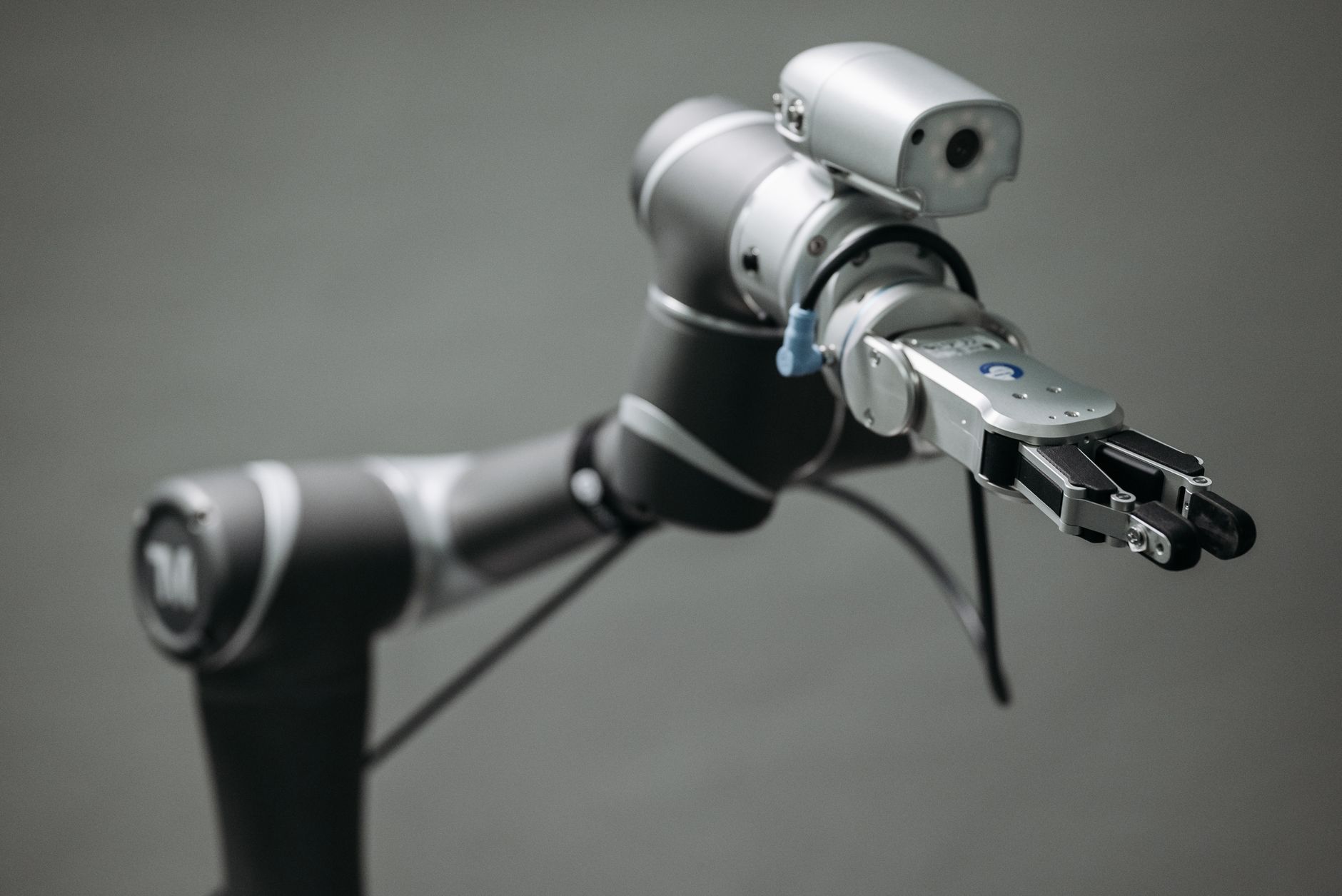

Workflow automation in life sciences is establishing new industry standards not through top-down mandates, but through demonstrated operational results. When pharmaceutical companies, biotech firms, and research institutions implement robotic process automation and integrated laboratory systems, they achieve measurable improvements in throughput, data integrity, and regulatory compliance that become the benchmarks their competitors feel compelled to match. This leadership effect cascades through supply chains, regulatory frameworks, and talent expectations—organizations that automate effectively shape what becomes the baseline expectation for their entire sector. The shift reflects a fundamental change in how life sciences views productivity.
Rather than treating automation as a cost-reduction tool, leading organizations deploy it as a strategic capability that enables new classes of work. A contract research organization automating sample tracking and data integration can now handle volumes and complexity levels that would require exponentially more manual staff. When this becomes visible to pharma partners and regulatory bodies, the expectation propagates: this is what best-in-class operations look like. The standard isn’t written in policy documents; it’s written in operating metrics.
Table of Contents
- How Do Automation Leaders Shape What Becomes Standard Practice?
- Technical Standards and the Risk of Proprietary Lock-In
- Regulatory Expectations and Automated Compliance
- Integration Strategy: Build Versus Buy in Automated Environments
- Data Quality Challenges and Hidden Complexity
- The Talent Ecosystem and Skill Requirements
- Regulatory Intelligence and Industry Convergence
How Do Automation Leaders Shape What Becomes Standard Practice?
Industry standards don’t emerge from committees alone—they emerge when enough influential players operate the same way successfully. Life sciences automation leaders establish standards by making their operational choices visible and replicable. A major clinical laboratory implementing barcode-driven sample management and automated reporting reduces turnaround times in ways that patients, physicians, and regulators observe. Competing laboratories face immediate pressure to match those timelines. Over time, that capability becomes the industry norm, then the regulatory expectation. What distinguishes leadership behavior from mere adoption is intentionality about ecosystem effects. Some organizations automate to solve their own problems; leaders automate in ways that reset expectations for their entire category.
They publish findings about data quality improvements, share benchmarks about staff productivity changes, and train the market’s talent pool to expect automated environments. When a major biotech adopts a new laboratory information management system architecture, the talent they recruit from competitors arrives expecting that architecture elsewhere. They also leave behind teams trained to run at that level, raising baseline competency across the industry. The competitive pressure is real but not always obvious from outside. A pharmaceutical company automating its clinical trial data management doesn’t announce that competitors now need equivalent capability to bid on trials. But bid committees do notice when response times cut from weeks to days, or when data validation errors approach zero. The standard shifts quietly but relentlessly.
Technical Standards and the Risk of Proprietary Lock-In
As life sciences automation advances, a critical tension emerges between standardization and proprietary advantage. Organizations that build advanced automation often develop system architectures tailored to their specific workflows. These aren’t simply elegant—they’re defended intellectual property. A company with superior laboratory robotics integration might keep that competitive edge by proprietary, to keep their setup proprietary. This creates a paradox: the more advanced automation becomes, the more it fragments the industry into incompatible platforms. Standards bodies attempt to address this through initiatives like LIMS integration frameworks and analytical instrument communication protocols. These efforts succeed when the benefits of interoperability exceed the value of lock-in.
In fields like genomic sequencing, where volume and standardization favor open protocols, progress has been real. In other domains—particularly bespoke cell therapies or specialized diagnostics—proprietary automation stacks remain common because customization value exceeds standardization benefit. Organizations implementing automation should anticipate this tradeoff: the most advanced capability often comes at the cost of vendor dependence. Data portability is a secondary but growing concern. As automation systems collect operational and scientific data at unprecedented volumes and granularity, organizations risk becoming locked into a single vendor’s ecosystem. A migration away from that vendor’s LIMS or laboratory automation platform becomes prohibitively expensive not just because of software switching costs, but because historical data remains trapped in proprietary formats. This risk is accelerating as artificial intelligence begins to train on historical operational datasets within single systems.
Regulatory Expectations and Automated Compliance
Regulatory bodies have begun embedding automation assumptions into their own standards. The FDA’s guidance on data integrity and electronic records increasingly assumes that systems have automated validation, audit trails, and anomaly detection built in. This expectation wasn’t in guidance documents five years ago; it reflects the reality that leading pharmaceutical companies operate that way now. Smaller firms implementing automation aren’t simply chasing efficiency—they’re aligning with regulatory expectations that are becoming formalized. This creates an implementation imperative with a clear timeline. A small contract manufacturing organization evaluating whether to automate batch documentation processes isn’t really making a discretionary choice anymore.
Regulatory inspections now expect to find that capability. The inspectors aren’t surprised when human transcription errors occur—they’re concerned that the company accepts that risk. Automation stops being nice-to-have and becomes table-stakes for regulatory credibility. Quality by design principles, which once seemed theoretical, now manifest as automated systems that enforce design intent in real time. Advanced manufacturing sites integrate raw material testing automation with production control automation with final testing, creating a data-driven chain of compliance. Regulators reviewing such operations see a fundamentally more defensible risk posture. Organizations still operating with manual checkpoints and paper records appear not just less sophisticated, but less compliant.
Integration Strategy: Build Versus Buy in Automated Environments
Organizations implementing workflow automation face a critical build-versus-buy decision that differs substantially from traditional software purchasing. A pharmaceutical company can buy a commercial LIMS, but integrating that system with their specific robotic hardware, analytical instruments, and existing data warehouses often requires significant custom development. Some organizations maintain small engineering teams to build these bridges; others depend on system integrators; many discover they need both. The economic calculus differs by organization size and complexity. A large pharmaceutical firm with hundreds of instruments and millions of samples annually can justify building and maintaining custom integration layers—the scale makes engineering investment pay off.
A smaller biotechnology company will likely minimize custom development, accepting constraints from commercial system limitations rather than paying the staffing and maintenance costs of custom integration. Neither approach is universally right; the tradeoff is between flexibility and cost of capital. There’s also a timing risk. Workflow automation in life sciences advances rapidly; commercial products mature and become obsolete with increasing frequency. A company that builds deep custom integrations to an older platform may find that platform becoming a constraint within five to seven years. Conversely, betting entirely on commercial solutions means accepting feature delays and customization limitations that may inhibit competitive differentiation.
Data Quality Challenges and Hidden Complexity
Automation in life sciences creates new categories of failure that manual processes didn’t expose. When sample handling is manual, human operators notice when something is obviously wrong—a vial falls, a label is illegible, a sample appears discolored. Robots move samples consistently; they also consistently move *incorrectly* labeled or degraded samples if they can’t detect the difference. An automated laboratory that receives poor-quality inputs becomes a poor-quality amplifier. More subtle: automation creates new opportunities for systematic error. A robotic dispenser that’s slightly miscalibrated doesn’t fail on one sample—it fails identically on thousands.
Manual variation, which is sometimes viewed as a weakness, actually provided implicit error detection; thousands of samples had slight variations, making systematic problems visible. Automated consistency can hide problems that would have been obvious in manual batches until they accumulate enough to become expensive failures. Data validation rules must therefore become far more sophisticated in automated environments. Organizations require automated systems that detect not just individual anomalies, but statistical distributions and longitudinal patterns that suggest equipment or methodology drift. This demands investment in data science capability alongside robotics investment. A company deploying laboratory automation without corresponding investment in data quality monitoring is creating liability, not just inefficiency.
The Talent Ecosystem and Skill Requirements
The rise of workflow automation in life sciences is creating new career requirements that the industry is still struggling to define. A scientist trained in the old paradigm knows how to design experiments and interpret results. A scientist trained in automated environments needs to understand system design, data provenance, algorithmic validation, and integration architecture. These aren’t the same skill set.
Universities are slowly adapting their curricula, but the leading practice organizations are training faster than academic programs. This skills gap becomes a competitive advantage and a recruitment challenge simultaneously. Organizations with deep automation expertise can hire scientists who’ve worked in automated environments—but they’re rare. Smaller organizations can’t always afford to develop this expertise internally, which reinforces industry consolidation. The automation standard, as it establishes itself, tends to favor larger organizations that can build and maintain specialized teams.
Regulatory Intelligence and Industry Convergence
Life sciences automation is driving unexpected convergence between regulatory philosophy and operational practice. As regulatory bodies review automated laboratory data, they’re seeing operational patterns that have no precedent in manual systems. An automated instrument can generate a complete statistical validation of analytical performance in real time. A manual laboratory couldn’t do this; the capability didn’t exist.
Regulators are gradually building this expectation into inspection focus and risk assessment. This creates an asymmetry: organizations that automate early gain the advantage of helping define what “good” looks like from a regulatory perspective. Organizations that automate late are expected to meet standards that were written about early automation. The standard-setting becomes less about documented best practice and more about what the market’s leaders are demonstrating. This reinforces the competitive pressure for automation adoption and shifts the definition of industry standards from something organizations implement to something they’re constantly chasing.
- —