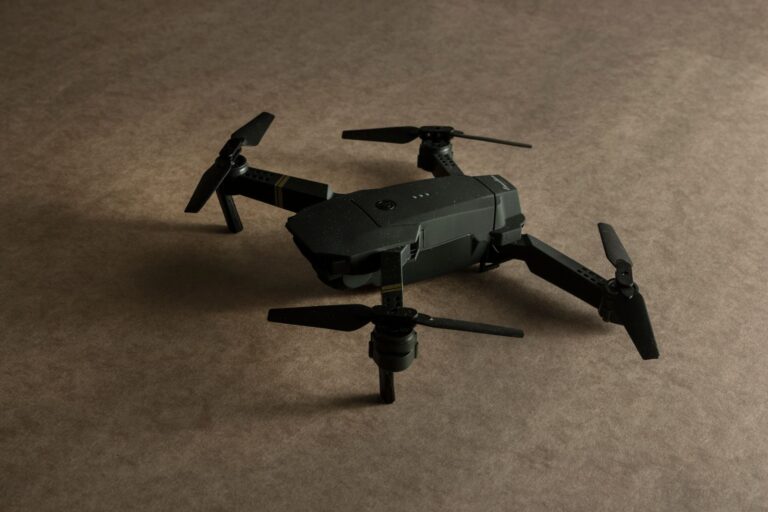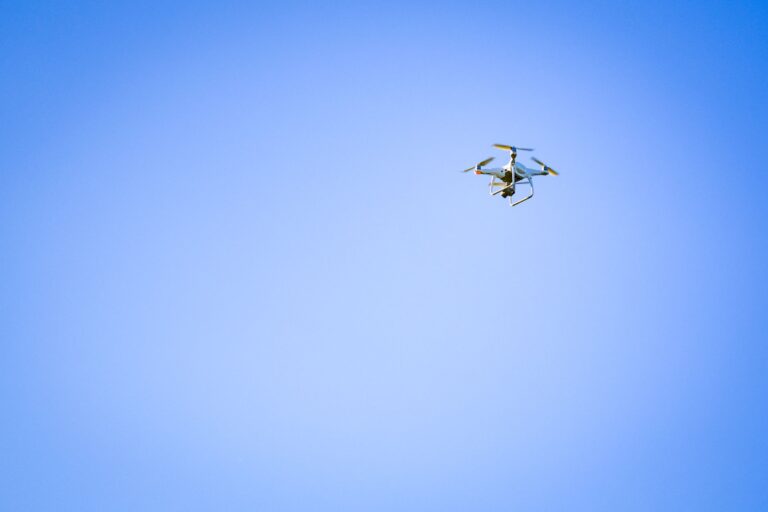

Amazon has begun operations of its automated drone delivery service in Baton Rouge, marking another expansion of the company’s effort to establish last-mile logistics infrastructure beyond traditional ground-based methods. The program leverages unmanned aerial vehicles to deliver packages directly to customers’ addresses in select areas of the Louisiana capital, representing a shift toward autonomous delivery in a mid-sized metropolitan market. This deployment demonstrates how drone delivery infrastructure is transitioning from controlled, limited-scope pilots into operational service models that handle regular customer orders.
The service targets shorter delivery routes and lower-weight packages—typically items under five pounds—which drones can handle efficiently. Unlike drone delivery experiments in rural areas or specially designated zones, Baton Rouge presents an urban environment with its own set of regulatory, airspace, and infrastructure challenges. Amazon’s presence in the city includes existing fulfillment operations, giving the company a logistics foundation from which to launch the drone service.
Table of Contents
- What Does Amazon’s Drone Delivery Service Actually Do in Baton Rouge?
- How Does Drone Delivery Differ From Traditional Last-Mile Logistics?
- Regulatory Framework Behind Baton Rouge’s Drone Operations
- Customer Experience and Practical Limitations
- Safety, Privacy, and Noise Concerns
- The Economics of Drone Delivery Scale
- What Drone Delivery Means for Baton Rouge’s Logistics Future
What Does Amazon’s Drone Delivery Service Actually Do in Baton Rouge?
Amazon’s drone program, branded as Prime Air, uses a fleet of aircraft designed to complete deliveries within a restricted operational area, typically a radius of several miles from a distribution hub or fulfillment center. In Baton Rouge, eligible customers in participating zones can select drone delivery as their option for qualifying orders. The system coordinates routing, maintains safety buffers around buildings and populated areas, and relies on communication systems to track each delivery in real-time. The drones operate under established flight corridors and follow geofenced boundaries set by both Amazon and the FAA.
A customer who receives a drone delivery receives a notification when the aircraft is en route, and the package lands in a designated drop zone—typically a backyard or open area—rather than at the front door. The entire operation is governed by specific regulatory permissions that Amazon has obtained through extended negotiations with federal aviation authorities, which took years to establish. Weather conditions significantly impact whether the service can operate on any given day. Rain, high winds, and thunderstorms prevent flights, meaning customers cannot reliably predict when their drone delivery option will be available. This limitation contrasts sharply with ground delivery, where poor weather rarely disrupts service entirely, making drone delivery a supplement to existing logistics rather than a replacement.
How Does Drone Delivery Differ From Traditional Last-Mile Logistics?
Traditional last-mile delivery—the movement of packages from a distribution center to a customer’s home—accounts for a substantial portion of overall shipping costs and environmental impact. trucks must navigate traffic, follow roads, and stop at numerous addresses sequentially. A single delivery vehicle might make hundreds of stops per route, creating congestion and emissions. Drone delivery bypasses roads entirely, traveling in straight lines through airspace and potentially reducing both time and fuel consumption for suitable deliveries. However, drone delivery has a critical constraint: payload capacity. Current commercial drones weigh between 5 and 10 pounds fully loaded, limiting them to small, lightweight items. A package containing books, electronics, or multiple items would exceed this threshold.
This means drone delivery cannot handle the full spectrum of goods that customers expect from Amazon. Heavy items, furniture, large electronics, or bulk orders remain entirely dependent on ground-based logistics, and likely will for years. Operational density presents another limitation. A delivery truck covers an entire neighborhood in a single route, serving dozens of addresses. A drone can deliver one package at a time, requiring multiple trips to serve the same area. This inefficiency means drone delivery works best for time-sensitive, small items where speed matters more than efficiency. For high-volume operations in densely populated areas, ground vehicles may actually remain more practical despite their traffic impact.
Regulatory Framework Behind Baton Rouge’s Drone Operations
Amazon’s ability to operate drone deliveries in Baton Rouge rests on federal approvals that took years to secure. The FAA categorizes drone operations into different risk levels, with commercial delivery falling under “low-altitude operations” that require specific authorizations. Amazon received Part 135 certification—the same classification used for commercial aviation—which allows the company to operate aircraft beyond the visual line of sight, a requirement for practical drone delivery. The Baton Rouge airspace itself presented unique coordination challenges. The city sits near industrial areas, residential neighborhoods, and other commercial aviation activity that required careful mapping and conflict resolution.
Amazon worked with local authorities and the FAA to establish specific corridors where drones can operate safely without interfering with manned aircraft or creating hazards to people on the ground. These corridors are not random; they follow routes that minimize exposure to populated areas and sensitive locations like hospitals or schools. Weather tracking and communication systems integrate with broader air traffic management infrastructure. Each drone departure and landing is logged, flight paths are continuously monitored, and any unexpected deviations trigger automatic safety protocols. This integration represents a technological infrastructure requirement that only a company with Amazon’s resources could reasonably deploy, creating a significant barrier to competitors attempting similar services in other cities.
Customer Experience and Practical Limitations
For customers in eligible delivery zones, accessing drone delivery involves a straightforward process: placing an order for a qualifying item and selecting drone delivery at checkout if available. The time window for arrival is typically two hours, and customers receive notifications as the drone approaches their address. Upon arrival, customers are instructed not to approach the aircraft, and packages are deposited in a safe zone that minimizes injury risk. The experience differs markedly from traditional delivery. A customer cannot specify an exact delivery time or hold a package for later collection. The drone arrives when the schedule dictates, meaning customers must be available during a two-hour window.
For working professionals or those without flexible schedules, this limitation can outweigh the convenience factor. Ground delivery, by comparison, offers a broader range of scheduled time slots and the option to work with a driver on timing. Factors like home structure and yard configuration matter in ways that traditional delivery never required. A small backyard, a roof’s overhang, or power lines create hazards that prevent drone landing. Amazon’s qualification system assesses addresses for drone eligibility before showing the option to customers, which means many addresses in Baton Rouge never see drone delivery as available, regardless of participation in the program. Properties with natural obstacles, difficult terrain, or proximity to sensitive areas are automatically excluded.
Safety, Privacy, and Noise Concerns
Automated aircraft operating in residential airspace raise legitimate safety questions. While Amazon’s drones include automated obstacle avoidance and fail-safe protocols, mechanical failures, software errors, or unpredictable interactions with wildlife are possible. A drone malfunction near a customer or pet creates injury potential that ground delivery does not present. The regulatory framework requires redundancy and testing, but no aviation technology achieves zero risk. Privacy concerns emerge from camera-equipped drones operating over residential neighborhoods.
Even if flight data and delivery routes are not directly exposed to customers, the infrastructure creates the possibility of aerial observation over private property. Regulatory approval includes restrictions on what data drones can collect and how it is stored, but the mere presence of aircraft equipped with navigation cameras creates a privacy footprint that some residents object to philosophically, independent of actual data practices. Noise from drone operations, though quieter than a delivery truck, is a localized disturbance that occurs directly over a home. Multiple drones serving multiple nearby addresses create cumulative noise that could prove irritating in residential areas, particularly during early morning or evening hours when users are more likely to notice such disturbances. Cities have begun imposing noise restrictions on drone operations, limiting windows for high-volume delivery activity.
The Economics of Drone Delivery Scale
For Amazon, the financial logic of drone delivery depends on operational scale. Each drone and its supporting infrastructure require significant capital investment. A single drone delivers one package at a time, creating a labor cost per delivery that must decline as volume increases. At small scale, drone delivery is expensive relative to ground delivery.
At hypothetical massive scale, per-delivery costs could compete with trucks, but that threshold remains theoretical in current operations. Weather unavailability directly impacts return on investment. If drones can operate only 60-70% of days due to weather, the annual utilization rate of physical assets declines significantly, raising per-delivery capital costs. This constraint particularly affects northern climates and regions with seasonal weather patterns. Baton Rouge’s subtropical climate with frequent afternoon thunderstorms during summer months and occasional heavy rain limits operational days, reducing the efficiency of infrastructure already in place.
What Drone Delivery Means for Baton Rouge’s Logistics Future
Baton Rouge’s status as a test market for drone delivery reflects both its logistics advantages and strategic value. The city is home to multiple Amazon fulfillment operations and serves as a regional distribution hub, providing the infrastructure backbone that drone operations require. A successful program in Baton Rouge can serve as a model for expansion into other mid-sized cities with similar characteristics.
The presence of drone delivery does not displace ground-based logistics; instead, it establishes a parallel system for specific use cases. Amazon continues to operate trucks, vans, and contract delivery networks throughout Baton Rouge because those systems handle the vast majority of packages and offer capabilities that drones cannot replicate. The drone program serves as a premium option for customers willing to accept the constraints of aerial delivery in exchange for speed and novelty on small eligible items.