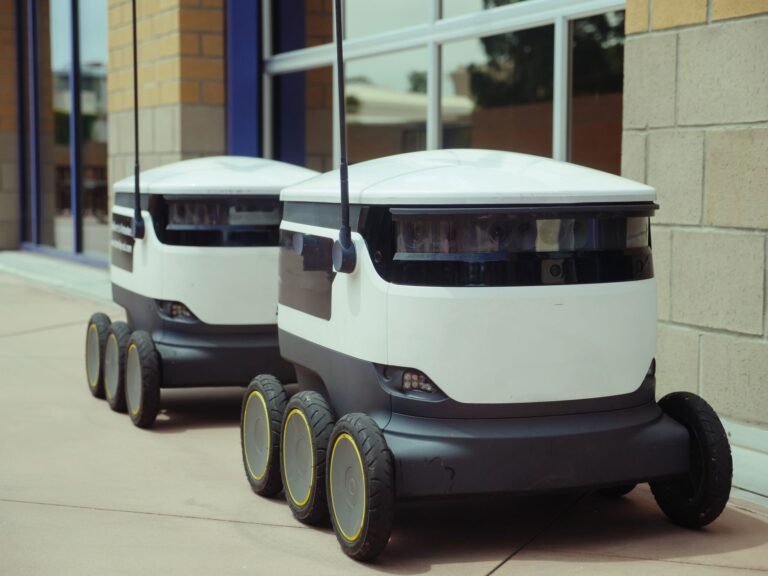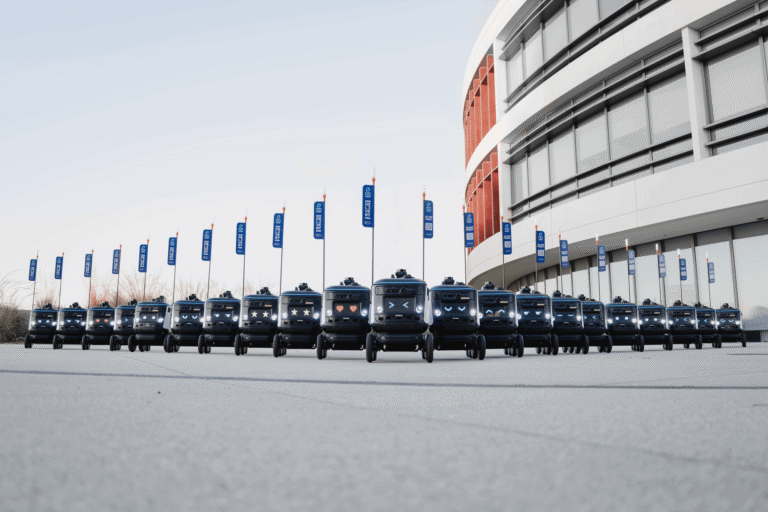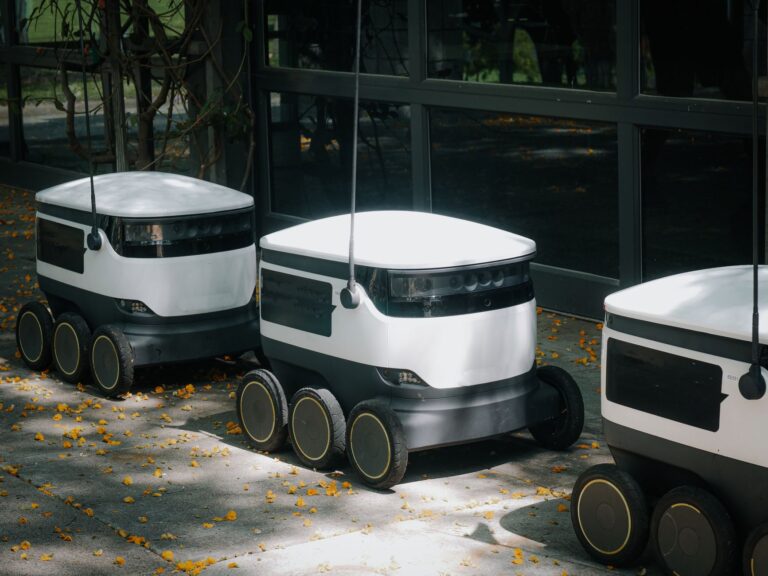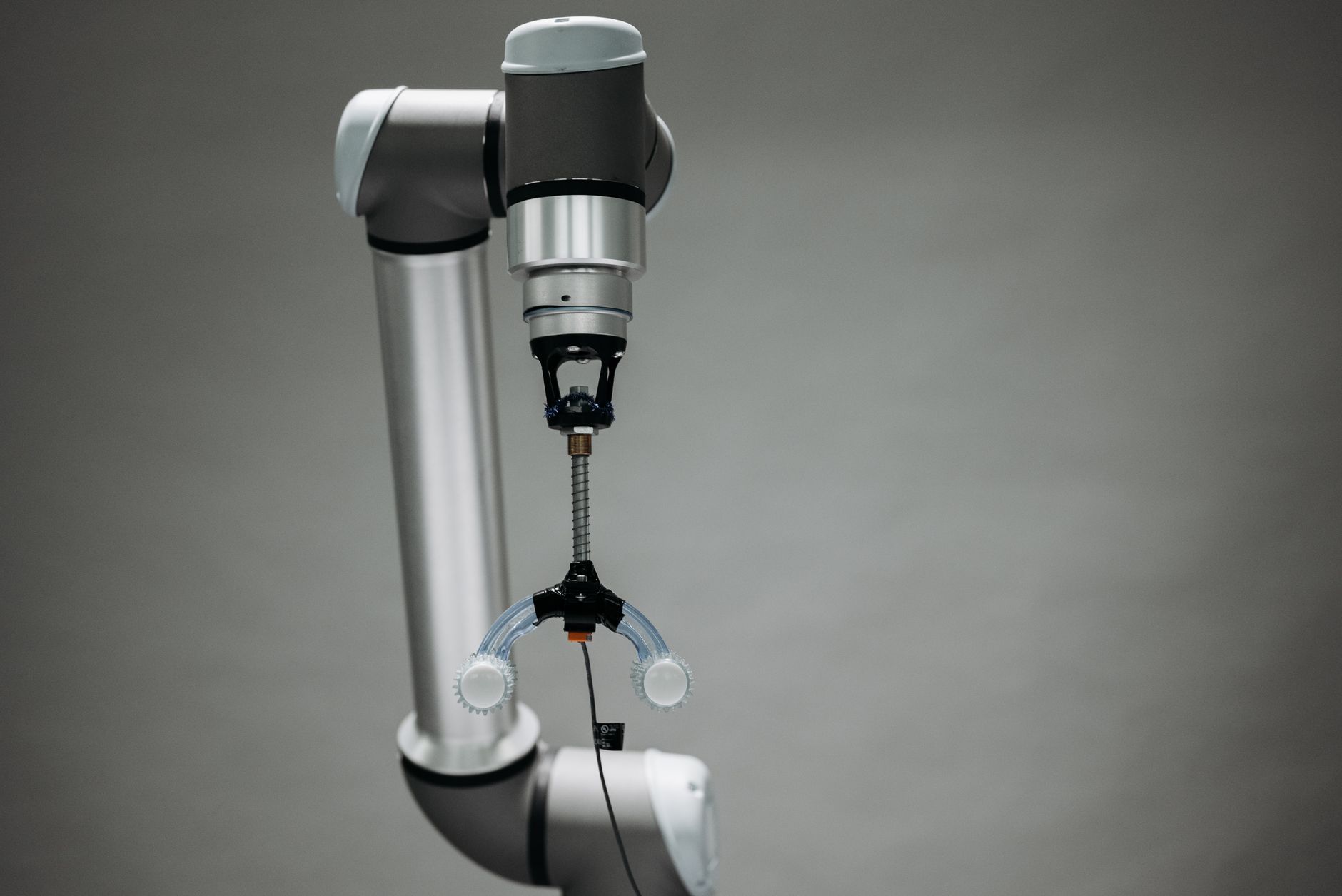

NeuraFrame represents an approach to robotic learning that offloads memory storage and retrieval to cloud-based systems, allowing robots to learn from experiences beyond the constraints of onboard storage and processing power. Rather than storing every learned behavior or sensor data point locally, robots using external cloud-based memory can access vast datasets, patterns, and learned models on demand, similar to how humans might reference a library instead of memorizing every fact. This architecture fundamentally changes what a robot can accomplish with limited onboard resources—a manufacturing robot on an assembly line, for example, could access years of quality control data from thousands of identical units to refine its own performance.
The system bridges the gap between edge computing on the robot itself and the unlimited resources available in cloud infrastructure. When a robot encounters a new situation, it can query the cloud memory system to find how similar scenarios were previously handled, download relevant models, or contribute its own newly learned patterns back to the shared knowledge base. This creates a network effect where robots improve collectively rather than individually, with each new experience and learned behavior potentially benefiting the entire fleet.
Table of Contents
- How Do Robots Traditionally Store and Learn Without Cloud Memory?
- Architecture and Technical Mechanisms of Cloud-Based Robotic Memory
- Real-World Applications and Industry Use Cases
- Integration Challenges and Network Architecture Considerations
- Limitations, Risks, and Dependency Considerations
- Model Training and Distributed Learning at Scale
- Regulatory Compliance and Operational Monitoring
- Frequently Asked Questions
How Do Robots Traditionally Store and Learn Without Cloud Memory?
Historically, industrial and service robots have been constrained by onboard storage limitations and processing capacity. A robot might carry internal memory sufficient for its programmed behaviors and sensor data from the current shift, but complex learning tasks required either expensive local compute upgrades or simplified learning models. Traditional approaches involve pre-programming behaviors or using rigid learning algorithms that don’t scale well when robots encounter novel scenarios. A warehouse robot using only local memory, for instance, would need to relearn navigation patterns each time the facility layout changed, losing accumulated knowledge about optimal routes. Cloud-based external memory solves this scalability problem by treating the robot as a lightweight edge device connected to a sophisticated learning backend.
Instead of each robot independently building its understanding of the world, all robots in a fleet can contribute to and draw from a shared knowledge repository. The performance difference is significant: a robot without external memory access might take weeks to become proficient at a task through trial and error, while a robot with cloud memory access can download a pre-trained model developed by dozens of similar robots and adapt it within hours. The limitation worth noting is latency sensitivity. Robots performing time-critical operations cannot afford to query cloud systems with high round-trip times—a surgical robot or a robot performing high-speed assembly cannot wait for network delays to retrieve memory. Systems like NeuraFrame must maintain local caches of frequently accessed data and ensure bandwidth-efficient communication, which adds architectural complexity.
Architecture and Technical Mechanisms of Cloud-Based Robotic Memory
The technical implementation involves several layers: edge computing on the robot itself handles real-time decisions and immediate responsiveness, a local cache stores frequently used models and data, and the cloud backend maintains the authoritative memory store with version control and optimization capabilities. Communication between robot and cloud is typically asynchronous when possible—the robot sends learning updates and queries in batches rather than constantly streaming data. The cloud system then performs computationally expensive tasks like model retraining, pattern analysis, and anomaly detection that would overwhelm a robot’s onboard processor. Data organization in cloud memory systems must account for the unique requirements of robotic learning. Unlike traditional databases, robotic memory systems need to quickly retrieve not just exact matches but also semantically similar experiences—if a robot encountered a gripper slipping on a blue plastic object, it should be able to access what similar robots learned about handling blue plastics, even if the shape or grip angle was slightly different.
This requires sophisticated indexing and similarity search capabilities. A collaborative robotic arm in a factory could query the cloud for “how have other units handled similar-weight objects with this material property” and receive relevant experience vectors in milliseconds. One significant limitation is data privacy and security. Robots continuously collecting environmental data and learning patterns could inadvertently expose sensitive information about production processes, facility layouts, or customer materials to cloud systems. Organizations must implement careful encryption, access controls, and data retention policies. Additionally, regulatory compliance in industries like healthcare or autonomous vehicles means robots cannot simply offload all decision-making to cloud systems—they must maintain sufficient local intelligence to operate safely even if cloud connectivity is lost.
Real-World Applications and Industry Use Cases
Manufacturing environments stand to gain substantially from cloud-based robotic memory. Consider a multi-site automotive supplier with identical assembly robots at five different facilities. Each robot learns from its local experience—parts fit differently based on temperature, humidity, and supplier variations. With cloud-based external memory, patterns learned at one facility become immediately available to all others. A robot in facility B can benefit from facility A’s discovery that parts from supplier X need a slightly different insertion angle at temperatures below 60 degrees Fahrenheit, cutting commissioning time and reducing defects. Collaborative robotics in shared workspaces present another compelling use case. Robots working alongside human operators need to learn safe interaction patterns, optimal collision avoidance strategies, and the preferences of different human teammates.
Storing this knowledge locally on each robot wastes redundant storage and prevents robots from learning from each other’s interactions. A cloud memory system enables one collaborative robot’s experience with ergonomic handoff techniques to inform how other units in the same facility approach similar tasks. A warehouse robot learns that smooth deceleration when approaching human workers reduces startled reactions—that insight can transfer to all robots in the network. Service robots deployed across multiple customer locations benefit similarly. A robot that cleans medical facilities faces entirely different contamination profiles than one deployed in office buildings. Cloud-based memory allows each unit to contribute learned cleaning strategies specific to its environment while accessing safety protocols and maintenance insights from the broader fleet. A robot deployed in a hospital learns which disinfectants work best on certain materials and can share this knowledge with units deployed in other healthcare facilities.
Integration Challenges and Network Architecture Considerations
Integrating external cloud memory into existing robotic systems requires architectural decisions about what stays local and what goes to the cloud. Real-time control loops, emergency stops, and safety-critical functions must always operate locally—a robot cannot afford to wait for cloud round-trip time to decide whether to stop when a human enters its workspace. Meanwhile, model training, historical analysis, and non-urgent learning tasks move to the cloud. This split architecture requires careful API design and clear boundaries about which decisions are made where. Network reliability becomes a critical operational concern. A robot without cloud connectivity must gracefully degrade to local-only operation, which means it needs sufficient onboard intelligence to function independently. This creates a design tradeoff: either robots are sophisticated enough to operate without cloud connectivity (defeating some efficiency gains) or they depend on reliable connectivity (creating vulnerability if networks go down).
Most industrial implementations use hybrid approaches where robots can operate at reduced capability without cloud access but perform optimally when connected. The comparison to human workers is instructive—a factory worker can still perform basic tasks without internet access, but their efficiency drops substantially without access to digital information systems. Network bandwidth is another constraint often underestimated. A fleet of 50 robots each sending high-resolution camera data or detailed sensor logs to the cloud can quickly overwhelm network capacity. Effective cloud memory systems implement aggressive data compression, intelligent batching, and edge processing to reduce what actually travels to the cloud. A robot might process hundreds of sensor measurements locally, compute a summary of what it learned, then send only the essential insights rather than raw data. This resembles how human brains consolidate daily experiences into lasting memories rather than storing every sensory detail.
Limitations, Risks, and Dependency Considerations
A fundamental risk of cloud-based robotic memory is single-point-of-failure vulnerability. When cloud infrastructure experiences outages or performance degradation, all connected robots are affected. A cloud provider’s maintenance window, security incident, or technical failure can impact an entire fleet’s performance. Industrial operations that depend on continuous productivity cannot fully depend on external systems without substantial redundancy and failover capabilities, which adds cost and complexity. Data staleness presents another practical limitation. A robot downloading a learned model from the cloud is using knowledge that may be hours or days old if the cloud system hasn’t yet processed and propagated the latest learning insights from other robots.
In rapidly changing environments, older models might lead a robot to make suboptimal decisions. A robot in a manufacturing environment might download a model that recommends a particular gripper approach, but that recommendation was based on parts from last week—if supplier quality has changed, the cloud model could guide the robot toward inefficiency or even damage. Security and competitive intelligence represent serious concerns. Knowledge stored in cloud systems can potentially be accessed by competitors, cloud provider staff, or attackers. Manufacturers are understandably reluctant to upload detailed information about their processes, part tolerances, or production rates to cloud systems. This creates a tension between the efficiency gains from shared learning and the business risk of exposing proprietary knowledge. Organizations must carefully evaluate what information can safely exist in shared cloud systems versus what must remain locally protected.
Model Training and Distributed Learning at Scale
Cloud-based systems enable sophisticated machine learning approaches that would be impossible with local-only robots. Federated learning, where model training happens on the cloud based on patterns learned by many robots, creates continuously improving systems. Rather than each robot learning independently, the cloud system identifies common patterns across all robots’ experiences, trains improved models, and deploys them back to the fleet.
A fleet of quality control robots inspecting components becomes increasingly accurate as the cloud system recognizes which defect patterns consistently indicate production problems versus false alarms. Transfer learning—applying knowledge learned in one context to accelerate learning in another—becomes practical at scale. A robot trained to handle rubber components can accelerate its learning when deployed to handle similar plastic components because the cloud system can transfer relevant models. This dramatically reduces the commissioning time and trial-and-error period for new robots or new applications.
Regulatory Compliance and Operational Monitoring
Robots using external cloud memory create audit trails and operational records that support regulatory compliance in regulated industries. Manufacturing facilities subject to FDA oversight or industry certifications can maintain detailed logs in the cloud showing exactly what each robot learned, what decisions it made, and why—supporting traceability requirements that purely autonomous local systems cannot provide. A pharmaceutical manufacturing robot’s cloud memory becomes part of the facility’s regulatory documentation, demonstrating that operations followed validated procedures.
Monitoring and diagnostic capabilities improve substantially with cloud-based memory. Operations teams can analyze fleet-wide performance patterns, identify robots that are underperforming or whose learning patterns deviate from the norm, and conduct root-cause analysis by examining the shared memory of similar robots. A robot on the edge of failure often exhibits subtle performance changes—its learned models drift slightly, its decision patterns shift. Cloud systems can detect these anomalies by comparing against the fleet baseline, enabling predictive maintenance before failures occur.
- —
Frequently Asked Questions
What happens to robot performance if cloud connectivity is lost?
Robots degrade gracefully, continuing local operations using cached models and local intelligence, though with reduced learning capability and optimization until connectivity is restored.
Can robots using cloud memory learn faster than robots with only local memory?
Yes—they can access pre-trained models from the entire fleet, skip redundant learning phases, and apply insights from thousands of similar experiences rather than discovering patterns independently.
Is storing robot learning data in the cloud a security risk?
Yes, it requires careful encryption, access controls, and compliance measures, as cloud systems may expose proprietary information about manufacturing processes or facility layouts to third parties.
How do cloud memory systems handle real-time safety-critical decisions?
Safety-critical control loops run locally on the robot; cloud systems handle non-urgent learning, optimization, and analysis, creating a hybrid architecture where local systems never depend on network latency.
What data compression techniques reduce cloud bandwidth requirements?
Robots compress raw sensor data into learning summaries, extract only relevant features, batch multiple updates together, and perform edge processing locally before sending insights to the cloud.
Can robots using the same cloud memory system interfere with each other’s learning?
Properly designed systems use safeguards to prevent one robot’s corrupted or anomalous learning from degrading fleet-wide models, but implementation quality varies significantly across systems.