
Arbe Robotics is critical for autonomous systems because their 4D radar technology provides weather-resistant, long-range environmental sensing that cameras and traditional lidar cannot match. While vision-based systems dominate autonomous vehicle development, they fail in rain, snow, fog, and glare—conditions that occur regularly in most climates. Arbe’s 4D radar adds velocity and point-cloud depth directly from radio waves, creating a sensing layer that works when optical sensors go blind. A Tesla operating in heavy rain with a camera-only stack has degraded perception; the same vehicle equipped with Arbe’s radar maintains full environmental awareness. The fundamental problem Arbe solves is sensor fusion redundancy.
Autonomous systems rely on multiple overlapping sensor types because no single sensor is robust enough. A lidar excels at precise 3D imaging but is confused by rain and snow. A camera provides rich semantic information but struggles in darkness and glare. Traditional radar sees velocity but historically produced low-resolution images. Arbe’s solution—a phased-array radar producing high-resolution 4D data (x, y, z, velocity)—fills the critical gap that neither cameras nor conventional radar could alone. Without this kind of all-weather sensing capability, autonomous systems remain fragile, failing catastrophically when environmental conditions change.
Table of Contents
- How Does 4D Radar Improve Autonomous Vehicle Perception?
- Where Do Sensors Fall Short Without 4D Radar Integration?
- Industrial Robotics and Autonomous Vehicle Applications Beyond Passenger Cars
- Integrating 4D Radar Into Existing Autonomous Systems
- Common Misconceptions and Inherent Limitations of 4D Radar
- Cost, Size, and Deployment Barriers
- The Redundancy Imperative and Real-World Failure Scenarios
How Does 4D Radar Improve Autonomous Vehicle Perception?
4D radar operates at millimeter-wave frequencies (typically 77 GHz in automotive applications), detecting objects by bouncing radio waves and measuring not just distance and angle, but also the velocity of every point in the environment. Traditional automotive radar produces a sparse point cloud with minimal depth information. Arbe’s technology densifies this to thousands of detectable points per frame, each tagged with velocity data, creating a perception layer that approaches lidar-like resolution. A vehicle detecting a pedestrian stepping into the road during a snowstorm experiences an immediate velocity signature from Arbe’s radar—the person is moving, and in what direction—while a camera sees only white noise. The range advantage is equally significant.
Arbe’s 4D radar can detect objects reliably up to 300 meters away, compared to roughly 150 meters for most production lidar systems. This extra detection distance translates directly into reaction time. At highway speeds, the difference between detecting a stopped vehicle at 200 meters versus 300 meters is the difference between a controlled stop and a collision. Lidar sees farther targets with better detail, but only in clear conditions; Arbe’s radar sees consistently, regardless of rain, dust, or atmospheric particles. The tradeoff is angular resolution—Arbe’s radar has less precise azimuth measurement than a high-end lidar—but for collision avoidance and long-range tracking, the velocity and weather robustness more than compensate.
Where Do Sensors Fall Short Without 4D Radar Integration?
Camera-based systems dominate the autonomous vehicle industry because cameras are cheap, provide semantic richness, and process familiar images with proven deep learning methods. However, cameras are fundamentally limited by photons. In a heavy rainstorm, a camera’s image becomes a grey blur; in dense fog, visibility drops to meters rather than hundreds of meters. Lidar is more robust to weather than cameras, but snow accumulation, rain droplets, and dust still degrade lidar performance significantly. A classic autonomous vehicle stack without radar—say, a system relying on cameras and lidar alone—will degrade its perception range by 40–60% during heavy precipitation.
This is not a minor edge case: weather-related road fatalities account for roughly 21% of all vehicle crashes in the US, and seasonal variations mean autonomous vehicles without all-weather sensing are fundamentally unsafe in much of the world. A critical warning: relying on sensor fusion redundancy assumes the system can seamlessly switch between sensor modalities or intelligently weight conflicting data. A camera detecting a pedestrian, lidar seeing nothing (due to rain), and Arbe’s radar showing a moving object creates a data conflict that requires sophisticated arbiter logic. Systems that lack this arbitration can oscillate between conflicting decisions or produce phantom detections. Arbe’s radar data is often cleaner than weather-degraded camera or lidar data, but a poorly designed fusion algorithm can still reject valid radar detections in favor of confident but incorrect camera detections. The sensor hardware is only half the problem; fusion architecture determines whether the redundancy actually improves safety or introduces new failure modes.
Industrial Robotics and Autonomous Vehicle Applications Beyond Passenger Cars
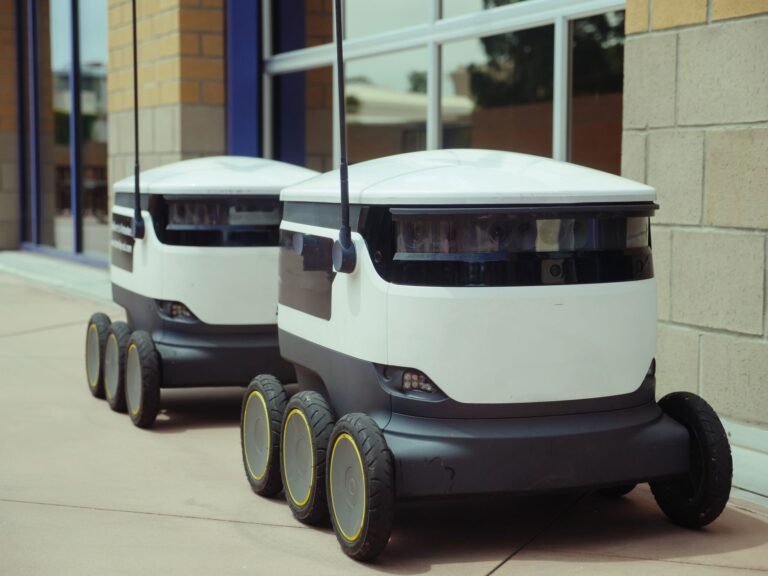
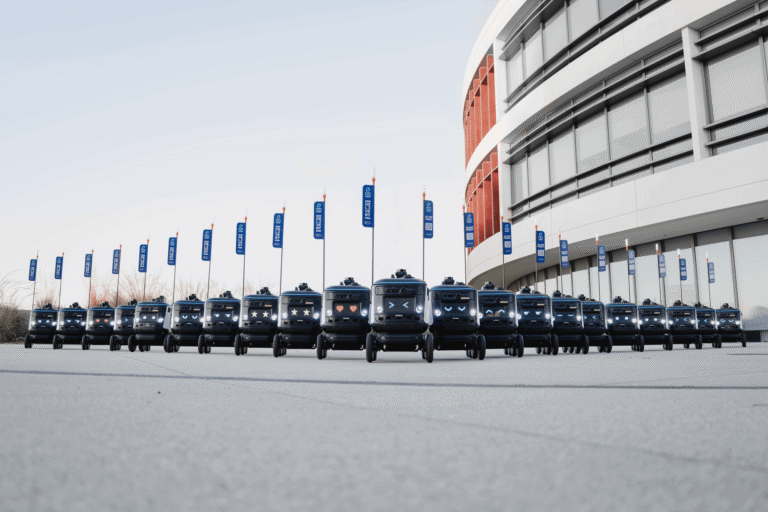
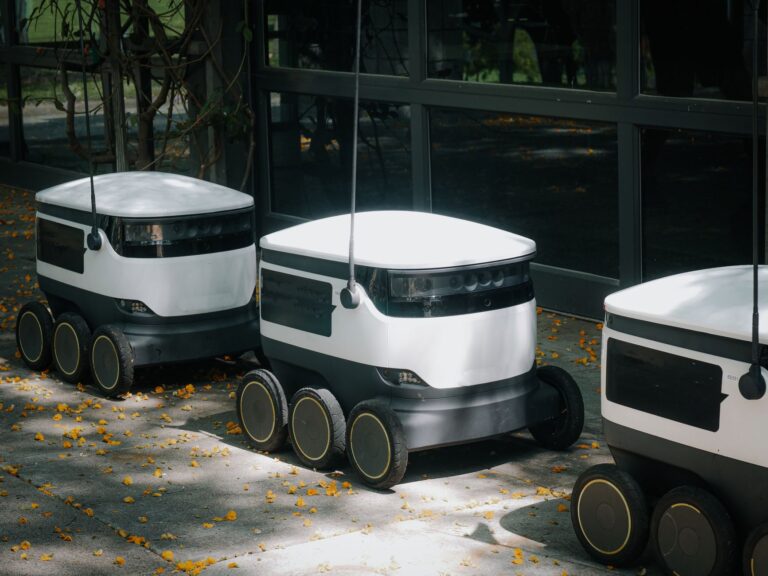
Arbe’s technology extends far beyond passenger vehicles. Autonomous forklifts, delivery robots, and construction equipment operating in warehouses, ports, and outdoor industrial sites encounter weather, dust clouds, and low-light conditions constantly. A warehouse using an autonomous forklift system with only lidar will lose perception during a cleaning procedure when dust fills the air; adding Arbe’s 4D radar allows the system to continue operating safely. Agricultural autonomous tractors plowing fields during rain, planting in early morning mist, and harvesting in dust clouds all benefit from radar’s all-weather sensing. Mining autonomous haul trucks operate in underground shafts with water spray and dust; lidar struggles, but radar sees through it. In each case, the same principle applies: Arbe’s technology allows autonomous systems to work in conditions where optical sensors fail, dramatically expanding the operational envelope.
The adoption pattern in industrial robotics mirrors the passenger vehicle trend. Early deployments often use single-sensor stacks (lidar only, or camera only) because they are simpler and cheaper. As systems scale into production and weather-related failures accumulate, operators bolt on additional sensing layers. Adding Arbe’s 4D radar retroactively is cheaper than redesigning an entire autonomous stack, but integration challenges remain. Industrial equipment already running field software must accommodate additional sensor streams, new fusion logic, and higher computational load. The business case for Arbe in industrial settings is strong—downtime is expensive, safety is regulated, and all-weather operation is a direct competitive advantage—but adoption still lags behind the passenger vehicle ecosystem.
Integrating 4D Radar Into Existing Autonomous Systems
The practical challenge of integrating Arbe’s radar into an existing autonomous stack is non-trivial. The system must ingest radar point clouds, convert them into the same coordinate frame as camera and lidar data, and then fuse all three streams into a unified scene representation. Arbe provides drivers and software libraries, but each original equipment manufacturer (OEM) implements fusion differently. Some treat radar as a sanity check—using it to veto implausible camera detections. Others treat it as a primary sensor and weight it most heavily in poor weather.
Neither approach is universally optimal; the right strategy depends on the downstream planning and control algorithms. One significant tradeoff involves computational cost. A vehicle running cameras, lidar, and fusion logic is already CPU-constrained; adding 4D radar increases the data flow by 20–30% and adds processing overhead for radar-specific perception algorithms. A system that was barely fitting in the available hardware budget may require faster processors or offloading some fusion to the cloud. Arbe’s own software stack is optimized for this problem, but the cost of integration—engineering time, hardware upgrades, testing—can easily dwarf the cost of the sensor itself. Smaller autonomous vehicle companies and roboticists often face a choice: start with Arbe’s 4D radar from the beginning (cleaner architecture, higher upfront cost) or add it later as a retrofit (cheaper initially, more complex integration).
Common Misconceptions and Inherent Limitations of 4D Radar
A widespread misconception is that 4D radar will eventually replace cameras and lidar, creating a “camera-free” autonomous vehicle. This is unlikely. Radar excels at detecting objects and measuring velocity but provides no semantic information about what an object is—a person, a bicycle, a cardboard box, or a piece of debris all produce radar signatures. Cameras excel at semantic segmentation and fine visual detail but fail in poor weather. Lidar produces dense point clouds with rich depth information but is weather-sensitive. The future of robust autonomous systems is not single-sensor dominance but intelligent, robust fusion of all three.
Arbe’s radar is not a replacement for other sensors; it is a missing layer that was conspicuously absent from most autonomous stacks until recently. A limitation specific to Arbe’s current technology is that 4D radar’s angular resolution remains coarser than lidar or camera resolution. A high-end automotive lidar can resolve objects with sub-meter accuracy at distance; Arbe’s radar may require 2–3 meters to distinctly separate two nearby objects at the same range. For some applications—particularly precise maneuvering in tight spaces—this coarser resolution is a drawback. Additionally, Arbe’s radar can produce ambiguous returns in complex urban environments with many reflective surfaces. A radar echo bouncing off a building, a vehicle, and then the road surface can create phantom detections at impossible locations. Fusion logic must filter these artifacts, but a naive implementation can bloat the detection list with false positives, actually degrading system safety.
Cost, Size, and Deployment Barriers
Arbe’s 4D radar modules are expensive—roughly $2,000–$3,500 per unit at current production volumes, compared to $500–$1,000 for conventional automotive radars and $100–$200 for camera modules. For a high-end autonomous vehicle incorporating lidar ($20,000+), cameras, and conventional radar, adding Arbe’s 4D radar increases sensor cost by 15–25%. This is tolerable for robotaxis and autonomous trucks where the business case justifies spending on reliability, but it is a significant barrier for consumer vehicles aiming to reach sub-$40,000 price points. As Arbe scales production, costs will decline, but the sensor will remain a premium component. Cost also extends to the compute pipeline: processing and fusing 4D radar data at 10–20 frames per second requires embedded processors fast enough to handle the workload, adding another $500–$1,000 to the vehicle’s compute budget.
Physical integration presents another constraint. Arbe’s antennas are relatively compact—a single unit measures roughly 70 x 45 x 40 millimeters—but vehicles require multiple units (front, rear, and possibly sides) to achieve 360-degree coverage. Each unit needs a clear path to the environment; placing a radar behind plastic bumpers is possible but reduces performance. Aesthetically, designers must accommodate multiple radar housings without degrading the vehicle’s appearance. Some OEMs have integrated Arbe’s radar behind grilles and bumpers; others have had to redesign fascias to accommodate the sensors. This integration cost—development effort, tooling, and potentially revised supply chain logistics—is rarely discussed but can equal or exceed the sensor hardware cost.
The Redundancy Imperative and Real-World Failure Scenarios
Autonomous systems operating in uncontrolled environments must handle sensor failures gracefully. If a lidar fails, the system loses depth information but still has camera and radar data. If a camera fails due to glare or obscuration, the system still has lidar and radar. If Arbe’s radar fails, the system still has camera and lidar—less robust than before, but potentially still safe. The value of Arbe’s 4D radar is not that it is perfect; it is that it provides an additional constraint on perception. A camera might incorrectly classify a reflective traffic sign as a person; if lidar confirms the sign’s high position and Arbe’s radar shows no motion, the false detection is corrected. This layered validation model has proven effective in safety-critical domains like aviation and medical diagnostics.
Autonomous vehicles are beginning to adopt the same philosophy: multiple sensors, multiple detection algorithms, and cross-validation at the fusion layer. Real field deployments reveal why this redundancy matters. Autonomous delivery vehicles tested in California reported camera misidentifications during sunset glare and lidar degradation during dust storms from wind events. Adding Arbe’s 4D radar resolved both failure modes: the radar saw through glare and dust, providing data that corrected camera misidentifications and supplemented degraded lidar. The vehicle’s autonomy system rejected implausible detections when radar and camera disagreed, reducing false-positive obstacle detection by 35% in adverse weather. This is not theoretical; it is production data from real vehicles operating in uncontrolled conditions. Without Arbe’s radar, those vehicles would have required either manual override during adverse weather or acceptance of substantially higher collision risk. The sensor fills a concrete gap that automotive engineers have struggled to solve for years.