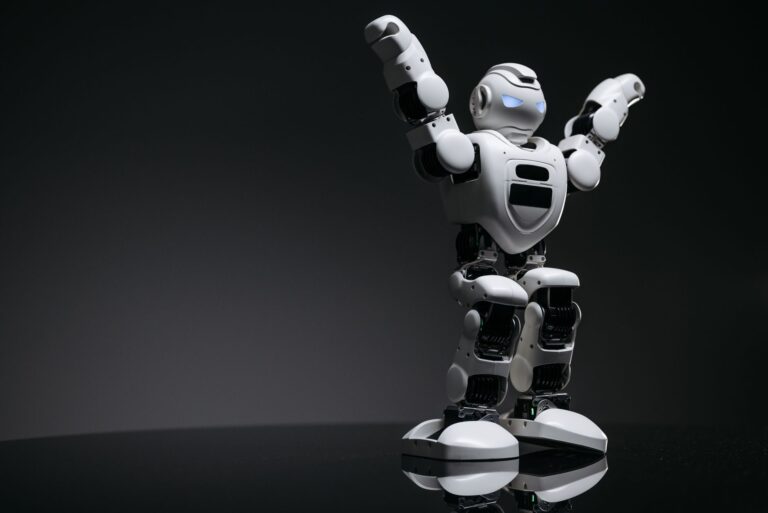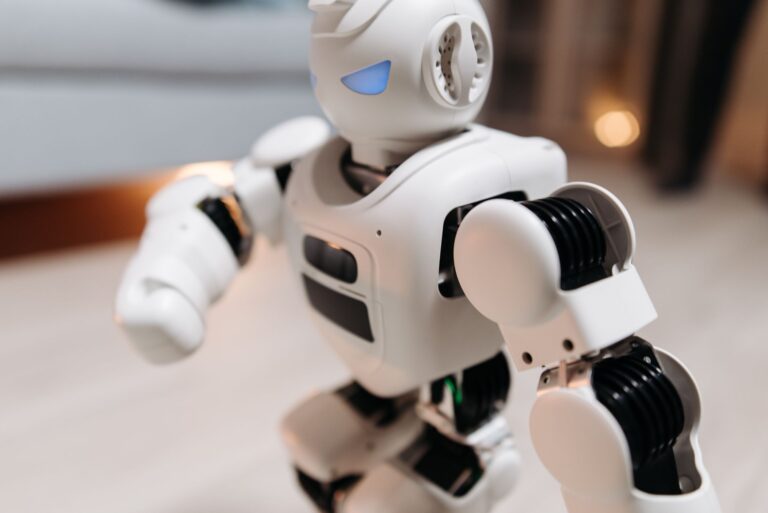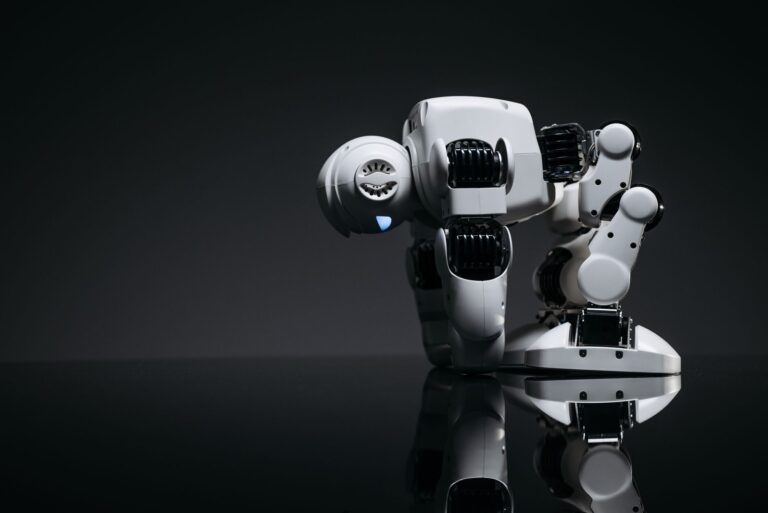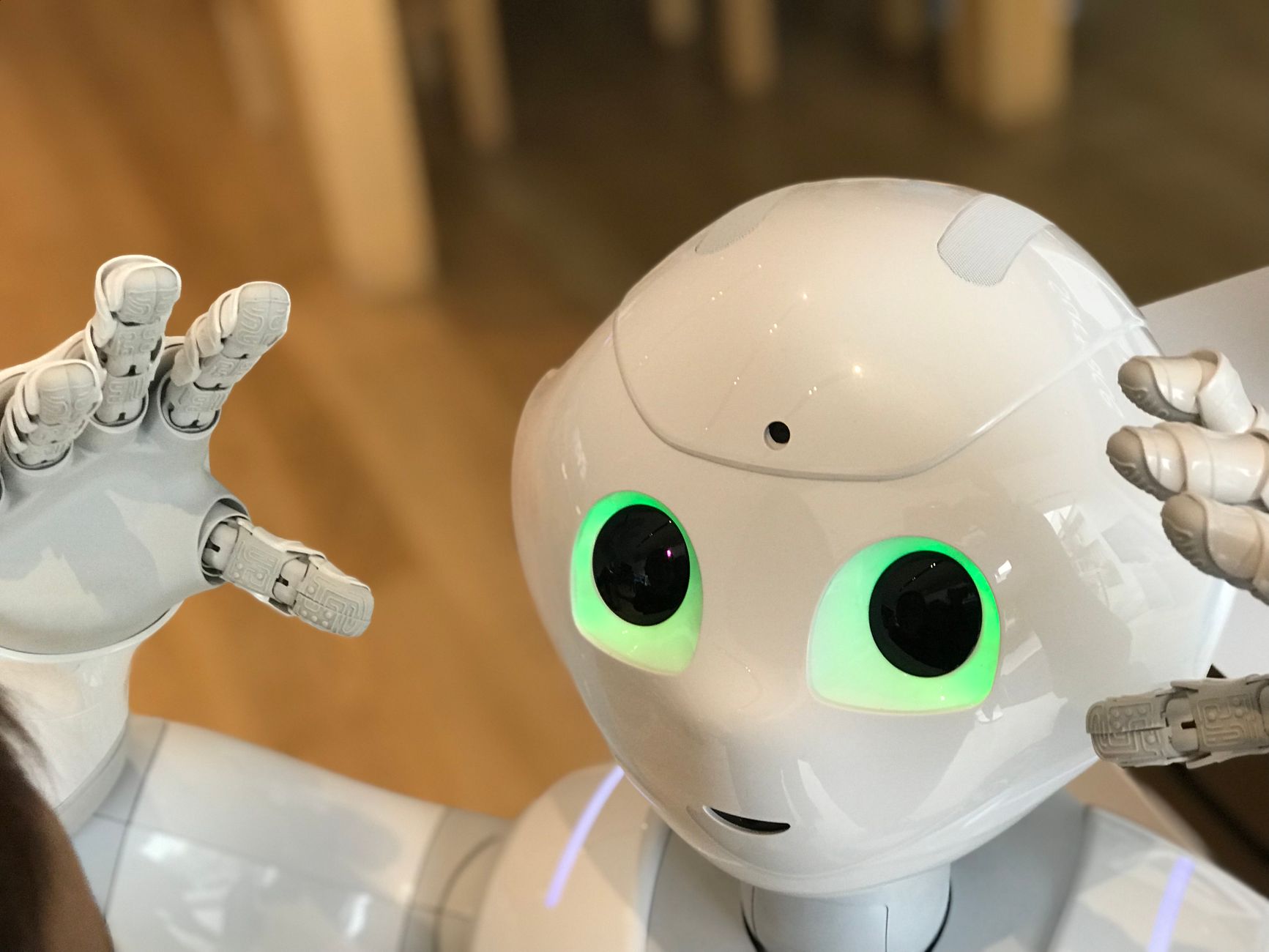

Intelligent robotics platforms have crossed a critical threshold in 2026: the transition from experimental prototypes to sustained production deployment. Major manufacturers are now rolling off thousands of units annually, with commercial platforms available for enterprise purchase and integration into real manufacturing environments. This shift from laboratory proof-of-concept to factory floor reality represents a fundamental change in how the robotics industry measures progress—no longer by research milestones or investor hype cycles, but by production volume and measurable real-world deployments. The scale of this moment is evident in concrete metrics. Agibot, which led global shipments in 2025, has now produced its 15,000th humanoid robot, demonstrating that high-volume manufacturing of complex robotic systems is not only possible but sustainable.
Simultaneously, Boston Dynamics deployed its commercial electric Atlas platform to Hyundai’s Metaplant Application Center in Georgia starting February 2026, with the entire year’s production allocation committed to enterprise partners. These are not limited trials or pilot programs—they represent committed manufacturing capacity and actual deployment at industrial scale. What makes 2026 distinct from previous robotics cycles is the alignment of three enabling factors: proven hardware platforms, standardized software frameworks, and commercial entities willing to absorb significant capital expenditure for automation. The industry has moved past the point where robots are curiosities or engineering demonstrations. They are now production tools with measurable return on investment.
Table of Contents
- How Are Humanoid Robots Achieving Production-Scale Manufacturing?
- Vision-Language Models as the Backbone of Robot Intelligence
- Hardware Components Purpose-Built for Robotic AI
- Market Structure: From Scarce Prototypes to Available Platforms
- The Persistent Challenge of Deployment Variability
- Software Standardization Enabling Broader Adoption
- Real-World Deployment at Scale: Beyond Pilot Programs
- Frequently Asked Questions
How Are Humanoid Robots Achieving Production-Scale Manufacturing?
The path from a working prototype to 15,000 units annually involves solving problems that rarely appear in robotics literature. Manufacturing tolerances must tighten, supply chains must stabilize, and the robots themselves must operate reliably without continuous engineering intervention. Agibot’s production milestone reflects not just engineering success but the ability to source components, train assembly workers, and troubleshoot failures across multiple production runs. Hyundai’s integration of Boston Dynamics Atlas into its manufacturing facility demonstrates that enterprise adoption requires more than a working robot—it demands integration with existing factory systems, control software, and safety protocols. The fact that Hyundai and Google DeepMind have committed an entire year’s production capacity signals confidence that these platforms can function within industrial schedules and quality requirements.
This is fundamentally different from deploying a robot to a controlled research lab environment. The increased availability of commercial humanoid platforms mirrors this trend. The market expanded from three commercial options in 2024 to multiple competing platforms in 2026. Competition in a still-young market typically indicates that several companies believe they can profitably manufacture and sell these systems, which suggests production costs are approaching commercial viability. However, the cost per unit remains substantially higher than conventional industrial robots, limiting adoption to applications where humanoid form factor provides genuine advantages.
Vision-Language Models as the Backbone of Robot Intelligence
The software layer supporting 2026 deployments relies heavily on vision-language action (VLA) models, which combine visual perception with language understanding to drive robot behavior. At least eleven commercial deployments have adopted VLA models as their primary policy framework by Q1 2026—a significant standardization on a particular architectural approach. This concentration suggests the robotics industry is converging on specific technical patterns rather than pursuing divergent solutions. One practical limitation of VLA-based systems is their computational cost. Running these models in real-time traditionally required data center-class GPU hardware.
However, quantized versions of VLA models can now operate at 10 to 25 frames per second on consumer-grade GPUs—a critical breakthrough that enables edge computing directly on robot hardware rather than requiring constant network connectivity to remote processing. This shift toward on-robot inference reduces latency and dependency on cloud infrastructure, making autonomous operation more feasible in environments with unreliable connectivity. The standardization around VLA models has a trade-off. While it accelerates deployment by allowing companies to build on proven architectures, it also concentrates risk in a single technical approach. If fundamental limitations of current VLA models emerge during large-scale deployment, the entire ecosystem faces simultaneous challenges. This centralization of architectural choice differs from previous industrial automation eras where multiple competing approaches coexisted within manufacturing environments.
Hardware Components Purpose-Built for Robotic AI
Supporting these intelligent platforms is an emerging ecosystem of AI-native hardware components. Intel’s RealSense D585 Pro depth camera, announced at Automate 2026, exemplifies this trend—a sensor designed not just for accurate depth sensing but with integrated edge AI acceleration and software-defined capabilities. Traditional depth cameras required separate processing pipelines; AI-native components incorporate processing at the hardware level. These specialized sensors represent a significant cost multiplier in robot systems.
A depth camera with edge AI acceleration costs substantially more than a conventional camera, and the software stack required to use AI-native features adds further complexity. Manufacturers must weigh whether the computational advantages of hardware-native AI acceleration justify the increased capital expense and integration complexity. For high-volume industrial deployment, this calculation favors specialized hardware; for lower-volume or experimental robotics, conventional sensors often remain more practical. The shift toward AI-native components indicates the robotics industry is optimizing for scale and production, not experimental flexibility. Once a company commits to a particular sensor architecture and software ecosystem, changing components becomes costly. This lock-in effect can limit the pace of innovation, as manufacturers become reluctant to abandon working systems to chase marginal improvements in newer hardware.
Market Structure: From Scarce Prototypes to Available Platforms
The transition from three commercial platforms in 2024 to multiple offerings in 2026 fundamentally changes market dynamics. Scarcity has defined robotics markets historically—limited production capacity meant limited choice and high prices. A broader selection of platforms allows enterprises to evaluate options, negotiate pricing, and choose systems aligned with specific factory requirements rather than adapting requirements to fit available hardware. However, this multiplicity of platforms creates fragmentation in software and integration standards. Each manufacturer’s platform requires distinct configuration, calibration, and integration work.
An enterprise deploying Boston Dynamics Atlas makes a different long-term investment than one deploying Agibot units, not just in hardware costs but in workforce training, maintenance relationships, and software ecosystem. This fragmentation is typical of immature markets transitioning toward standardization—several years of competition will likely consolidate the field around a smaller number of dominant platforms. The availability of platforms for both purchase and lease represents another critical shift. Leasing models reduce the capital barrier to entry for smaller manufacturers and allow enterprises to test robotic deployment before committing to ownership. This financing flexibility accelerates adoption by shifting risk from end-users back to manufacturers, who must ensure their platforms function reliably to make lease agreements profitable.
The Persistent Challenge of Deployment Variability
Despite standardization around VLA models and increasing hardware maturity, deployment of humanoid robots remains contextual and challenging. A robot that functions reliably in one factory environment may require significant recalibration for different floor surfaces, lighting conditions, or task variations. The software frameworks supporting these systems are designed for general capability, but real-world performance depends heavily on environment-specific tuning and integration work. This variability creates a deployment tax—significant engineering effort required to move from a working system in the manufacturer’s lab to a functioning system in a customer’s facility. Hyundai’s Metaplant deployment likely involved months of integration work beyond simply receiving the Atlas platform.
This integration complexity means the effective cost of deployment extends far beyond hardware and software license costs. Enterprises considering robotic systems must budget for specialized technical staff and extended project timelines. Another limitation is reliability in edge cases. The systems deployed in 2026 perform well within their training distribution—structured factory environments with known objects and predictable conditions. They struggle with unexpected scenarios, novel objects, or environmental changes outside their training data. This limitation means humanoid robots function best as specialized tools for well-understood tasks rather than general-purpose factory workers capable of adapting to arbitrary new challenges.
Software Standardization Enabling Broader Adoption
The convergence on VLA-based approaches has created a shared software foundation that reduces the barriers to deployment. Rather than each robotics company developing proprietary AI frameworks, many can build on common model architectures and share optimizations for consumer-grade hardware. This standardization mirrors previous industrial automation cycles where standardized interfaces and protocols accelerated broader adoption.
Open-source contributions and shared model weights from research institutions have accelerated this standardization. Companies implementing VLA-based systems can leverage publicly available models rather than training systems from scratch, significantly reducing development time and cost. This ecosystem effect is relatively new in robotics—previous industrial automation relied more heavily on proprietary, closed systems from individual manufacturers.
Real-World Deployment at Scale: Beyond Pilot Programs
The distinction between 2026 and previous robotics cycles lies in the scale of real deployment. Agibot’s 15,000th unit represents actual robots functioning in production environments, not limited trials involving a handful of systems. These thousands of units are in operation, and their performance data provides genuine insight into reliability, maintenance requirements, and practical deployment challenges rather than theoretical capabilities.
Hyundai’s commitment of Boston Dynamics’ entire 2026 production allocation signals that major industrial manufacturers now view humanoid robots as sufficiently mature for integration into their production roadmaps. This represents a fundamental shift in enterprise confidence—manufacturers would not allocate production capacity to systems they expected to fail or face significant deployment challenges. The fact that both Hyundai and Google DeepMind are backing these deployments indicates alignment between manufacturing industry demand and robotics innovation, suggesting this is not a temporary trend but a sustained shift in how manufacturing operations evolve.
- —
Frequently Asked Questions
Are these robots replacing human workers or augmenting them?
Current deployments focus on specific, well-defined tasks within structured environments—not general-purpose replacement. Most industrial applications position robots alongside human workers for tasks involving repetitive motion, hazardous conditions, or precision requirements beyond typical human capability.
What is the actual cost of deploying a humanoid robot system?
Hardware costs vary significantly by platform, but enterprise deployment budgets typically exceed hardware cost by 2-4 times when accounting for integration, calibration, software customization, and workforce training.
How reliable are these platforms in continuous operation?
Deployment data from 2026 shows systems operating for thousands of hours, but reliability varies significantly based on task complexity and environment. Structured, repetitive tasks show higher reliability than diverse, adaptive tasks.
Can these robots be easily reprogrammed for different tasks?
Current systems require significant reconfiguration for new tasks. While VLA models provide generality, factory-specific deployment still requires environment-specific adaptation and testing.
Why focus on humanoid platforms instead of specialized robots?
Humanoid form factor provides advantages in environments designed for human workers—existing factory layouts, tool compatibility, and infrastructure can be leveraged without redesign.
What happens if a robot fails during production?
Current deployments include extensive monitoring and fault detection systems. Failures trigger alerts and fallback to human operation or alternative systems, but predicting and preventing failures remains a significant technical challenge.