
SoftBank Group CEO Masayoshi Son is seeking up to $100 billion from Gulf investors for a new wave of AI investments, according to Financial Times reporting summarized by Reuters. He held discussions in recent weeks with senior Gulf figures, including in the United Arab Emirates, about the potential fundraising.
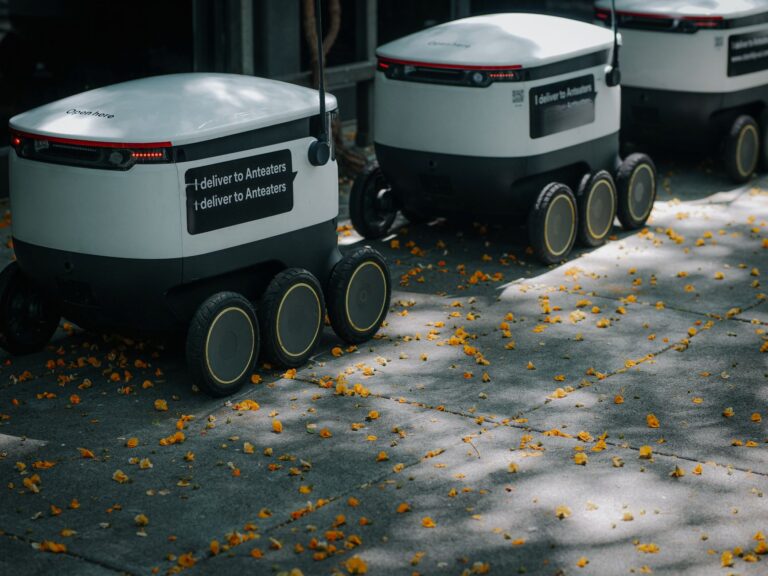
The strategy is buy-and-upgrade, not startup bets. The proposed fund would acquire established companies and improve operations with AI, robotics, and other advanced tools, as PrimeXBT reports. SoftBank's robotics and physical-AI unit, Roze, is expected to supply much of that automation.
Table of Contents
- What would the fund buy?
- Why Roze matters to automation teams
- Why outside money is needed now
- What should robotics buyers and sellers do?
What would the fund buy?
The target is operating businesses outside pure tech. These are firms where vision systems, mobile robots, scheduling software, and process automation can cut cost and raise output. The focus is applying tools, rather than building new AI models.
For robotics vendors, that means potential enterprise customers at scale. A logistics firm, manufacturer, or service chain under this fund could become a multi-site deployment. The sales motion would be operational improvement, not research partnership.
Why Roze matters to automation teams
Roze is SoftBank's robotics and physical-AI unit. Physical AI means software that controls machines in the real world, such as arms, carts, and inspection systems. Roze is expected to play a central role by providing AI and robotics to the acquired companies.
That structure would make Roze both supplier and standard-setter. Component makers, integrators, and fleet managers could face one preferred stack across many sites. Teams that already work with Roze-compatible interfaces will adapt faster.
Why outside money is needed now
The push follows heavy OpenAI spending. SoftBank completed a final $10 billion tranche on Oct. 1, finishing a $30 billion follow-on and bringing cumulative OpenAI investment to $64.6 billion for about 13% ownership, according to AI Affairs.
It raised $11.1 billion in September in the largest high-yield corporate bond sale globally to support that commitment. That balance-sheet pressure helps explain the Gulf approach. Gulf capital previously anchored the nearly $100 billion 2017 Vision Fund, with Saudi Arabia's PIF and Abu Dhabi's Mubadala as major backers. Son is returning to a familiar funding base for a different thesis.
What should robotics buyers and sellers do?
Buyers should treat this as a signal to benchmark automation now. Map repetitive material handling, inspection, cleaning, and data-entry tasks that robots and AI can already handle.
Clean task data and floor layouts matter more than pilot hype. Sellers and integrators can prepare for larger, faster rollouts: The talks remain early, with no final agreement announced.
- package proven cells and software that deploy without custom engineering
- document labor savings, uptime, and safety gains in plain numbers
- track Roze partnerships and interface requirements for compatibility