
Rockwell Automation is not the next NVIDIA—it’s charting its own path as the cornerstone of AI-powered industrial transformation. While NVIDIA dominates the compute infrastructure that enables modern AI, Rockwell Automation (NYSE: ROK) is the world’s largest company dedicated to industrial automation and digital transformation, positioning itself to capture the manufacturing and logistics sector’s shift toward intelligent, autonomous operations. The distinction matters: NVIDIA builds the chips that power everything; Rockwell builds the systems that put those chips to work on factory floors.
The real story here is a strategic partnership between two companies playing complementary roles in reshaping how factories operate. The numbers tell part of the story. In Q2 fiscal 2026, ROK reported sales of $2.24 billion, up 12% year-over-year with organic growth of 9%, and management raised the full-year sales outlook to $8.9 billion. More importantly, Rockwell recently deepened its collaboration with NVIDIA across four major areas—edge-based generative AI, digital twin technology, autonomous mobile robots, and next-generation manufacturing capabilities—signaling that the company is making a deliberate bet on becoming the industrial AI platform of choice.
Table of Contents
- Why Rockwell Automation Is Betting Heavily on Industrial AI
- The Digital Twin and Autonomous Robot Strategy—Where ROK Differentiates
- Generative AI for Frontline Operators—A Practical Example
- Analyst Consensus and Valuation Reality
- The Earnings Headwind Nobody’s Talking About
- The OTTO Motors Opportunity in Autonomous Logistics
- What Comes Next—The AI-Powered Factory Floor
- Conclusion
Why Rockwell Automation Is Betting Heavily on Industrial AI
Rockwell Automation’s partnership with nvidia represents a fundamental shift in how the company approaches its core mission: automating and optimizing factory operations. The integration of NVIDIA’s Nemotron Nano—a small language model designed specifically for industrial use—into FactoryTalk Design Studio, Rockwell’s flagship software platform, is not a marketing exercise. It’s a technical infrastructure play. FactoryTalk is the central nervous system for thousands of manufacturing facilities worldwide, and embedding generative AI capabilities directly into it means operators, engineers, and planners will have AI assistance built into their daily workflows without having to adopt entirely new tools. This approach contrasts sharply with how many enterprise software companies handle AI integration—bolting it on as an afterthought or requiring customers to adopt separate platforms. Rockwell is integrating it into existing customer deployments, which is how you achieve rapid adoption.
The Nemotron Nano model was chosen specifically because it’s optimized for edge computing, meaning it can run directly in manufacturing environments without requiring constant cloud connectivity. This matters for factories in regions with unreliable internet, and it addresses real concerns about sending sensitive manufacturing data to third-party cloud providers. The financial performance supports the thesis that this strategy is resonating. FY2026 guidance calls for 3% to 7% reported sales growth and 2% to 6% organic sales growth, with adjusted EPS guidance of $11.20 to $12.20. That’s meaningful improvement over FY2025, when earnings declined 8.54% despite revenue growing less than 1%. The gap suggests operational challenges existed before—and the company is betting that AI-driven efficiency gains will help close that gap.

The Digital Twin and Autonomous Robot Strategy—Where ROK Differentiates
Rockwell’s integration of NVIDIA’s Omniverse platform into Emulate3D—the company’s digital twin software—opens a different kind of opportunity. Digital twins allow factories to simulate production scenarios before implementing them in the real world, reducing costly mistakes and equipment downtime. By adding NVIDIA’s physics simulation capabilities and AI learning agents, Rockwell can offer customers something that competitors can’t: a simulation environment where factories can test autonomous operations, optimize production flows, and train AI systems in a risk-free virtual environment before deploying them. But here’s the limitation: building effective digital twins requires detailed data models of physical facilities, and many manufacturers—especially smaller and mid-market operations—lack the technical expertise or data infrastructure to create those models. Rockwell will need to provide turnkey solutions or services, not just software, or risk limiting adoption to large enterprises that can afford custom engineering.
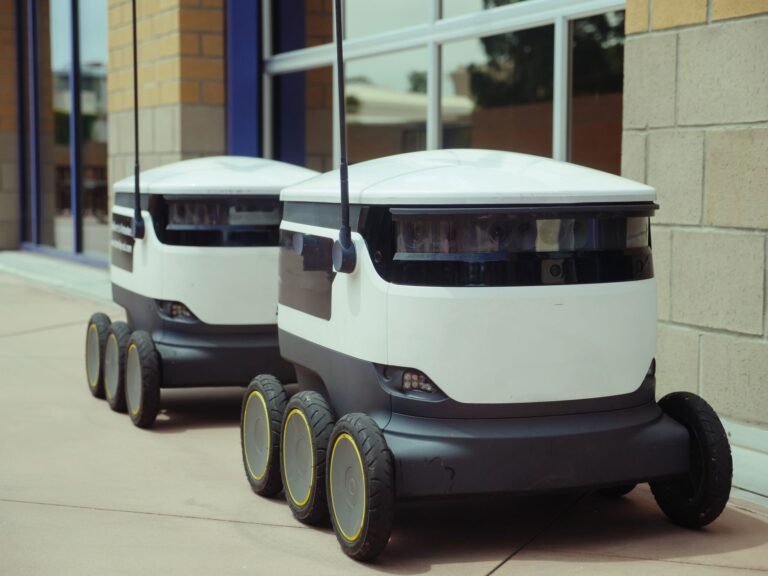
The company hasn’t explicitly addressed how it plans to handle this implementation barrier, which could constrain the TAM more than investors currently price in. The OTTO Motors division—Rockwell’s autonomous mobile robot business—benefits directly from this ecosystem. By integrating NVIDIA’s Isaac robotics platform, OTTO can develop next-generation AMRs with more sophisticated AI capabilities for navigation, obstacle avoidance, and coordination in crowded manufacturing environments. OTTO is already a player in the AMR market, but the partnership signals that Rockwell wants to own not just the software layer (FactoryTalk) but also the physical robotics layer. That’s a much broader footprint than traditional automation companies have pursued.
Generative AI for Frontline Operators—A Practical Example
The application of generative AI that might have the broadest impact is the simplest one: giving frontline factory workers—technicians, maintenance teams, quality inspectors—AI-powered assistants that can help them diagnose problems, find solutions, and optimize their work. A technician on the factory floor could query a system about why a particular machine is underperforming, and instead of calling an expert or hunting through documentation, receive an intelligent answer based on real-time sensor data and historical patterns. Rockwell’s integration of Nemotron Nano into FactoryTalk makes this practically feasible. The model runs on edge hardware, meaning low latency and no external cloud dependency.
A factory can deploy this without overhauling its IT infrastructure. The catch: the quality of answers depends on the quality of training data, and for this to work well, manufacturers need clean, labeled sensor data and operational logs. Legacy factories with decades of undocumented equipment and processes won’t see immediate value. This is why Rockwell’s enterprise sales and integration capabilities matter as much as the technology itself.

Analyst Consensus and Valuation Reality
Wall Street sees the opportunity. With an average “Buy” rating from 28 analysts and a 12-month price target of $462.17 compared to the stock price of $454.80 as of May 28, 2026 (implying 2.18% upside), the consensus view is cautiously optimistic but not exuberant. The modest price target upside suggests analysts believe the company’s strategy is sound but priced in, or that execution risk remains meaningful. The comparison to NVIDIA is instructive here.
NVIDIA’s stock has benefited from a narrative of inevitable AI domination across all sectors. Rockwell’s thesis is narrower—it’s about industrial AI specifically—which should mean lower volatility but also lower upside expectations. This is actually healthier for investors who understand that automation and manufacturing improvements follow longer sales cycles than the hype cycles that have driven some AI stocks. Rockwell’s adjusted EPS guidance of $11.20 to $12.20 for FY2026 suggests the market expects steady, deliverable progress, not the exponential gains that characterize earlier-stage AI companies.
The Earnings Headwind Nobody’s Talking About
Here’s what doesn’t get mentioned enough: earnings declined 8.54% in FY2025 even as revenue grew modestly. That gap signals that margins were under pressure. FY2026 guidance shows the company expects to stabilize and improve, but this is a critical risk factor. If Rockwell invests in AI capabilities and NVIDIA partnerships but doesn’t see corresponding margin expansion, the stock won’t perform well regardless of revenue growth.
The company will need to demonstrate that AI-enabled products command higher prices, or that AI-driven efficiency gains directly improve profitability. Another limitation often overlooked: Rockwell’s core customer base is manufacturing, which is cyclical. A recession would immediately impact capital spending on automation, which is discretionary. The company has exposure to industrial end-markets that depend on GDP growth, corporate capital expenditure cycles, and competitive dynamics in specific verticals like automotive and food and beverage processing. The NVIDIA partnership doesn’t eliminate this risk; it just makes the upside larger when the cycle is favorable.

The OTTO Motors Opportunity in Autonomous Logistics
Autonomous mobile robots are one of the few areas in manufacturing where adoption is accelerating regardless of economic cycles, because the labor shortage in logistics and warehousing is structural, not cyclical. OTTO Motors, by deploying AI-enhanced robots powered by NVIDIA’s Isaac platform, is positioned to capture share in a growing market. The advantage is that OTTO isn’t just selling hardware; it’s selling a complete platform that includes software, fleet management, and integration with existing factory systems.
A practical example: a large automotive parts distributor could deploy OTTO robots to move inventory within its facility, and integrate them with Rockwell’s FactoryTalk system to optimize routes and scheduling in real time. The customer gets reduced labor costs, faster order fulfillment, and fewer errors. Rockwell gets recurring software revenue from the integration and ongoing optimizations. This is where the margin improvement could come from—not from higher software prices, but from a broader mix of higher-margin autonomous systems and services.
What Comes Next—The AI-Powered Factory Floor
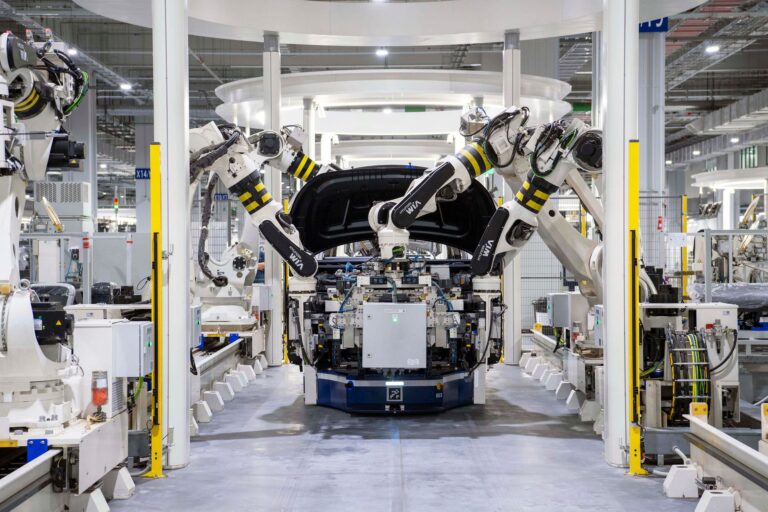
Over the next three to five years, the factory floor will look measurably different. Not because of one technology, but because AI, digital twins, autonomous robots, and intelligent software are converging. Rockwell’s strategy is to own as much of that convergence as possible—from the software layer (FactoryTalk) to the execution layer (OTTO robots) to the simulation layer (Emulate3D) to the edge AI layer (Nemotron integration).
This is more ambitious than Rockwell’s traditional positioning as a pure software and controls company. The forward-looking vision outlined in Rockwell’s NVIDIA partnership—enhanced machine vision, accelerated compute in control systems, advanced simulations with learning agents, widespread AMR adoption, and GenAI experiences for frontline operators—is the roadmap for the next generation of industrial automation. Whether Rockwell executes flawlessly, or whether competitors like Siemens, Honeywell, or newer entrants capture share, will determine whether the company truly becomes the defining platform for AI-powered manufacturing. The partnership with NVIDIA increases the probability, but doesn’t guarantee it.
Conclusion
ROK is not the next NVIDIA because the two companies are solving different problems in the industrial ecosystem. NVIDIA provides the computational foundation; Rockwell provides the systems that turn that compute into factory floor productivity. The partnership validates that industrial automation is becoming AI-native, and Rockwell’s existing customer relationships, software platform, and robotics division give it advantages competitors would struggle to replicate.
The stock is fairly valued with modest upside expectations, reflecting analyst confidence in execution but caution about explosive growth. For investors and manufacturers, the real question is not whether ROK will replicate NVIDIA’s returns, but whether Rockwell can execute on the vision of AI-powered, autonomous factory operations. FY2026 guidance and Q2 results suggest execution is on track. The next 18 months will reveal whether the NVIDIA partnership translates into sustained margin expansion, customer wins, and market share gains, or whether it remains a promising technology roadmap without proportional business impact.