This guide tracks 2026 robotics investments, explains current capabilities, and shows how to deploy safely. It highlights key funding facts and questions to ask suppliers before pilots or purchases. Physical AI here means robots that sense, decide, and act in the physical world.
Funding is at record levels, but capability remains narrow and task-specific. Buyers can match funded use cases to proven tasks and safety controls. The sections below separate momentum from readiness.
Table of Contents
- Where is the money going?
- What can humanoids do in factories today?
- Which safety rules govern deployment?
- How does geography affect buying?
- What should you ask before a pilot?
Where is the money going?
Global robotics startups raised $18.8B in 2026 to date, Crunchbase News reports, topping $15B for full-year 2025 and the $14.1B peak in 2021 record venture funding data. The total signals record investor confidence in physical AI. It also widens the gap between well-funded categories and slower ones. PitchBook reports $18.6B for robotics and physical AI in Q2 2026 alone quarterly physical-AI funding report.
Defense and security led, concentrated in the Anduril deal, while logistics funding fell 68%. Money favors perception, autonomy, and mission systems over warehouse automation today. The Robot Report counts $4.87B across 162 transactions in August 2026, with China at about $2.44B. That is roughly half of disclosed capital for the month. Buyers should check supplier location, parts sourcing, and support coverage early.
What can humanoids do in factories today?
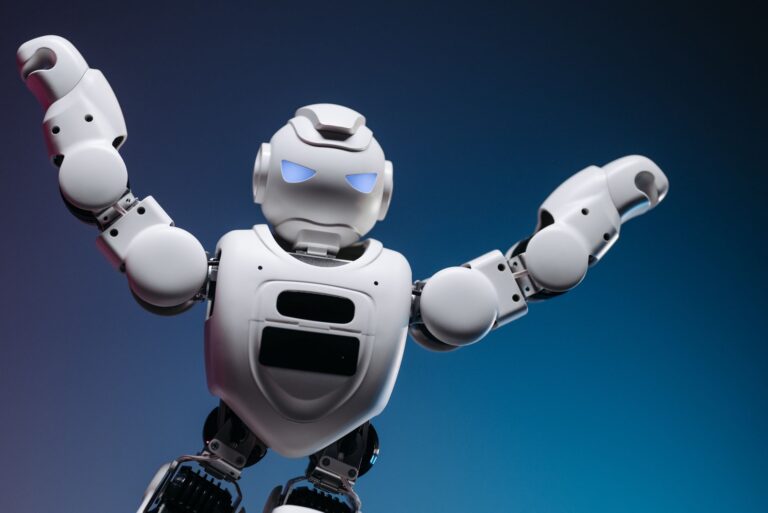
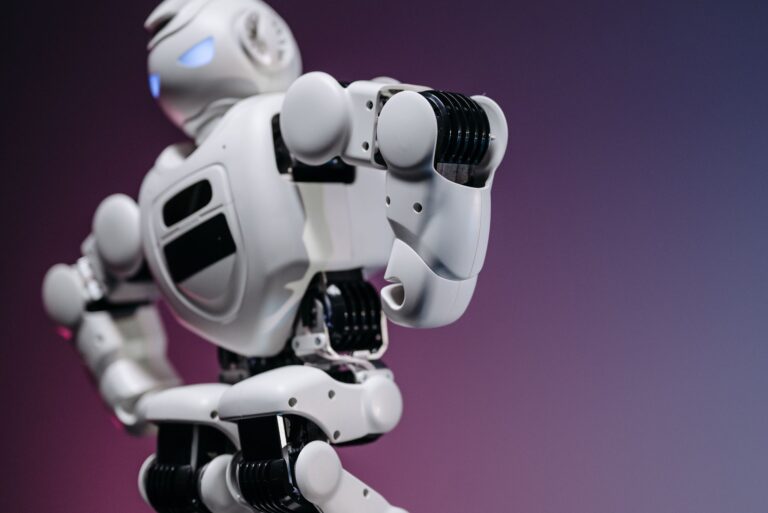
The most documented 2026 humanoid pilots handle simple, repetitive moves, EVS Intelligent reports industrial humanoid deployment review. Figure 02/03 pilots move materials at BMW Spartanburg. Agility Digit handles totes in warehouse flows.
Tesla Optimus remains internal to Tesla factories. That split matters: two systems face customer floors, one does not. Choose tasks with fixed paths, light loads, and clear handoffs.
Which safety rules govern deployment?
ISO 10218-1:2025 and 10218-2:2025 set safety for industrial robots and integration, ISO states updated industrial robot safety standards. They add cybersecurity, functional safety alignment, and collaborative-robot rules from ISO/TS 15066. Apply them to cells, tooling, and system integration, not just the arm.
Under compliance analyses of EUR-Lex, EU Machinery Regulation 2023/1230 fully applies from 20 January 2027, replacing Directive 2006/42/EC. It requires CE conformity for AI-enabled robots, including software safety and high-risk assessment. Humanoid-specific ISO/CD 25785-1 for dynamically stable robots was still a working draft in 2026, according to ISO Technical Committee 299 reporting. Pilots must therefore use ISO 10218, ISO/TS 15066 and ANSI/RIA R15.08 plus site risk assessment.
How does geography affect buying?
Capital concentration shapes where products mature first. China accounted for about half of August disclosed robotics capital. North American and European buyers may face longer lead times, different software defaults, or limited service networks.
Map the supply chain before technical trials. Ask where core modules, sensors, and cloud services originate. Confirm spare parts, warranty service, and data-hosting terms for your region.
What should you ask before a pilot?
Ask for evidence, not slides. Control Engineering frames diligence around risk assessment, guarded zones, validation, hardening, and measured pilot performance.
Use these checks for every vendor: Require trained observers and remote stop for humanoid pilots. Keep workzones geofenced until intervention rates stay low for weeks.
- ISO 12100 risk assessment for your task and layout
- fenced or sensor-guarded zones with force and pressure validation
- cybersecurity hardening for networked robots and controllers
- uptime and intervention rates from relevant pilots
- deployment controls such as geofenced workzones, trained observers, and remote stop