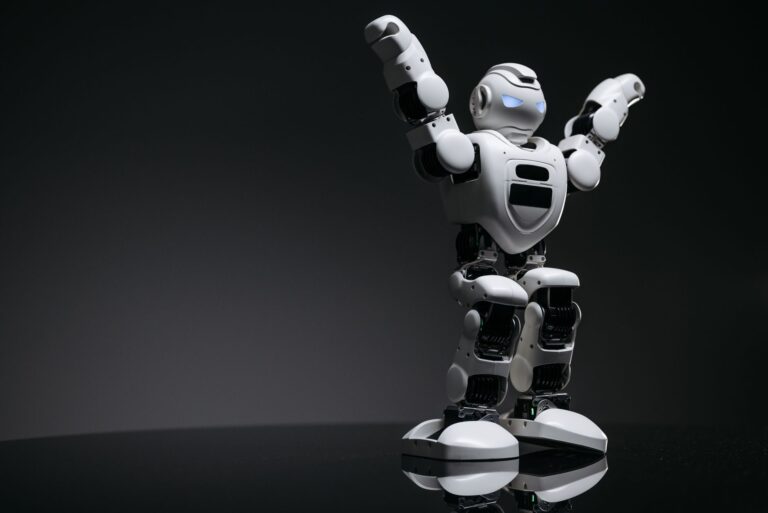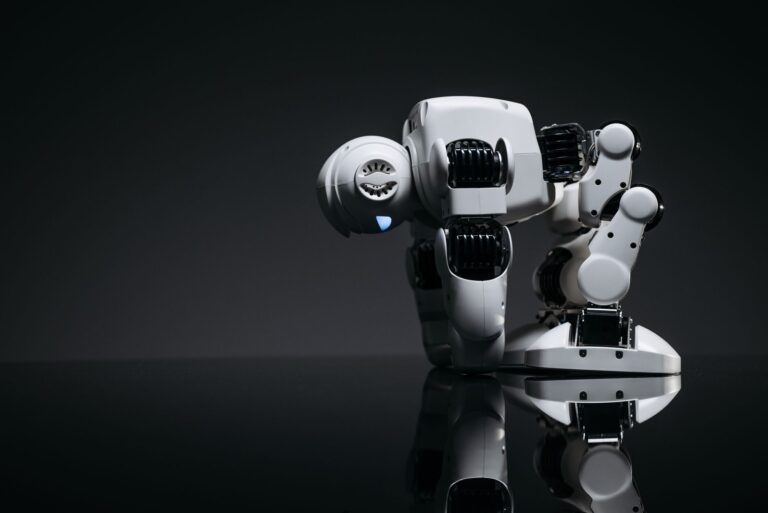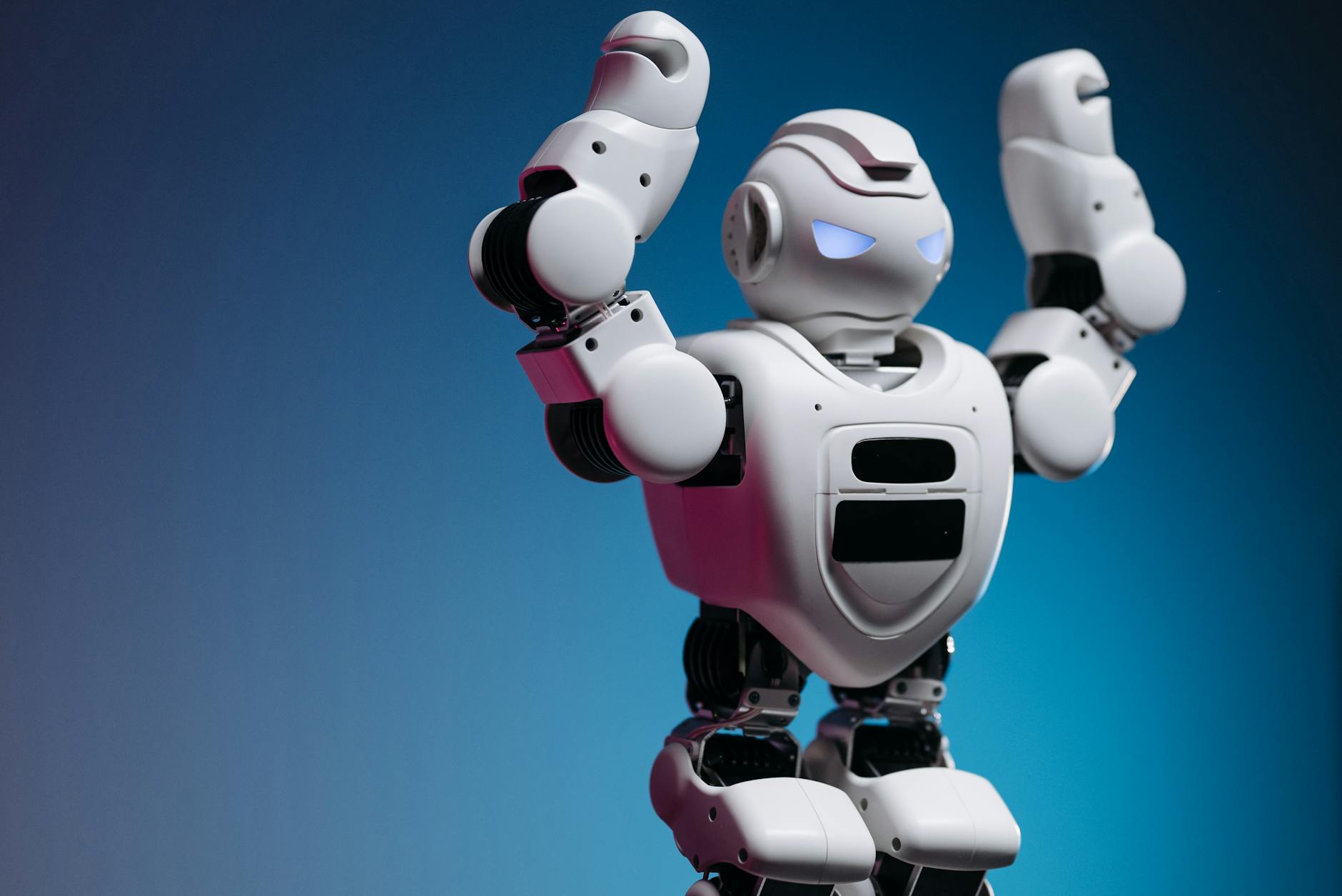

Yes, a vision technology company could be the next transformational force in robotics, rivaling NVIDIA’s influence in AI infrastructure. While NVIDIA has dominated by providing the compute backbone for robotics through platforms like their Rubin AI system and Isaac GR00T models, the real bottleneck for deploying robots at scale isn’t raw processing power—it’s the ability to see, understand, and act on the physical world. Companies specializing in advanced vision systems, 3D perception, and spatial reasoning are positioned to become essential infrastructure layers, much like NVIDIA became for AI training.
Consider Apera AI’s 4D vision technology, which Zebra Ventures backed in April 2026; such innovations address problems that pure compute providers cannot solve alone. The robotics market is maturing rapidly, with global robotics funding reaching $27.6 billion in 2025, more than double the prior year’s $13.7 billion. Simultaneously, the AI in computer vision market is projected to explode from $34.94 billion in 2026 to $254.51 billion by 2033—a compound annual growth rate of 32.8%—while the broader machine vision market surges toward $69.49 billion. This trajectory reveals where the value is concentrating: not just in robot makers, but in the perception systems that make robots useful in unstructured, real-world environments where pre-programmed tasks fail.
Table of Contents
- Why Vision Technology Is the Critical Bottleneck in Physical AI
- The Market Opportunity and Investment Signals
- The Robotics Giants Are Already Making Their Move
- Competition and the Platform Challenge
- The Data and Training Imperative
- Integration and the Software Stack
- The 2026 Inflection Point and What Comes Next
- Conclusion
- Frequently Asked Questions
Why Vision Technology Is the Critical Bottleneck in Physical AI
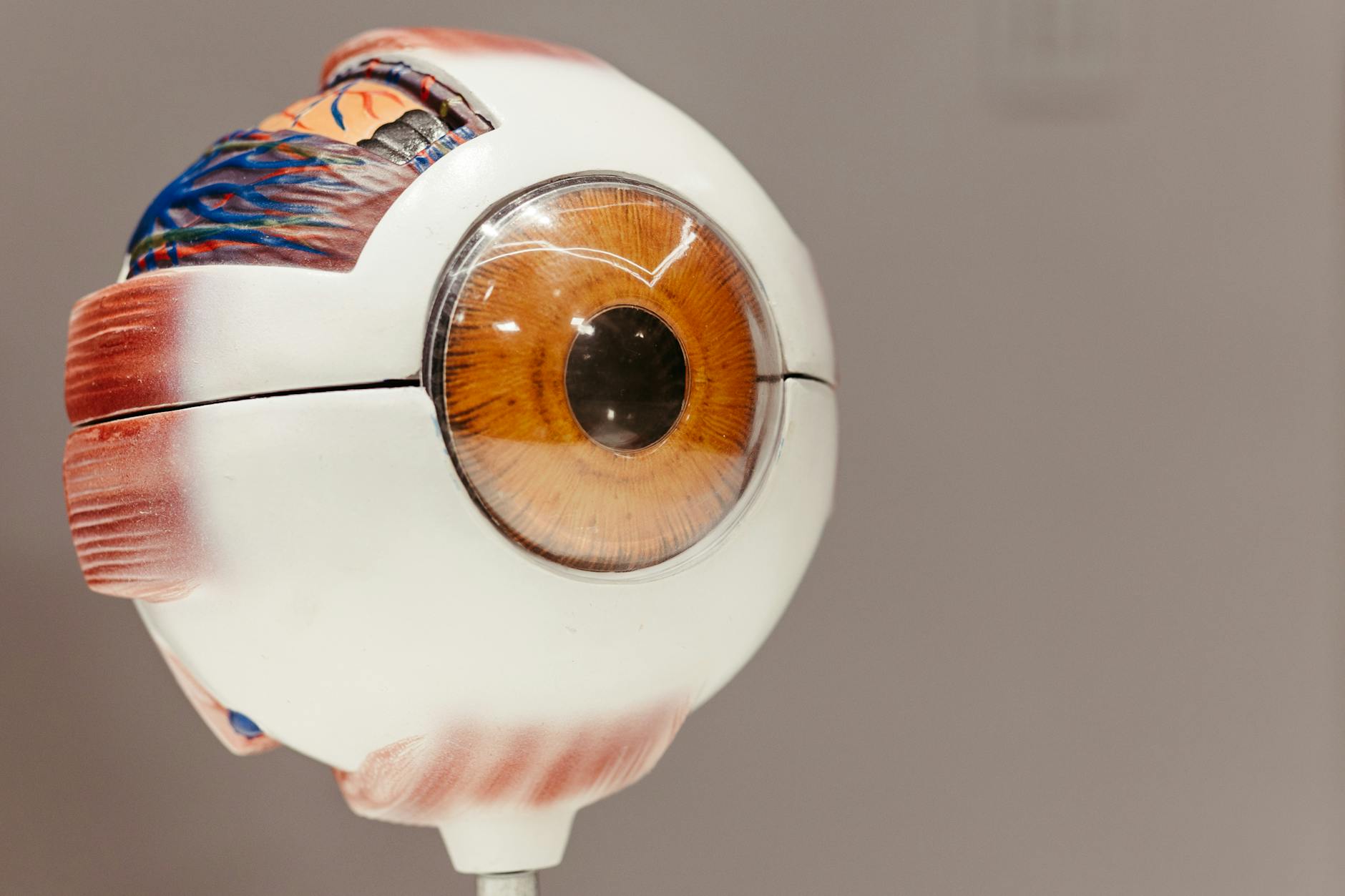
Current robotics architecture depends on a perception-first pipeline: sensors feed data to vision models, which inform planning algorithms, which guide motor commands. nvidia understands this—their recent CES 2026 announcements included not just the Rubin platform, but Cosmos world foundation models and Cosmos Reason, specifically a reasoning vision language model designed for physical AI. This signals that even the compute giant recognizes that generic computing power alone won’t solve robotics. The difference between a robot that can recognize a part and a robot that can actually handle unexpected variations in lighting, partial occlusion, or novel object orientations often comes down to the quality of the vision stack. Vision tech companies have a different advantage than platform providers: they operate closer to the physics of perception.
A pure vision play can specialize in solving domain-specific problems that a general-purpose platform treats as a commodity. For instance, 4D vision (adding temporal dimension to spatial understanding) enables robots to predict motion and plan around it—something that matters enormously in dynamic environments like manufacturing floors or warehouses, but that generic vision APIs struggle with. This specialization creates defensible value. The risk here is that vision could become commoditized just as GPU computing has. If NVIDIA integrates advanced vision models into Rubin, or if open-source alternatives mature rapidly, standalone vision companies face compression. The companies most likely to sustain premium valuations are those that solve proprietary, recurring problems in specific industries rather than building general-purpose vision layers that everyone can replicate.
The Market Opportunity and Investment Signals
The growth metrics speak clearly: computer vision software spending is outpacing overall AI investment. That $254.51 billion projection isn’t hype—it reflects enterprise commitments already underway in supply chain, healthcare, and manufacturing. What’s notable is the velocity of these bets. When Zebra Ventures, a strategic corporate venture arm, invests in Apera AI’s 4D vision technology, it signals that established industrial companies view vision as a differentiator, not a commodity. Compare this to how robotics funding is distributed. Figure AI reached a $39 billion valuation after raising over $1.9 billion across funding rounds through 2026, and Physical Intelligence hit $14 billion after a $1.4 billion Series C led by SoftBank in January 2026.
Both are general robotics platforms, yet both depend critically on vision. Now consider that neither of these companies is primarily a vision specialist—they both license or integrate vision technology from elsewhere. This creates an opening: the company that becomes the standard for robot perception, the way CUDA became the standard for GPU computing, could command substantial leverage. However, there’s a complication: unlike NVIDIA’s hardware moat, vision software can be replicated or open-sourced relatively quickly. Once a vision approach is proven to work, competitors can implement similar models in months. This means vision tech companies need network effects, proprietary data, or regulatory defensibility to maintain margins long-term.
The Robotics Giants Are Already Making Their Move
Tesla’s decision to halt Model S and Model X production in 2026 to free up factory capacity for Optimus robot manufacturing signals confidence in the robotics timeline—and a bet that vision is solvable. Tesla plans to launch Optimus sales by the end of 2027, which means they’re betting they can scale autonomous perception faster than the traditional robotics industry. ABB Robotics’ planned spinoff, targeting a $3.5 billion valuation for 2026, suggests even legacy players are repositioning around robotics-as-a-standalone-business rather than as an accessory to broader industrial equipment. These moves reveal what the incumbents already know: the next $39 billion company in robotics won’t necessarily be a robot manufacturer. It’ll be whatever layer becomes so essential that every robot maker depends on it.
For Tesla, that’s their own vertically-integrated perception. For ABB or FANUC (traditional industrial robot makers), they’re likely to partner with or acquire vision specialists. The companies that remain independent and command premium valuations will be those that solve problems the general-purpose platforms don’t handle well—environmental adaptation, real-time spatial reasoning, or domain-specific object recognition. When NVIDIA CEO Jensen Huang declared at CES 2026 that “the ChatGPT moment for robotics is here” and predicted that “every industrial company will become a robotics company,” he was implicitly endorsing a future where robots are commoditized. In a commoditized robotics market, the margin accrues to whoever controls the essential layer—and for many applications, that’s perception, not processing power.

Competition and the Platform Challenge
NVIDIA isn’t sitting idle. Their Isaac GR00T N1.6 is a vision language action model specifically engineered for humanoid robots, combining perception and decision-making in a single trained component. By integrating advanced vision capabilities into their own platforms, NVIDIA raises the bar for standalone vision competitors. A startup offering marginal improvements over NVIDIA’s built-in vision won’t gain traction; they need to solve problems that the platform approach structurally can’t handle. Where independent vision companies can compete is in vertical markets. A vision system optimized for surgical robotics operates under constraints (sterile field, known lighting, small working volume) very different from warehouse automation or hazardous environment inspection.
Companies that carve out defensible verticals—say, underwater drone perception, or autonomous truck loading—can command premium multiples because the problem is specific enough that general platforms can’t beat them. The lesson from enterprise software is that specialization survives longer than generalization. The trap for vision startups is becoming a feature rather than a platform. If they’re acquired as a R&D team and their IP gets folded into someone else’s product, the acquirer wins, not the original shareholders. This is why vision companies that build ecosystems—enabling third-party developers to build on their perception stack, creating dependency—are more likely to become the next NVIDIA. Those that stay as point solutions risk becoming acqui-hires.
The Data and Training Imperative
One of vision technology’s hidden advantages is data leverage. Training a world-class vision model requires massive datasets of real-world robotics scenarios. Companies with proprietary access to such data—whether through robotics partnerships, manufacturing facilities, or large deployed bases—have a structural advantage. Figure AI and Physical Intelligence both have access to real robot rollout data that feeds back into their perception systems, creating a flywheel. A pure-play vision company without a deployed robotics base faces a chicken-and-egg problem: you need robots to generate training data, but you need great perception to sell robots.
This is why Zebra Ventures’ investment in Apera AI matters—Zebra brings industrial customer access and real-world deployment scenarios, not just capital. Vision companies that can partner their way into large operational datasets (logistics networks, manufacturing floors, supply chains) will outpace those relying on synthetic or volunteer-collected data. The warning here is around data ownership and regulatory risk. As robots handle sensitive environments—healthcare, precision manufacturing, critical infrastructure—there will be questions about who owns perception data and how it’s used. A vision company dependent on customer data streams but without direct customer relationships could find themselves in a weak negotiating position when those customers decide to internalize perception capabilities.
Integration and the Software Stack
NVIDIA’s Rubin platform is designed to integrate multiple layers: world foundation models (Cosmos), reasoning models (Cosmos Reason 2), and action models (Isaac GR00T). This integration strategy suggests that the future winner won’t be pure perception—it’ll be the company that owns multiple interdependent layers of the robotics software stack. Vision is necessary but not sufficient.
This creates an opportunity for vision companies to build up the stack rather than defend a single layer. Offer perception, then add simulation, then add training frameworks, then add deployment tools. Each layer becomes a switching cost that makes pure vision providers more attractive. Companies pursuing this strategy—deepening from perception into motion planning, training, and deployment—are more likely to achieve NVIDIA-like status than those that optimize a single narrow problem.
The 2026 Inflection Point and What Comes Next
The timing of CVPR 2026 (May 19, 2026), featuring a major showcase of embodied AI, robotics, and autonomous systems, coincides with record robotics funding and the launch of multiple foundation models for physical AI. This is the inflection moment. Robotics is transitioning from research and prototype to early deployment at scale, and that requires enterprise-grade perception infrastructure.
The companies positioned to provide that infrastructure—not the robot makers, not the compute providers, but the perception layer—have the highest probability of achieving unicorn or mega-cap status in this cycle. The next NVIDIA in robotics will likely be a vision or perception technology company that solves the integration problem: connecting perception to decision-making to action in a way that’s modular enough for different robot morphologies but specialized enough to beat commodity approaches. Whether that’s an existing company like NVIDIA expanding its vision capabilities, or a startup that captures a critical vertical like 4D vision for dynamic environments, remains to be seen. What’s certain is that the capital is flowing to robotics, and the bottleneck is perception.
Conclusion
Vision technology companies have a genuine opportunity to become as essential to robotics as NVIDIA became to AI infrastructure. The market is growing faster than robotics hardware supply, funding is accelerating, and every major robotics platform is racing to improve perception capabilities. The question isn’t whether vision matters—it’s whether the winner will be an independent company or an acquisition that enhances an existing platform.
Companies that specialize in domain-specific perception problems, build data flywheels, and integrate perception with higher-level robotics capabilities will be in the strongest position. For investors, entrepreneurs, and industry players, the lesson is clear: don’t assume the robotics boom automatically benefits roboticists. Some of the best returns will come from the companies building the invisible infrastructure—the perception, the understanding, the ability to see—that makes any robot actually useful. That’s where the next $39 billion valuation likely lies.
Frequently Asked Questions
Is NVIDIA already doing vision technology for robotics?
Yes, NVIDIA offers vision models including Isaac GR00T N1.6 and Cosmos, but they position these as part of a broader platform. Specialized vision companies can still compete in specific domains where depth of expertise or proprietary data provides an advantage.
What’s the difference between a vision company and a robotics company?
A vision company focuses on perception—helping robots see and understand the environment. Robotics companies build the physical systems and overall platforms. A robot needs vision, but a vision company doesn’t need to build robots to succeed.
Could open-source vision models like YOLO or Segment Anything eliminate the value of proprietary vision startups?
Partially. Open-source models commoditize basic perception tasks, but real-world robotics usually requires domain-specific optimization, specialized hardware integration, and continuous training on proprietary data. The winner will likely be whoever controls the domain-specific layer, not the generic foundation.
Why did Zebra Ventures invest in Apera AI’s 4D vision?
4D vision adds temporal understanding to spatial perception, enabling robots to predict motion and plan around moving objects. This is crucial for dynamic environments like warehouses and manufacturing floors where static 3D vision isn’t sufficient.
What are the risks for a pure-play vision company?
Integration into larger platforms (NVIDIA, robotics companies), commoditization by open-source alternatives, data scarcity without a deployed robotics base, and customer concentration if reliant on a few large robotics integrators.
Could a vision company achieve NVIDIA-scale valuation?
Unlikely on vision alone, but likely if the company expands upward in the stack to include motion planning, simulation, and training frameworks—or downward to include specialized hardware. Integration and scope expansion create defensibility that pure perception software doesn’t offer.